Global disruptions, material shortages, and shifting consumer demand have forced manufacturers to rethink everything — especially how they manage inventory. In 2025, the age-old debate between Just-in-Time (JIT) and Just-in-Case (JIC) is more relevant than ever.
Which approach truly works best for today’s facilities and production lines?
What is Just-in-Time (JIT)?
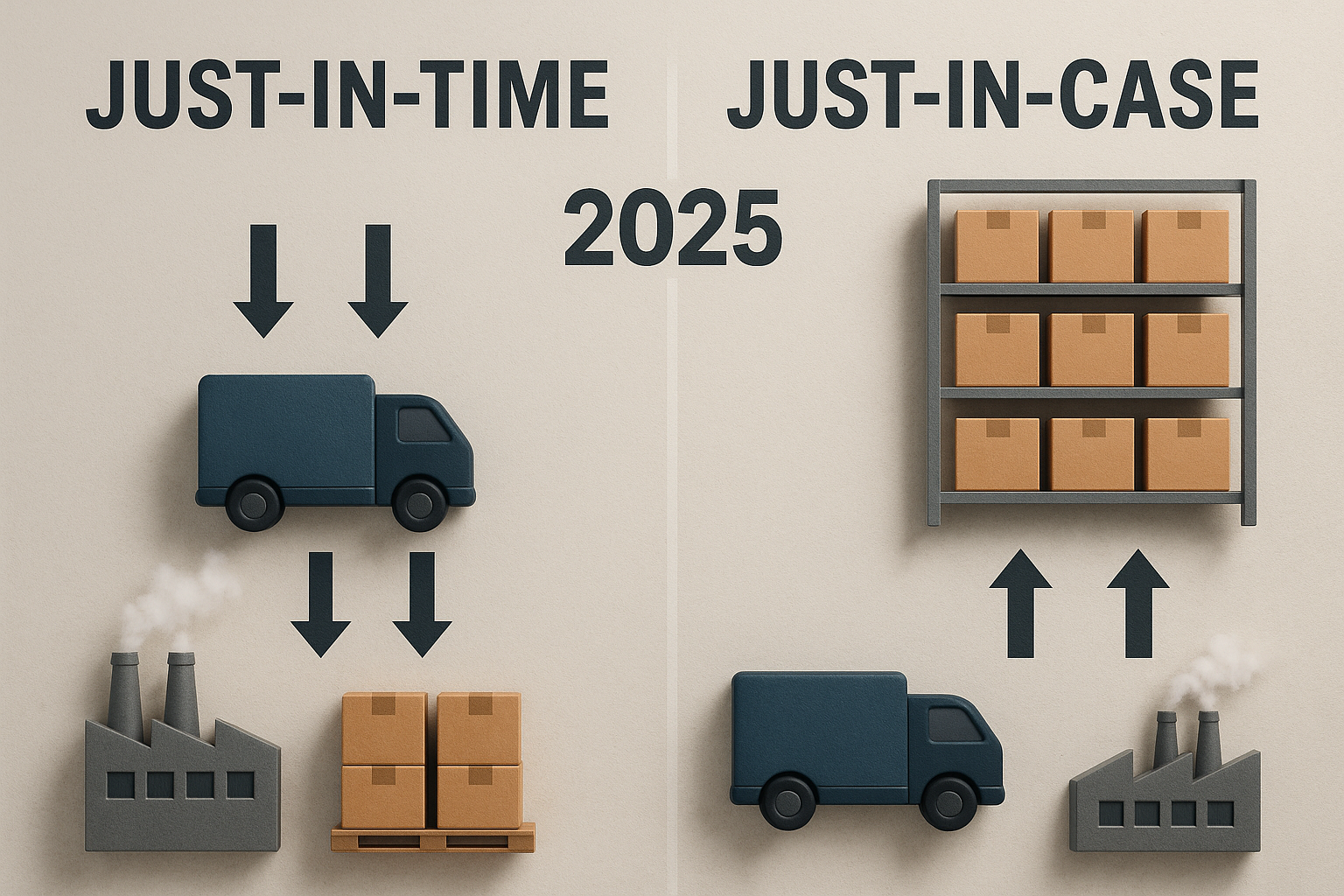
Just-in-Time is a lean manufacturing principle where materials arrive only when needed, minimizing inventory holding costs.
Pros of JIT:
- Lower inventory storage costs
- Reduced waste
- Leaner operations
- Faster turnaround
Cons of JIT:
- Vulnerable to supply chain delays
- Risk of production stoppage
- Relies heavily on vendor reliability
In 2025, with ongoing logistics volatility, many manufacturers have seen JIT challenged by real-world unpredictability.
What is Just-in-Case (JIC)?
Just-in-Case is a buffer-based inventory approach that prioritizes preparedness. Companies stockpile raw materials or finished goods in case of demand spikes or supply disruption.
Pros of JIC:
- Higher resilience to supply chain shocks
- Ability to fulfill sudden demand
- Improved service levels
Cons of JIC:
- Higher storage costs
- Risk of excess or obsolete inventory
- Capital tied up in unused stock
In the post-pandemic and geo-politically uncertain world of 2025, JIC is gaining popularity — especially in industries where delays are unacceptable.
Lean vs. Resilient: Who Wins in 2025?
The Case for Lean (JIT)
Companies with strong supplier relationships and advanced forecasting tools still benefit from lean JIT models. Automotive and electronics industries, for example, continue to streamline operations using JIT to stay competitive and cut costs.
The Case for Buffer (JIC)
Healthcare, aerospace, and essential goods manufacturers are leaning into JIC for supply chain resilience. Even tech-driven operations are now combining AI + JIC to dynamically manage buffer levels.
Hybrid strategies are emerging as the most effective solution.
2025 Trend: The Rise of “Just-in-Time-Case” Hybrid Models
In 2025, many facilities are blending both strategies — using predictive analytics and IoT-enabled inventory monitoring to:
- Maintain strategic safety stock (JIC)
- Still operate lean where possible (JIT)
This hybrid model — often called “Just-in-Time-Case” — enables both cost-efficiency and resilience.
Final Takeaway: Which Strategy Should You Choose?
| Scenario | Best Strategy |
|---|---|
| Highly predictable demand | Just-in-Time (JIT) |
| Uncertain global supply chains | Just-in-Case (JIC) |
| Critical industries (e.g. healthcare) | Just-in-Case or Hybrid |
| Agile tech-driven production | Hybrid JIT + JIC |
| Cost-cutting priority | JIT (with backup contingency plans) |
There is no one-size-fits-all in 2025. Your strategy must align with:
- Industry type
- Supply chain maturity
- Business risk tolerance
- Customer demand variability