As we step deeper into 2025, one thing is clear: healthcare investment decisions across the U.S. are increasingly shaped by where CMS (Centers for Medicare & Medicaid Services) puts its money.
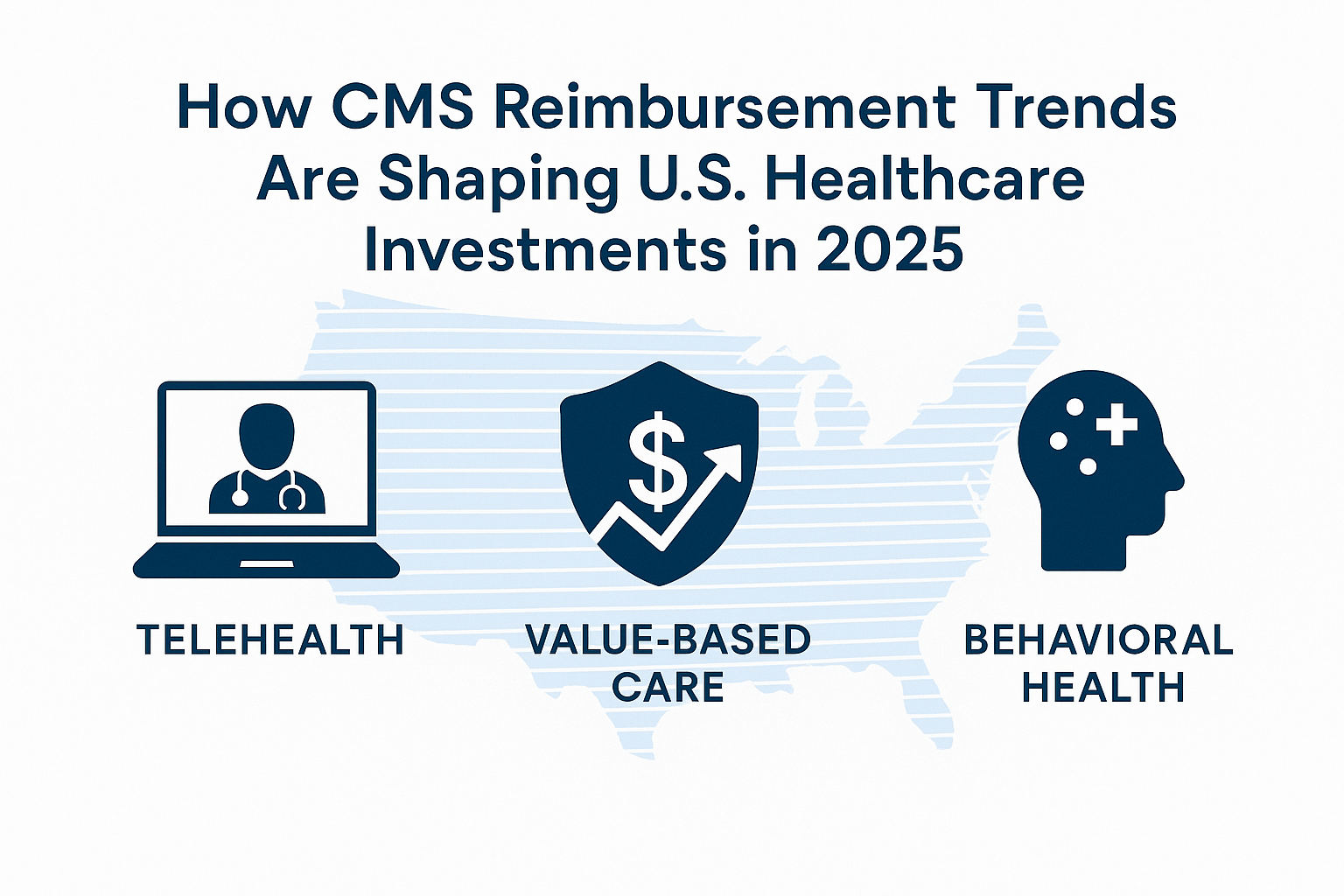
From telehealth to behavioral health to value-based care models, CMS reimbursement trends are signaling a strong shift in priorities—forcing providers, health systems, and investors to rethink how and where they allocate resources.
Telehealth is No Longer a Temporary Fix
What started as a pandemic-era necessity has now become a permanent fixture. CMS’s 2025 reimbursement rules continue to support a broad range of telehealth services, especially in rural and underserved areas. This has pushed many providers to invest heavily in:
- Secure telehealth platforms
- Remote patient monitoring tools
- Broadband infrastructure for both urban and rural settings
- Virtual behavioral health services
Providers who once hesitated to go digital are now redesigning care models that assume virtual delivery is here to stay. If your facility hasn’t updated its IT backbone or workflow systems to handle telehealth efficiently, you’re already behind.
Value-Based Care is Gaining Ground
Fee-for-service isn’t dead—but it’s definitely being challenged. CMS has made it clear that value-based models are the future, and that’s shifting how care is delivered and measured.
In 2025, we’re seeing:
- More Accountable Care Organizations (ACOs) being formed
- Increased investments in care coordination technologies
- A strong push toward outcome tracking and patient satisfaction metrics
- Financial incentives tied to reduced hospital readmissions and better chronic care management
This means hospitals and clinics are spending more on analytics, population health platforms, and even hiring care navigators—not because it’s trendy, but because CMS will reward those efforts.
Behavioral Health is Finally Getting the Attention It Deserves
CMS reimbursement structures have long neglected mental and behavioral health—but that’s changing fast. In 2025, we’re seeing expanded billing codes for:
- Substance use disorder treatments
- Integrated behavioral health in primary care settings
- Tele-mental health consultations
- Crisis intervention and stabilization services
This is driving significant investment in behavioral health infrastructure, especially among private equity firms and health systems looking to expand outpatient and virtual care offerings.
The message is clear: behavioral health is no longer on the sidelines. It’s moving to the core of care delivery.
Why These Trends Matter for Investors and Facility Leaders
Follow the money. CMS reimbursement updates are effectively a blueprint for where the healthcare industry is going—and investors are taking note.
In 2025, we’re seeing increased funding flow toward:
- Tech-driven outpatient facilities
- Hybrid care models (brick-and-mortar + virtual)
- Behavioral health startups
- Data analytics platforms supporting value-based care reporting
- Rural access improvements tied to telehealth incentives
Whether you’re planning a facility upgrade, launching a new service line, or deciding where to expand, these reimbursement trends aren’t just policy updates—they’re strategic signals.
Final Thought
CMS isn’t just paying for services—it’s shaping the future of U.S. healthcare delivery. Providers and investors who align with these trends are more likely to thrive in a system that’s shifting toward access, value, and whole-person care.
The smartest healthcare investments in 2025 are the ones that mirror CMS’s evolving priorities.