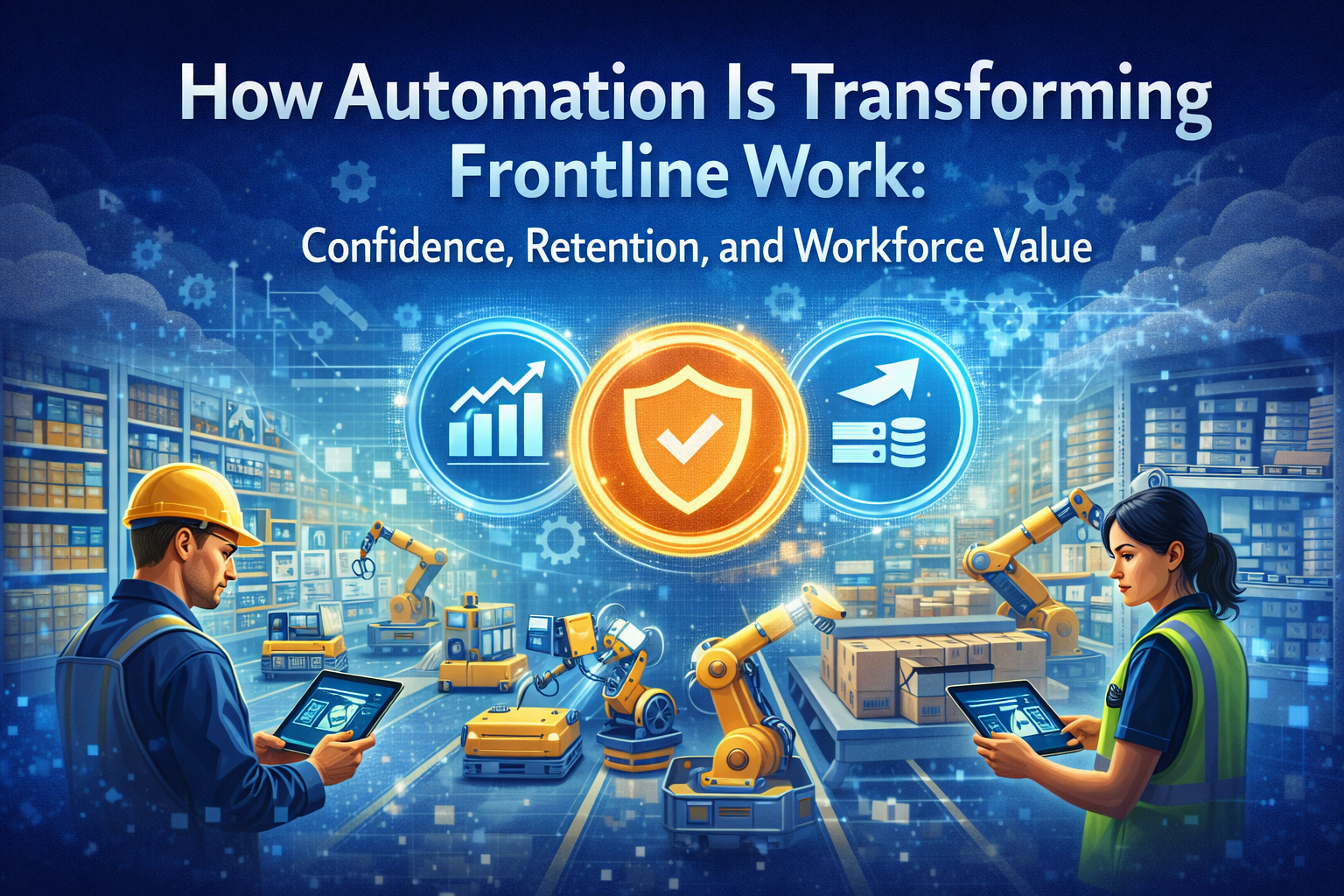
Manufacturing and logistics industries around the world are facing two major challenges: labor shortages and high employee turnover. These problems disrupt operational stability, increase risk, and affect service reliability.
Today, employee satisfaction is no longer just an HR issue — it has become a key factor for business competitiveness.
Automation is often associated with productivity improvements and cost savings. However, its influence on the workforce is just as significant. By reducing repetitive tasks, improving safety, and easing pressure during demand surges, automation is reshaping frontline jobs and creating more stable and rewarding workplaces.
Turning Routine Tasks into Skilled Roles
Automation is redefining the nature of frontline work.
Instead of performing repetitive manual tasks such as picking, carrying, or sorting for entire shifts, employees now focus more on monitoring automated systems, managing exceptions, and overseeing workflows.
Organizations that support this transition through training programs often see better employee engagement and retention.
A European logistics survey in 2023 found that companies introducing automation experienced 20–25% higher participation in technical training programs, as workers recognized the value of developing new skills.
This shift allows frontline workers to transition from physically demanding roles to more technical and knowledge-based positions.
Reducing Pressure During Peak Demand
Seasonal peaks and promotional campaigns create enormous pressure on logistics and warehouse staff.
Automation helps organizations handle these spikes more efficiently by maintaining operational throughput without relying heavily on overtime or temporary workers.
For example:
- During Japan’s Oseibo and Ochugen gift-giving seasons, Yamato Transport reported that overtime hours in major distribution centers dropped by around 40% after implementing automated sortation systems.
- Global e-commerce leaders such as Amazon and JD Logistics have also highlighted automation as a key factor in reducing reliance on temporary labor during peak seasons.
By absorbing demand surges, automated systems help companies maintain productivity while protecting employees from burnout.
Creating Safer Work Environments
Workplace safety is another major advantage of automation.
Manual warehouse operations often expose workers to:
- Heavy lifting
- Repetitive strain injuries
- Hazardous environmental conditions
Automation technologies such as autonomous mobile robots (AMRs), pallet shuttles, and robotic depalletizers handle the most physically demanding tasks.
Cold storage facilities present an especially high risk. In Japan, government data indicates that accident rates in frozen warehouses are nearly twice as high as those in standard warehouses.
By reducing human involvement in these environments, automation significantly lowers injury risks and increases employee confidence on the job.
Improving Communication and Operational Visibility
Modern automated systems integrate with digital management platforms that provide real-time visibility into operations.
Instead of relying on paper instructions or verbal communication, workers can access real-time data on:
- Inventory levels
- Task assignments
- Performance metrics
- Workflow status
Research from McKinsey shows that organizations with real-time operational visibility experience 30% fewer coordination errors.
For frontline employees, this transparency reduces confusion, improves coordination, and gives them greater control over daily operations.
Real-World Examples of Automation in Action
Pharmaceutical Warehousing
In traditional pharmaceutical warehouses, urgent orders can take hours to coordinate manually.
Automated warehouses reduce this process to just minutes, improving efficiency and lowering stress on employees.
At Otsuka Pharmaceutical in Japan, outbound error rates dropped by 60% after automation was introduced, reducing the need for repeated manual verification.
Cold Chain Logistics
Working in temperatures of –20°C or lower poses serious health risks.
Automation allows companies to limit human exposure by using robotic systems for storage and retrieval.
In some European cold chain facilities, automated systems have reduced human entry into frozen areas by more than 70%, improving both safety and employee retention.
E-Commerce Fulfillment
E-commerce fulfillment centers face intense operational pressure during major sales events and seasonal peaks.
Automation helps companies maintain productivity while improving working conditions.
For example:
- Rakuten Logistics in Japan reported improved retention among permanent employees after introducing robotic sorting systems.
- DHL has reported productivity improvements of around 25% in automated warehouses, along with higher employee satisfaction due to reduced physical strain.
Automation and Long-Term Workforce Value
Automation does more than improve immediate operational efficiency — it also supports long-term workforce development.
Key long-term benefits include:
Skill Diversification
Workers shift from purely physical tasks to roles involving system monitoring, troubleshooting, and equipment maintenance.
Lower Employee Turnover
Improved working conditions and career development opportunities lead to higher job satisfaction and lower attrition rates.
Stronger Employer Branding
Modern, technology-driven workplaces are more attractive to younger employees.
In regions facing aging labor markets — such as Japan — and in high-turnover markets like North America, this advantage can become a decisive competitive factor.
The Future of Frontline Work
Automation is not simply replacing human workers — it is transforming the nature of frontline roles.
By reducing physical strain, improving safety, and creating opportunities for skill development, automation helps organizations build more resilient and motivated workforces.
For companies navigating labor shortages and rising operational demands, automation is becoming not just a technology investment — but a strategic workforce solution.