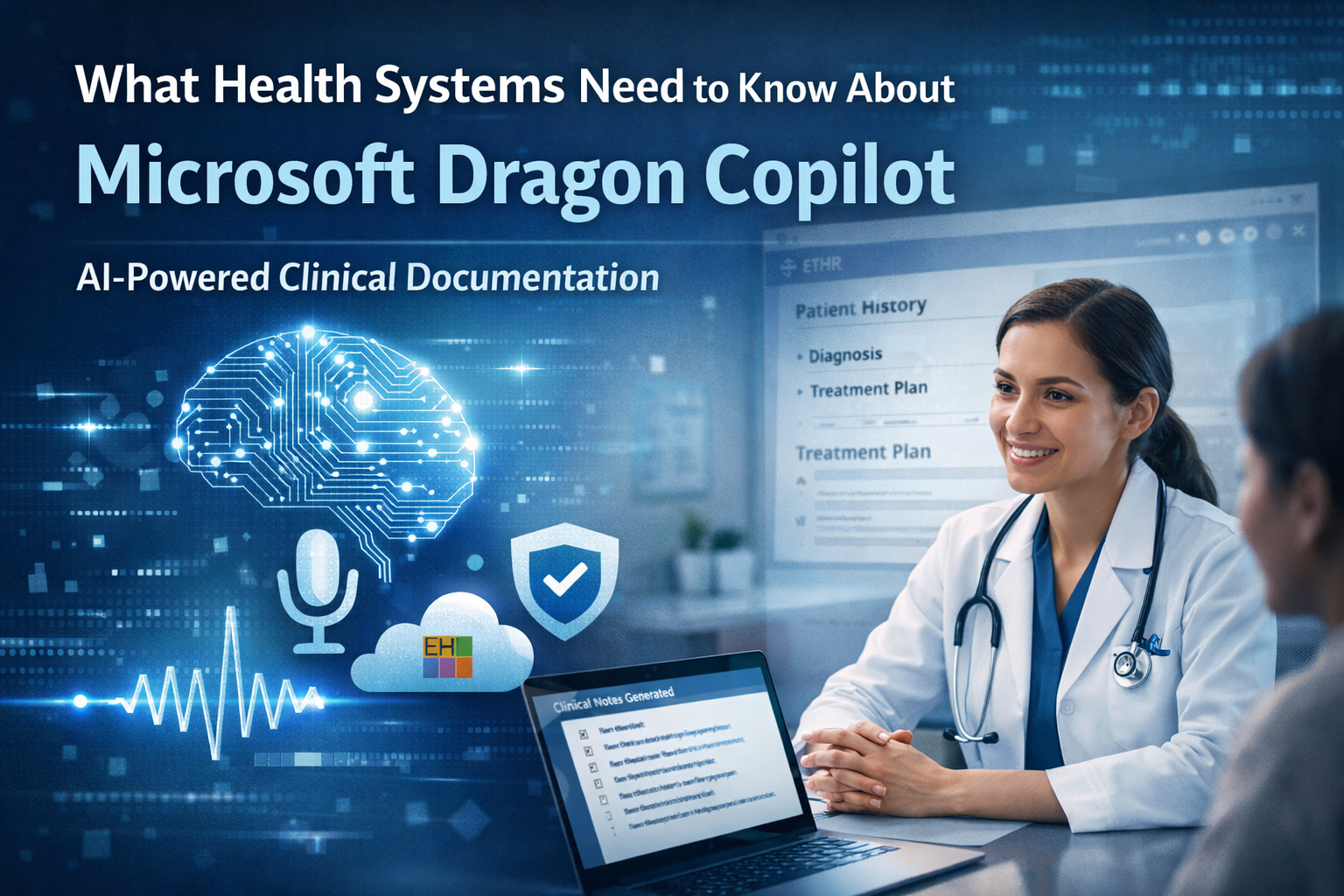
Healthcare systems are rapidly adopting artificial intelligence to reduce administrative burden, improve clinical documentation, and enhance patient care. One of the most promising new tools in this space is Microsoft Dragon Copilot, an AI-powered clinical assistant designed specifically for healthcare professionals.
Built by Microsoft in collaboration with Nuance Communications, Dragon Copilot combines advanced speech recognition with generative AI to streamline clinical workflows. For hospitals, clinics, and health systems exploring AI-powered documentation tools, understanding how this platform works—and what benefits it offers—is essential.
What Is Microsoft Dragon Copilot?
Microsoft Dragon Copilot is an AI clinical assistant that helps healthcare providers capture and summarize patient encounters using natural conversation.
The system integrates the speech recognition technology from Dragon Medical One with generative AI capabilities powered by Microsoft Copilot. This combination allows physicians to automatically generate structured clinical documentation while focusing on patient care rather than typing notes.
Instead of manually entering information into an Electronic Health Record (EHR), doctors can simply speak during the patient visit and allow the AI to generate accurate clinical summaries.
Key Features of Dragon Copilot
1. AI-Powered Clinical Documentation
Dragon Copilot listens to doctor–patient conversations and converts them into structured medical notes in real time. These notes can include:
- Patient history
- Symptoms
- Diagnoses
- Treatment plans
- Follow-up instructions
This dramatically reduces the time clinicians spend on documentation.
2. Integration with Electronic Health Records (EHR)
The platform integrates with major EHR systems used across healthcare organizations. By connecting directly to the EHR, Dragon Copilot ensures documentation is automatically placed in the correct sections of the patient record.
Health systems using platforms like Epic Systems or Cerner can potentially integrate AI-assisted documentation into their existing workflow.
3. Ambient Clinical Intelligence
Dragon Copilot uses ambient listening technology that captures conversations in the exam room without interrupting patient interaction.
This technology, previously introduced through Nuance Dragon Ambient eXperience, enables physicians to maintain eye contact with patients instead of focusing on a computer screen.
4. AI-Generated Visit Summaries
After a patient visit, the system can automatically generate:
- Clinical summaries
- Patient instructions
- Referral notes
- Follow-up care plans
These summaries can be reviewed and edited by clinicians before finalizing the documentation.
Benefits for Health Systems
Reduced Physician Burnout
Administrative workload is one of the leading causes of physician burnout. AI documentation assistants can reduce charting time significantly, allowing clinicians to focus more on patient care.
Improved Clinical Efficiency
Hospitals and health systems can increase operational efficiency when physicians spend less time documenting visits.
Better Patient Experience
Patients benefit when doctors can focus on conversation rather than typing notes during appointments.
Enhanced Documentation Accuracy
AI-assisted documentation can reduce errors caused by rushed or incomplete notes.
Security and Compliance Considerations
Because healthcare data is highly sensitive, platforms like Dragon Copilot are built with strict security and compliance measures.
Microsoft integrates healthcare AI solutions with secure cloud infrastructure through Microsoft Azure, ensuring compliance with healthcare regulations such as HIPAA in the United States.
Health systems must still ensure proper governance, access control, and data management when deploying AI tools in clinical environments.
Challenges Health Systems Should Consider
While AI-powered documentation offers significant benefits, implementation may come with challenges:
- Integration with existing EHR systems
- Physician training and adoption
- Data privacy considerations
- Workflow adjustments
Hospitals should conduct pilot programs before full deployment to ensure smooth integration.
The Future of AI in Clinical Documentation
The launch of Microsoft Dragon Copilot signals a major shift in how healthcare providers interact with technology. AI assistants are increasingly becoming a core part of healthcare IT infrastructure.
As generative AI continues to evolve, tools like Dragon Copilot may eventually support:
- Automated clinical decision support
- Predictive patient insights
- Real-time care recommendations
Health systems that adopt AI early may gain a significant advantage in improving efficiency, reducing clinician burnout, and enhancing patient outcomes.