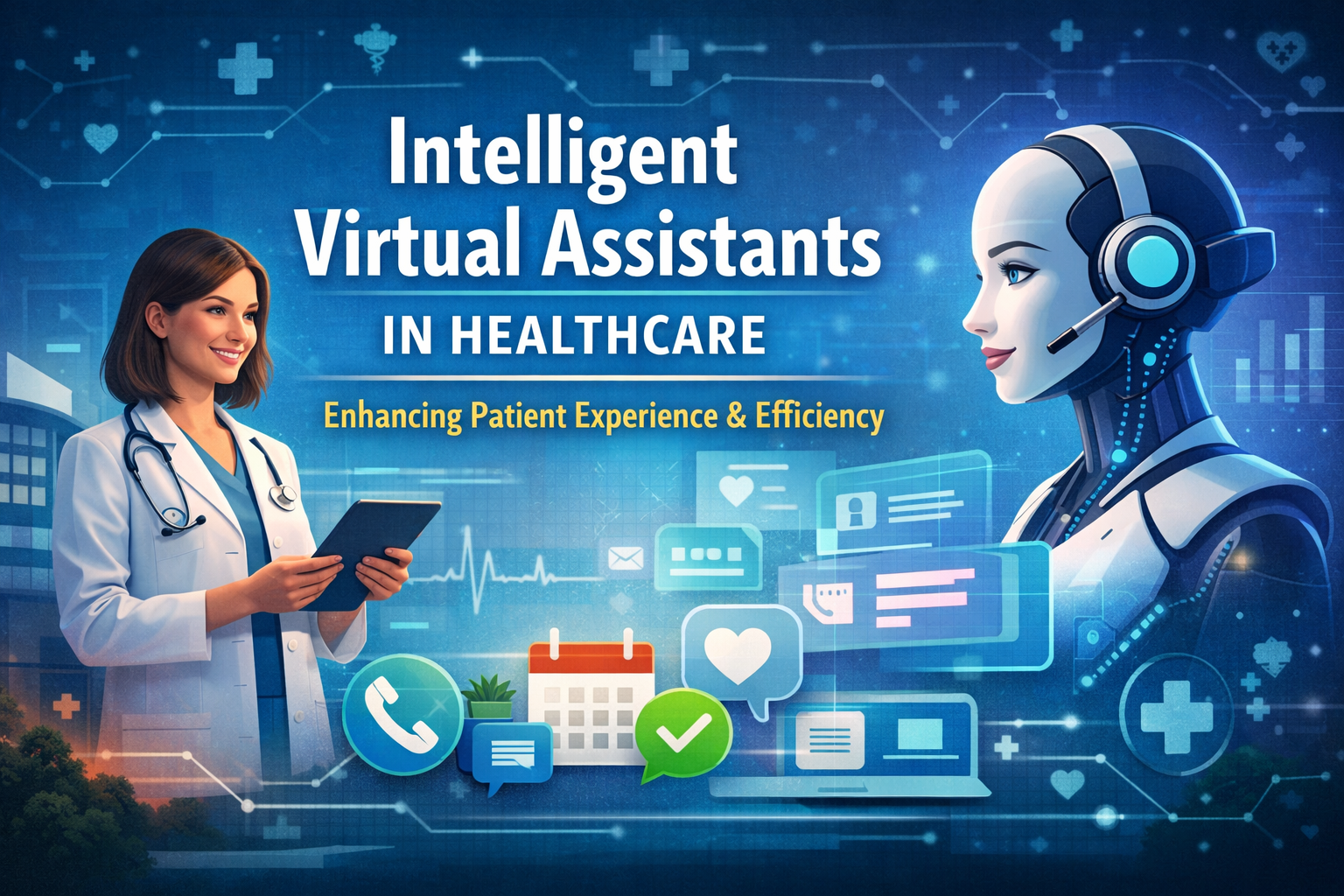
Healthcare organizations are under growing pressure to improve patient experience, reduce administrative burden, and modernize operations. One of the most effective technologies helping providers achieve these goals is the intelligent virtual assistant (IVA).
From streamlining contact centers to supporting clinical teams, virtual assistants powered by artificial intelligence are becoming an essential part of digital healthcare transformation.
But how exactly can intelligent virtual assistants improve healthcare delivery? Let’s explore.
Learning from Innovation at Mayo Clinic
A strong example of AI in healthcare comes from Mayo Clinic, which introduced a Nurse Virtual Assistant designed to help nurses quickly access patient care information, institutional knowledge, and clinical guidelines.
Instead of navigating multiple electronic health record screens or searching through policy libraries, nurses can receive curated summaries in one place. The goal is simple: reduce time spent searching for information and increase time spent on patient care.
The key lesson for healthcare organizations is not just about adopting AI technology. It is about identifying a specific operational challenge and implementing a targeted solution that delivers measurable value.
Why Patient Experience Is the Ideal Starting Point
While AI in clinical decision-making can be complex, improving patient experience through intelligent virtual assistants is a practical and high-impact starting point.
Consider common patient frustrations:
- Long wait times on phone calls
- Difficulty reaching the correct department
- Confusion about clinic hours or locations
- Complicated appointment booking processes
- Limited after-hours support
Today’s patients expect seamless digital experiences similar to what they receive in retail, banking, and travel industries. When healthcare organizations fail to meet those expectations, patient satisfaction declines.
Intelligent virtual assistants can address these issues by providing real-time responses, automating routine inquiries, and routing calls efficiently.
What Makes Modern IVAs Different from Basic Chatbots
Many healthcare organizations previously experimented with simple chatbots. However, modern intelligent virtual assistants are significantly more advanced.
Advanced Language Understanding
Powered by large language models, IVAs understand context, intent, and conversational nuances. This allows them to handle complex patient queries more accurately.
Faster Response Times
Low-latency AI systems ensure minimal delays, especially during voice interactions. Speed is critical in maintaining patient trust and engagement.
Agentic AI Capabilities
Agentic AI allows virtual assistants to complete entire workflows with minimal human intervention. For example, an IVA can verify patient information, schedule an appointment, and send confirmation — all within a single interaction.
Importantly, patients still prefer having the option to speak to a human representative. Successful healthcare AI strategies integrate automation with accessible human support rather than replacing it entirely.
Building a Strong Contact Center Foundation
For intelligent virtual assistants to succeed, healthcare organizations must modernize their communication infrastructure.
For example, Jupiter Medical Center upgraded its contact center operations using Amazon Connect while also implementing Epic as its electronic health record platform.
This shift improved call routing accuracy, enhanced data visibility, and strengthened both patient and staff experiences. With a cloud-based foundation in place, organizations are better positioned to deploy intelligent automation solutions.
Without streamlined systems and integrated data, even the most advanced virtual assistants cannot deliver optimal results.
Key Benefits of Intelligent Virtual Assistants in Healthcare
When implemented strategically, IVAs can provide measurable benefits, including:
- Reduced administrative workload for clinical teams
- Improved patient access to information and services
- Faster call resolution and appointment scheduling
- 24/7 patient engagement
- Personalized communication based on patient data
- Enhanced operational efficiency
These improvements directly contribute to higher patient satisfaction and better staff productivity.
The Future of AI-Driven Patient Engagement
Intelligent virtual assistants are no longer experimental tools. They are becoming core components of modern healthcare contact centers and digital patient engagement strategies.
Healthcare leaders who want to stay competitive must focus on:
- Identifying operational pain points
- Modernizing contact center infrastructure
- Implementing scalable AI solutions
- Balancing automation with human interaction
The future of healthcare depends on delivering smarter, faster, and more patient-centered experiences. Intelligent virtual assistants are helping organizations move closer to that goal — one interaction at a time.
If your healthcare organization is exploring AI adoption, starting with patient experience and contact center automation may provide the fastest return on investment and the strongest foundation for long-term digital transformation.