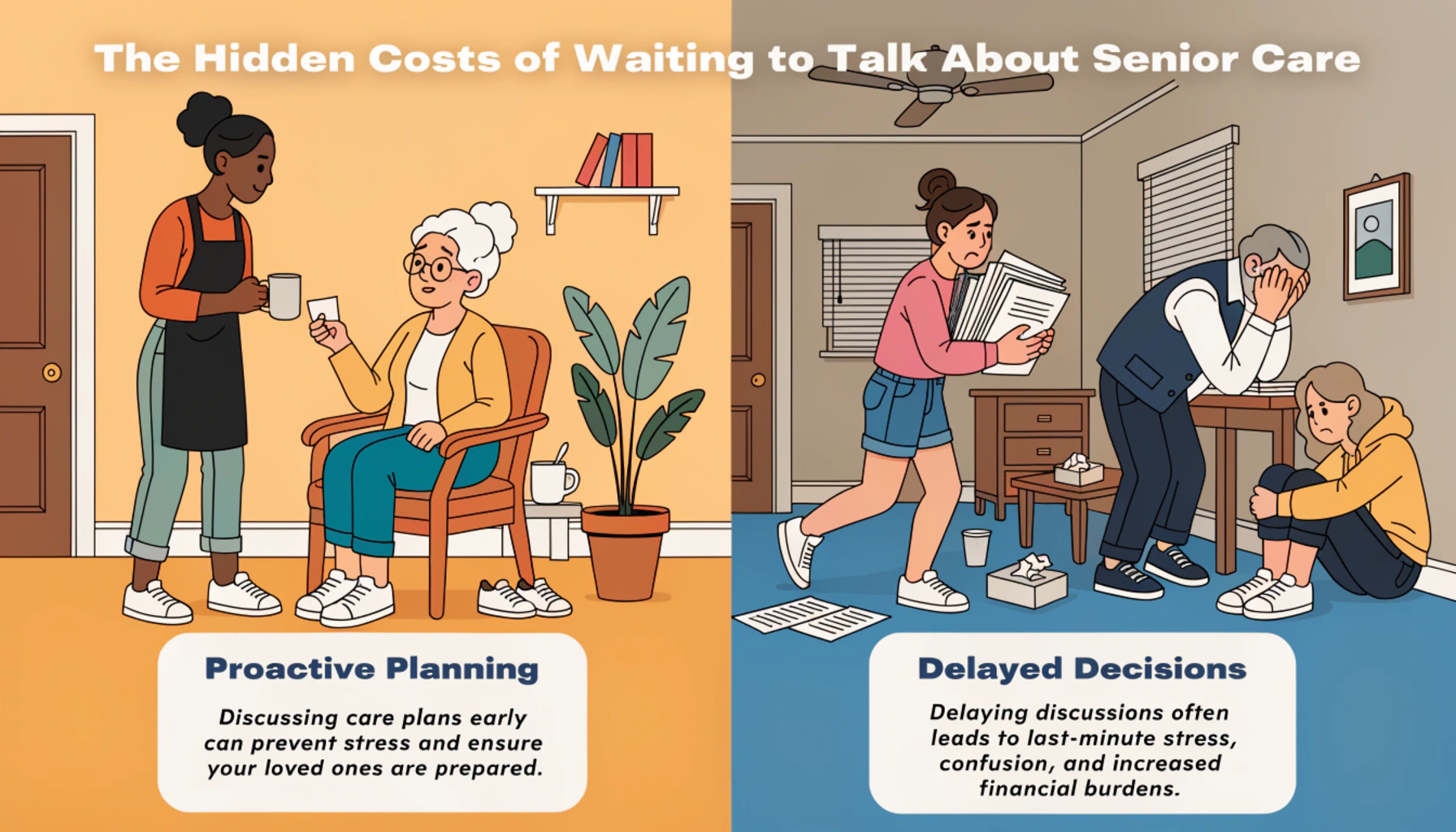
For many families, conversations around senior care and aging are often delayed or avoided altogether. It is an emotional topic that brings concerns about independence, finances, and changing family dynamics. Because of this discomfort, people tend to postpone planning, assuming there will always be more time later.
However, delaying these discussions can lead to serious consequences. The need for care often arises suddenly, leaving families unprepared and overwhelmed. Research shows that waiting to plan can turn what should be a thoughtful process into a high-pressure crisis, leading to higher costs, fewer options, and increased stress for everyone involved (A Place for Mom). Taking a proactive approach to senior care planning can prevent these avoidable challenges.
The Financial Impact of Delayed Senior Care Planning
One of the biggest hidden costs of avoiding senior care conversations is financial uncertainty. Many families underestimate the true cost of assisted living, home care, or long-term care services, which can quickly escalate when decisions are made under pressure. Without prior planning, these expenses often come as a shock.
Studies indicate that only a small percentage of people fully understand senior care costs, and many end up paying significantly more than expected. In fact, nearly one-third of families report that care costs exceeded their expectations, largely because they began planning during a crisis (Local News 8). This lack of preparation removes the ability to compare options or make cost-effective decisions.
Additionally, delaying planning can eliminate access to important financial tools such as long-term care insurance. These options are typically more affordable and accessible when individuals are still healthy. Waiting too long can result in higher premiums or complete ineligibility, forcing families to rely on savings or emergency funds.
Limited Choices and Compromised Care Decisions
Another major drawback of postponing senior care discussions is the loss of choice. Finding the right care solution requires time, research, and thoughtful evaluation. Whether it is assisted living, memory care, or in-home support, each option must be carefully considered to match the senior’s needs and preferences.
When a health crisis occurs, families are often forced to make immediate decisions. Research shows that many caregivers expect to have months to plan, but in reality, a majority need to arrange care within a short time frame, often within weeks (A Place for Mom). This urgency limits available options and leads to compromises in quality, location, or type of care.
Planning ahead allows families to explore multiple care environments, compare services, and make informed decisions. It ensures that the final choice is not just convenient, but truly aligned with the senior’s comfort and long-term well-being.
The Emotional Strain on Families and Caregivers
Beyond financial and logistical challenges, delaying senior care planning can take a significant emotional toll. In the absence of a clear plan, caregiving responsibilities often fall suddenly on family members, creating stress and uncertainty. What starts as occasional support can quickly become full-time care.
The pressure of making urgent decisions while coping with a loved one’s declining health can be overwhelming. It often leads to disagreements among family members and burnout for primary caregivers. Without prior conversations, families may struggle to agree on what is best, adding further emotional strain.
Early planning helps reduce this burden by creating clarity and alignment. When families openly discuss preferences and responsibilities in advance, it fosters understanding and minimizes conflict. This proactive approach protects both relationships and emotional well-being during difficult times.
How to Start Planning for Senior Care Early
Starting the conversation about senior care may feel uncomfortable, but it becomes easier when approached gradually. Instead of waiting for a crisis, families should introduce the topic in everyday discussions and frame it around future comfort and independence. This makes the conversation feel less intimidating and more constructive.
It is important to focus on the preferences and goals of the aging individual. Understanding where they would like to live and how they envision their future care helps guide better decisions. Planning should be a collaborative process, ensuring that seniors feel heard and respected.
For a deeper understanding of the real financial and emotional impact of delaying these conversations, you can refer to this detailed resource: The Cost of Waiting to Talk About Senior Care. It provides valuable insights into why early planning is essential and how families can avoid common pitfalls.
Conclusion
Avoiding conversations about senior care may feel easier in the short term, but it often leads to greater challenges later. The hidden costs—financial strain, limited choices, and emotional stress—can significantly impact both seniors and their families. Acting early transforms uncertainty into preparedness.
Proactive senior care planning allows families to make informed, thoughtful decisions rather than rushed ones. It ensures better care outcomes, protects financial stability, and strengthens family relationships. Most importantly, it provides peace of mind, knowing that the future is being handled with care and intention.