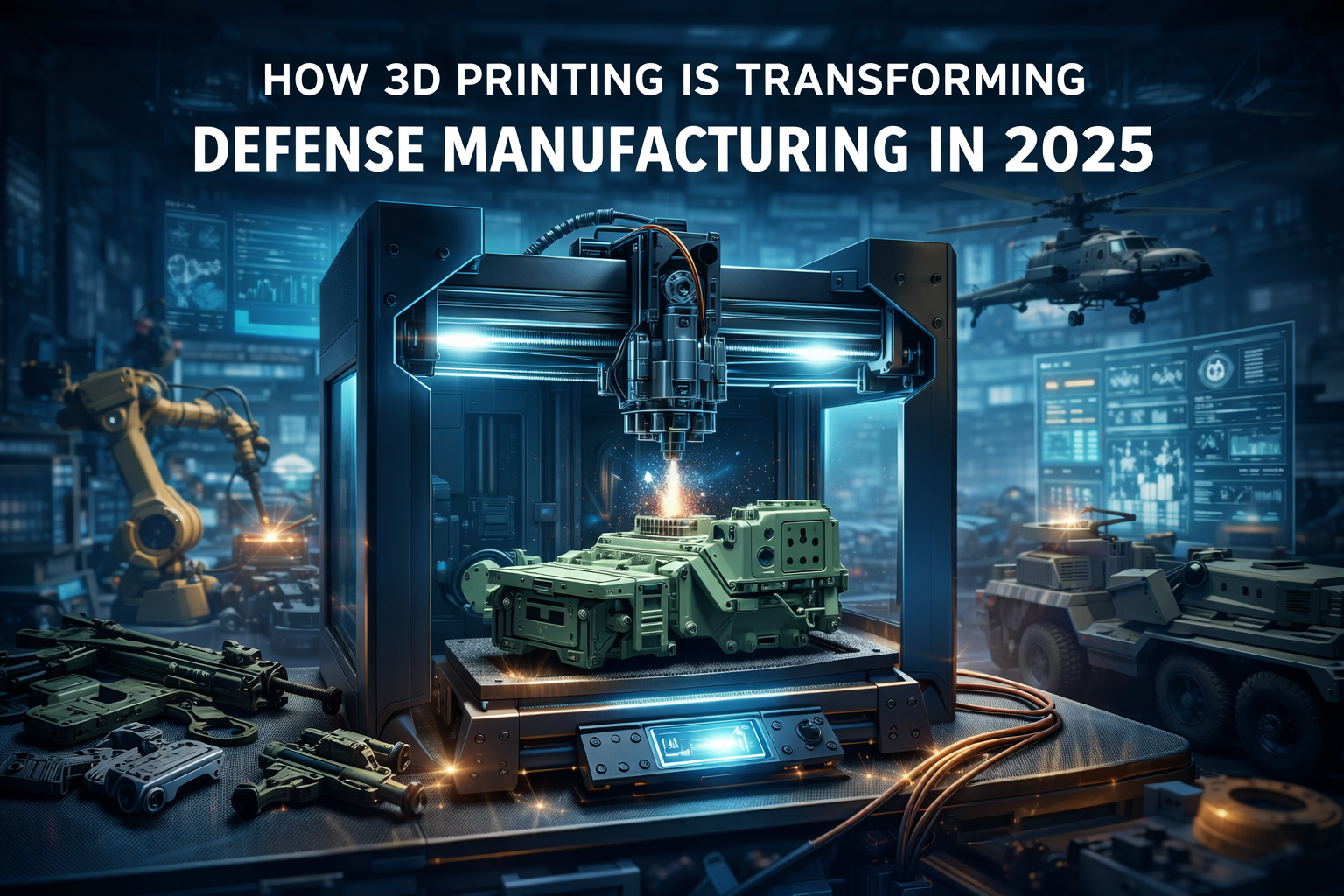
Manufacturing technology has long been a strategic resource in defense — but in 2025, additive manufacturing (also known as 3D printing) is no longer just an experimental tool. Defense leaders are increasingly moving from research and prototyping into full‑scale deployment of 3D printing capabilities that are reshaping how military equipment is designed, produced, and sustained.
This transition from “futuristic potential” to “mission‑critical reality” reflects broader investments in defense technology, shifts in supply chain strategies, and the growing demand for agility in complex global environments.
From Experimentation to Deployment
Over the past decade, additive manufacturing in defense moved from early experimentation to certified applications. Today, defense budgets are directing significant funding into programs that expand 3D printing capacity for production‑ready parts, field‑deployable systems, and rapid replacement components.
Where once armies and aerospace manufacturers talked about needing 3D printing, they now consider it essential for modernization and operational readiness. Organizations that once hesitated to adopt additive manufacturing are now scaling it within core manufacturing operations.
The scale up involves:
- Integrating 3D printing across multiple defense programs
- Increasing internal manufacturing capabilities
- Partnering with additive‑focused technology companies
- Testing large‑format and high‑performance printed parts for real applications
This shift reflects a strategic pivot: additive manufacturing is moving beyond prototyping into production of structural, performance‑critical components.
Why Defense Needs 3D Printing Now
Modern defense operations demand precision, speed, and flexibility — qualities that additive manufacturing delivers in unique ways:
1. Rapid Prototyping and Design Iteration
Traditional manufacturing often requires weeks or months to develop and test a prototype. With additive manufacturing, engineers can design, print, and test components in a matter of days. This accelerates innovation cycles, enabling faster development of new technologies and adaptive systems.
2. On‑Demand Parts Production
Supply chain reliability is critical for mission readiness. Defense organizations can print spare parts on‑site or near operations, reducing dependency on extended logistics networks and minimizing downtime due to unavailable components. This capability is especially valuable in remote or contested environments where resupply may be delayed.
3. Customization and Flexibility
Each mission can present unique equipment needs. Additive manufacturing allows for customization of parts — from custom drone components to tooling jigs — tailored to specific tasks without the high cost or lead time normally associated with bespoke manufacturing.
Applications Across Defense Operations
Additive manufacturing in defense spans multiple use cases, including:
- Spare parts for armored vehicles and aircraft: Traditional inventories require large stockpiles of replacement parts. 3D printing reduces this burden by enabling production on‑demand.
- Lightweight structural components: Complex geometries and optimized designs reduce weight while maintaining strength, enhancing performance for aircraft and drones.
- Field‑deployable solutions: Portable printing systems can be used in forward locations to support maintenance and repair operations, improving operational resilience.
- Customized tools and mission‑specific gear: From unique maintenance fixtures to mission‑specific components, additive manufacturing supports diverse equipment needs.
These applications demonstrate how additive manufacturing can decrease logistical strain and improve mission effectiveness across land, air, and sea environments.
Market Growth and Strategic Significance
The defense additive manufacturing market has experienced strong growth and shows continued expansion. Military and aerospace sectors are projected to invest heavily in additive technologies through the next decade, reflecting confidence in their strategic value.
Key market trends include:
- Increase in funding for additive manufacturing programs
- Rising adoption of 3D printing in aircraft, vehicles, and unmanned systems
- Expansion of applications from prototyping to certified production
- Growth in advanced materials and printing technologies that meet stringent defense requirements
This growth indicates that defense 3D printing is not a passing trend but a strategic evolution in how defense manufacturing operates.
Challenges on the Path to Full Adoption
While the advantages are clear, scaling 3D printing for defense use still requires overcoming several challenges:
- Certification and quality assurance: Parts used in defense applications must meet rigorous safety and performance standards. Establishing reliable certification processes is essential.
- Material development: Printing with advanced metals and composites suitable for high‑stress environments requires continued innovation in materials science.
- Workforce training: Effective adoption demands skilled operators and engineers who understand both the technology and its operational contexts.
By addressing these challenges, defense organizations can unlock the full potential of additive manufacturing with confidence.
The Future of Defense Manufacturing
The expansion of 3D printing from research labs to field deployment represents a broader shift toward agile defense manufacturing. This approach prioritizes speed, adaptability, and operational resilience — qualities that traditional production methods struggle to deliver.
Looking ahead, additive manufacturing will continue to:
- Enhance supply chain resilience
- Support rapid modernization of defense systems
- Enable new mission capabilities with lighter, stronger parts
- Reduce manufacturing costs through optimized production methods
These developments position 3D printing as a cornerstone of future defense manufacturing strategies, reinforcing preparedness and performance in an evolving global security environment.