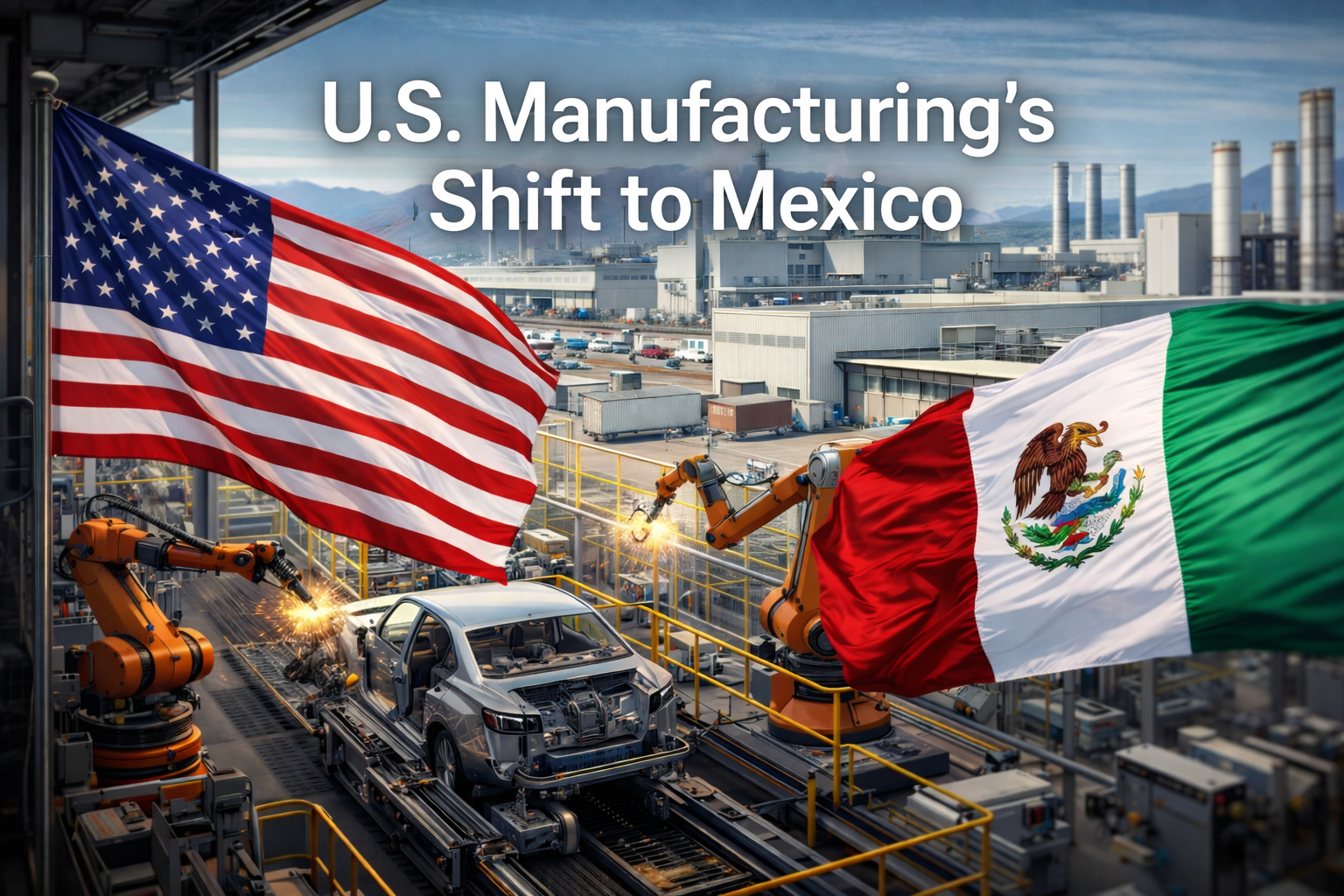
Over the past decade, a growing number of U.S. manufacturers have shifted parts of their production operations to Mexico. This move is not driven by a single factor, but by a strategic combination of geography, economics, workforce availability, and supply chain resilience.
As global manufacturing faces rising costs, geopolitical uncertainty, and pressure to shorten supply chains, Mexico has emerged as a critical partner in North American manufacturing.
Proximity That Strengthens Supply Chains
One of the strongest advantages Mexico offers is geographic proximity to the United States. Unlike offshore manufacturing in Asia, factories in Mexico allow companies to:
- Reduce shipping times from weeks to days
- Lower transportation costs
- Respond faster to demand changes
- Maintain closer operational oversight
This proximity enables manufacturers to build more agile and resilient supply chains, especially in industries where speed and reliability are critical.
Cost Efficiency Without Compromising Quality
Labor and operational costs in Mexico remain significantly lower than in the U.S., while manufacturing standards continue to improve. For many companies, this creates a balanced equation—cost savings without sacrificing quality or compliance.
In addition to labor, manufacturers benefit from:
- Competitive facility and land costs
- Lower utility and operational expenses
- Favorable industrial zones designed for manufacturing
These advantages allow organizations to reinvest savings into automation, digital transformation, and advanced manufacturing technologies.
Skilled Workforce and Manufacturing Experience
Mexico has a long-standing manufacturing base, particularly in automotive, electronics, aerospace, and industrial equipment sectors. The workforce is increasingly skilled in:
- Advanced manufacturing processes
- Automation and robotics
- Quality control and lean manufacturing practices
Technical education programs and partnerships with multinational companies have strengthened workforce readiness, making it easier for manufacturers to scale operations efficiently.
Trade Agreements and Market Access
Trade frameworks such as the United States–Mexico–Canada Agreement (USMCA) play a critical role in making Mexico an attractive manufacturing destination. These agreements provide:
- Reduced tariffs
- Streamlined customs processes
- Stronger intellectual property protections
For manufacturers serving North American markets, this creates a stable and predictable environment for long-term investment.
Infrastructure and Industrial Ecosystems
Mexico has invested heavily in industrial infrastructure, including:
- Modern manufacturing parks
- Logistics hubs near major border crossings
- Improved ports, highways, and rail networks
These ecosystems support end-to-end manufacturing operations, from raw materials to finished goods distribution, making Mexico a practical extension of U.S.-based production networks.
Nearshoring as a Strategic Shift
Recent global disruptions have accelerated nearshoring strategies, with manufacturers prioritizing supply chain visibility and control. Mexico fits this strategy by offering:
- Reduced dependency on distant overseas suppliers
- Easier coordination between facilities
- Improved risk management and continuity planning
Rather than replacing U.S. manufacturing, many companies use Mexico to complement domestic operations, creating an integrated North American production model.
Final Perspective
The rise of U.S. manufacturers operating factories in Mexico reflects a broader transformation in global manufacturing strategy. Cost, proximity, talent, and supply chain resilience are driving decisions—not just labor arbitrage.
For facilities leaders and manufacturing executives, Mexico represents a strategic extension of operational capability, supporting smarter, faster, and more resilient manufacturing across North America.