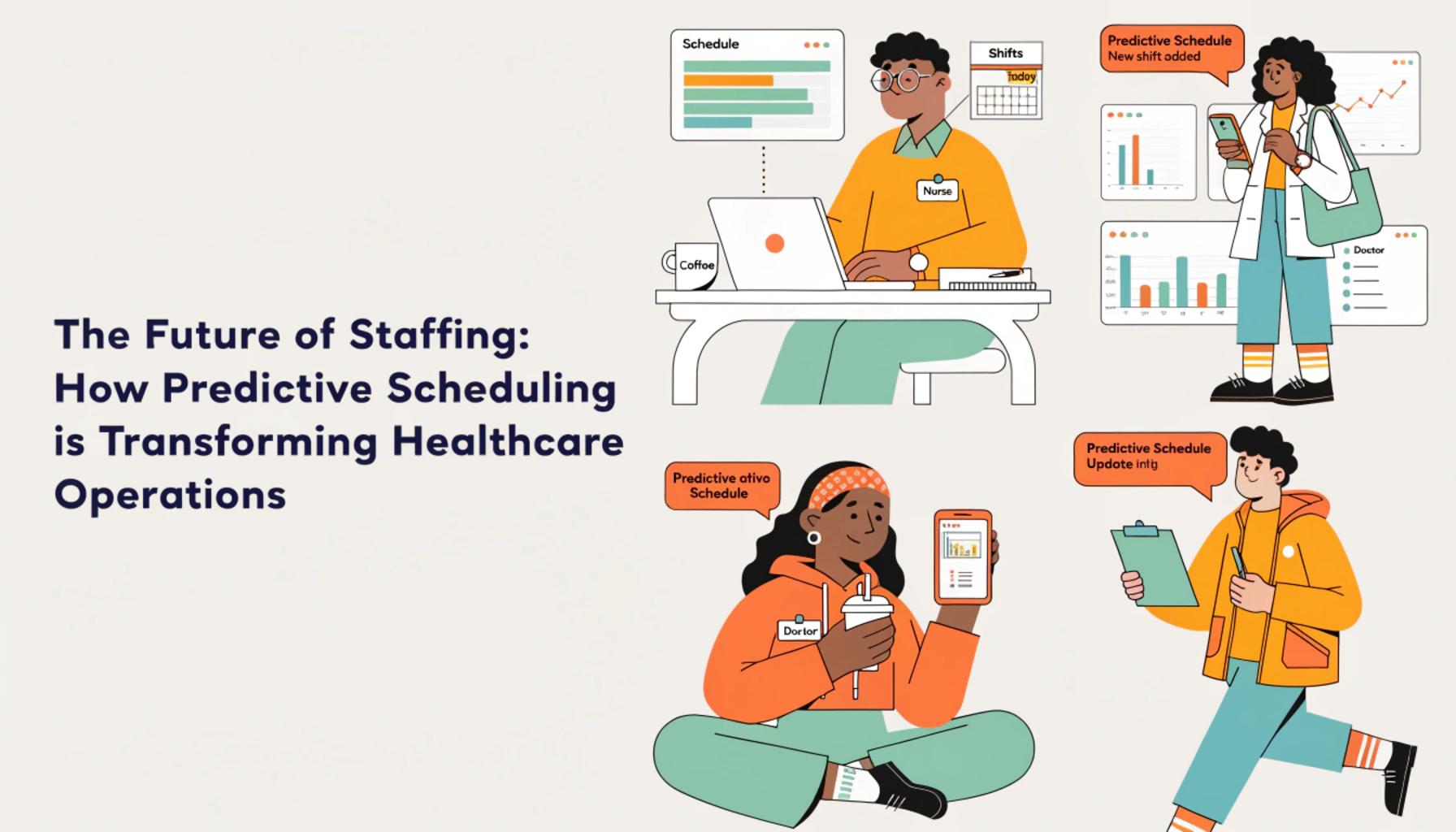
In today’s high-pressure healthcare environment, outdated staffing methods are quickly becoming a liability. Spreadsheets and manual scheduling simply can’t keep up with fluctuating patient demand, ongoing clinician shortages, and the growing complexity of care delivery.
A recent feature by HealthTech Magazine highlights how leading institutions like Duke University Health System are embracing predictive scheduling systems—and why this shift is no longer optional.
So, what makes predictive scheduling such a game-changer?
What is Predictive Scheduling?
Predictive scheduling leverages Artificial Intelligence (AI) and advanced analytics to anticipate patient volume and care needs before they arise. By analyzing historical data alongside real-time inputs, these systems enable hospitals to align staffing with actual demand—accurately and efficiently.
The result? A critical shift from reactive staffing (scrambling during peak times) to proactive workforce planning (being prepared before demand surges).
Why It Matters: 4 Key Benefits
1. Reducing Clinician Burnout
Unpredictable schedules, last-minute call-ins, and excessive overtime are major contributors to clinician fatigue. Predictive scheduling introduces stability and flexibility—helping healthcare professionals maintain better work-life balance while ensuring adequate coverage.
2. Aligning Staff with Patient Acuity
Not all busy days are equal. Ten high-acuity patients can demand more resources than twenty stable ones. Predictive systems analyze both patient complexity and volume, ensuring the right mix of skills is always available where it’s needed most.
3. Driving Financial Efficiency
Emergency staffing solutions—like agency nurses and overtime—can severely impact budgets. By forecasting needs in advance, organizations can better utilize internal resources, reduce dependency on costly alternatives, and optimize overall workforce spending.
4. Enhancing Patient Outcomes
Staffing levels directly influence patient care quality. With the right number of qualified professionals on hand, hospitals can reduce wait times, improve safety, and deliver more consistent care—even during peak periods.
The Real Enabler: Integrated Data
Predictive scheduling isn’t just about smarter software—it’s about connected systems.
For maximum impact, hospitals must integrate data from:
- Electronic Health Records (EHRs)
- Patient flow and admissions systems
- Workforce management platforms
When these systems “talk” to each other, predictive models gain a complete operational view—unlocking their true potential.
Addressing the Challenges
Technology alone isn’t enough. Successful implementation requires thoughtful human governance:
- Engage HR early: Compliance with labor laws and policies is essential
- Involve frontline staff: Adoption improves when clinicians are part of the design process
- Build trust: Transparency in how scheduling decisions are made is key
Without buy-in, even the best systems can fall short.
The Bottom Line
In 2026, healthcare operations have outgrown manual processes. The sheer volume and complexity of data demand a smarter, more adaptive approach.
Predictive scheduling is no longer a “nice-to-have”—it’s a strategic necessity.
Organizations that embrace it will not only improve operational efficiency but also create better working environments for staff and deliver higher-quality care for patients.
Ready to Make the Shift?
Is your organization ready to move beyond spreadsheets and into the future of workforce management?
Let’s help you build a smarter, data-driven staffing strategy that works—for your team and your patients.
👉 Contact us today to get started.