In today’s competitive industrial landscape, manufacturers generate massive amounts of data every second — from machine outputs and sensor readings to operator inputs and system logs. But raw data by itself has little value unless it’s transformed into clear insights that help teams make smarter, faster decisions.
That’s where manufacturing intelligence comes in: a systematic approach to collecting, processing, analyzing, and visualizing production data so manufacturers can optimize performance, reduce downtime, improve quality, and drive strategic growth.
What Is Manufacturing Intelligence?
Manufacturing intelligence (MI) refers to the technologies, systems, and processes that capture operational data across production environments, transform that data into meaningful information, and provide actionable insights to decision makers throughout an organization. This includes data from machines, sensors, operators, and control systems, which are then aggregated and analyzed in real time or near real time to improve visibility into operations.
In essence, MI shifts manufacturers from relying on intuition and delayed reports to timely, data-backed decisions that can dramatically improve outcomes.
Core Components of Manufacturing Intelligence
To understand manufacturing intelligence, it helps to break it into three fundamental building blocks:
1. Data Collection
This is the foundation of MI — gathering information from multiple sources such as sensors, machines, production lines, human inputs, and connected systems. High-fidelity data from everywhere on the shop floor is essential for accurate insights.
2. Data Processing and Analysis
Once collected, the raw data must be cleaned, organized, and analyzed. Advanced analytics techniques — including real-time processing and correlation with historical performance — help translate vast data streams into meaningful patterns. This turns mountains of numbers into actionable knowledge.
3. Visualization and Insight Delivery
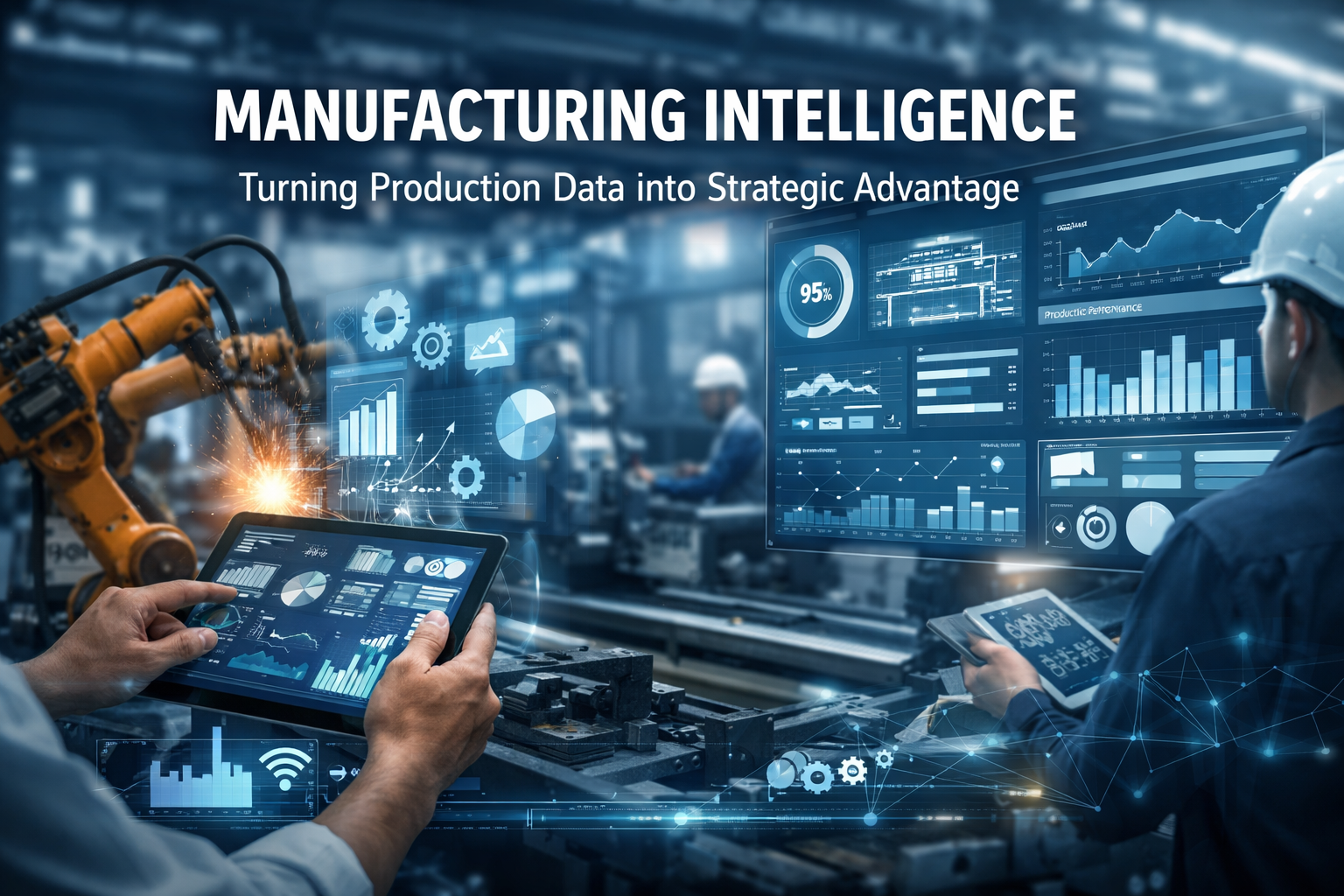
Insights are only useful if they can be understood and acted upon. Dashboards, visual reports, and intuitive analytics tools present complex information in clear formats that help teams identify issues, opportunities, and trends quickly.
Why Manufacturing Intelligence Matters
Modern manufacturing environments often operate with tight margins, complex processes, and increasing expectations for speed and quality. Manufacturing intelligence supports this new reality in powerful ways:
Real-Time Operational Visibility
MI systems give managers and operators a real-time view of production performance, allowing them to respond swiftly to bottlenecks and deviations.
Predictive Maintenance
By analyzing performance trends and equipment behavior, MI enables proactive maintenance planning — reducing unexpected breakdowns and costly downtime.
Quality Improvement
Detailed analytics can highlight subtle variations in product quality, enabling adjustments before defects escalate and minimizing waste.
Data-Driven Decision Making
Decisions informed by facts rather than guesswork lead to better scheduling, resource allocation, and manufacturing outcomes.
Manufacturing Intelligence and Industry 4.0
Manufacturing intelligence is not a standalone concept — it’s deeply tied to the broader framework of Industry 4.0. This refers to the modern digital transformation of factories, where automation, IoT (Internet of Things), cloud computing, and analytics converge to create smart, interconnected production environments.
By leveraging MI within the Industry 4.0 ecosystem, manufacturers can integrate data streams from machines, enterprise systems, supply chain platforms, and workflow tools — creating a comprehensive, dynamic view of the entire operation.
Practical Benefits at Every Level
From the shop floor to the executive suite, the impact of manufacturing intelligence can be felt across multiple dimensions:
Boosted Efficiency
Real-time insights help teams identify process inefficiencies and optimize throughput.
Reduced Downtime
Early warning signals help prevent unplanned stoppages before they occur.
Lower Costs
Data-informed adjustments reduce waste, rework, and energy consumption.
Improved Collaboration
Shared dashboards and insights break down silos between teams and align goals.
Challenges and How to Overcome Them
While the value of manufacturing intelligence is clear, many organizations face hurdles on the path to implementation:
Data Silos
When different systems cannot communicate, insights become fragmented. A unified data strategy is essential.
Cultural Shift
MI success depends on a data-driven culture where teams value and use insights regularly.
Integration Complexity
Connecting legacy equipment and modern analytic tools requires thoughtful planning and execution.
Overcoming these challenges involves setting clear goals, prioritizing quick successes, and providing training so teams can use MI tools confidently.
The Future of Manufacturing Intelligence
Manufacturing intelligence is transforming factories from reactive operations to optimized, proactive ecosystems. As technologies continue to evolve — including AI and machine learning — MI will become even more sophisticated, enabling automated recommendations, adaptive production flows, and real-time strategic guidance.
In a world where speed, quality, and efficiency define competitiveness, manufacturing intelligence is not just beneficial — it’s essential for growth and resilience.