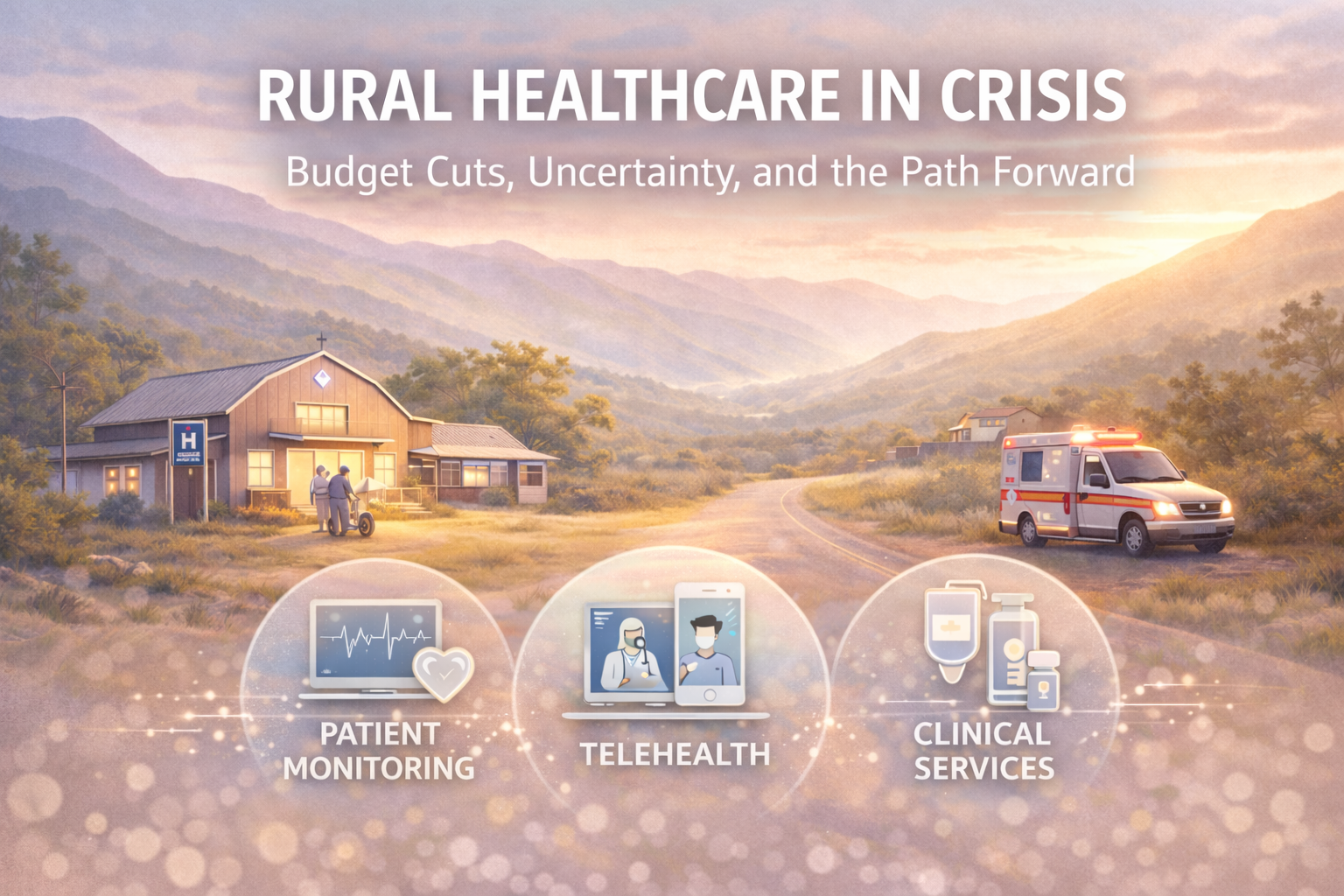
In 2025, rural healthcare is at a tipping point.
Across the country, small-town hospitals and health centers are battling shrinking budgets, rising operational costs, and limited workforce availability. These institutions have always served as the backbone of rural communities — providing essential care where no one else would — but today, they’re struggling to stay open.
And the stakes couldn’t be higher. When rural healthcare systems suffer, entire regions lose access to life-saving services.
Why Are Rural Hospitals Under Pressure?
The challenges facing rural healthcare aren’t new, but they’ve intensified over the past few years. Here’s what’s driving the crisis:
1. Budget Uncertainty
Many rural hospitals depend on government reimbursements. Any change in Medicaid or Medicare funding can immediately threaten their survival. With fluctuating policies and inconsistent funding streams, these facilities are operating without financial stability.
2. Rising Costs
Inflation is hitting healthcare hard. From medical supplies to electricity to salaries — everything costs more. But rural hospitals rarely have the patient volume or private funding sources to absorb these increases.
3. Workforce Shortages
It’s tough to attract and retain medical professionals in remote areas. As a result, many hospitals are short-staffed, forcing them to cut back on services or rely on expensive temporary workers.
The Impact on Patients and Communities
When a rural hospital reduces services or shuts down, the ripple effects are immediate and devastating:
- Patients have to travel long distances for basic care, emergency services, or prenatal checkups.
- Elderly and chronically ill individuals face delays in receiving time-sensitive treatments.
- Community trust erodes, especially when essential services like maternity wards or urgent care are removed.
Healthcare deserts are expanding — and they’re putting lives at risk.
Finding a Way Forward: Strategies That Show Promise
Despite the crisis, many rural healthcare leaders are working hard to adapt. Some of the most promising solutions include:
● Telehealth Expansion
Virtual care has proven to be a game changer in rural settings. It allows patients to consult with specialists, manage chronic conditions, and access mental health support — all without needing to travel. But expanding telehealth also requires broadband investment and digital literacy.
● Local Partnerships
Some rural hospitals are forming alliances with larger healthcare systems, nonprofit organizations, and community colleges. These partnerships can provide shared staffing, joint training programs, or access to centralized resources.
● Grant Funding & Targeted Investment
Targeted grants — for things like telemedicine infrastructure, staff development, and equipment upgrades — are helping some hospitals bridge the financial gap and keep essential services running.
● Smarter Resource Management
Hospitals are getting creative: automating back-office operations, reducing utility expenses, and using data to optimize staffing and inventory — all to make the most of every dollar.
Long-Term Solutions: What Needs to Change
While short-term adaptations are helping, long-term stability requires broader changes:
- Stable, predictable funding models that reflect the unique challenges of rural healthcare
- Incentives for medical professionals to serve in underserved areas
- Policies that support telehealth and infrastructure upgrades
- Community-driven strategies that center on local needs and cultural understanding
Final Thoughts
Rural healthcare shouldn’t be an afterthought — it’s a lifeline for millions of people.
The current crisis is a wake-up call. Without action, we risk losing critical access to care in vast parts of the country. But with innovation, smart partnerships, and the right policy support, rural health systems can not only survive — they can thrive.
It’s time to move from crisis mode to future planning — and make sure that no matter where someone lives, quality healthcare is never out of reach.