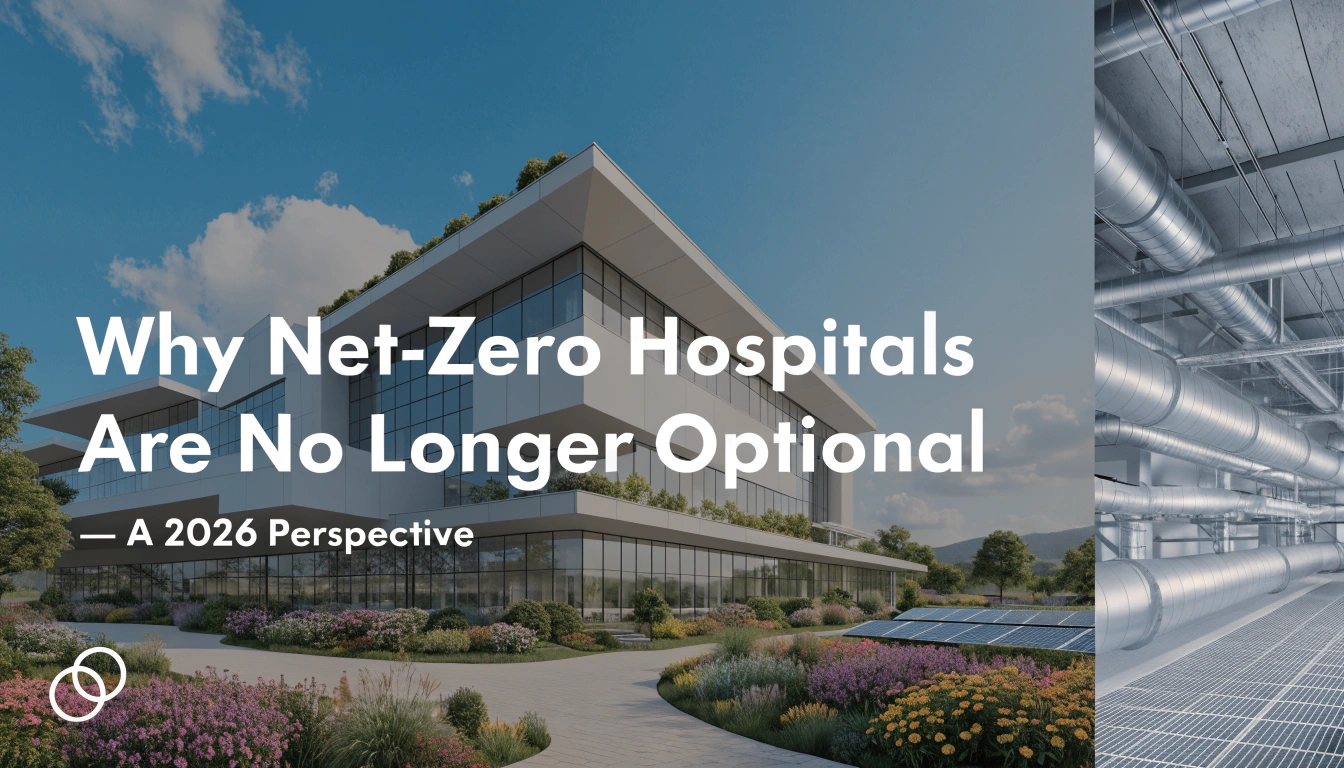
Healthcare exists to protect human health, yet hospitals are among the most energy-intensive buildings in the world. They operate 24/7, rely on complex medical equipment, maintain strict indoor environmental conditions, and consume vast amounts of electricity, water, and resources. As climate change continues to affect public health, healthcare providers are recognising that environmental responsibility is no longer separate from patient care.
In 2026, the conversation has shifted from whether hospitals should embrace sustainability to how quickly they can achieve it. Governments are introducing stricter environmental regulations, investors are prioritising Environmental, Social, and Governance (ESG) performance, and patients increasingly expect healthcare organisations to demonstrate responsible practices.
This is why the concept of the net-zero hospital 2026 has become a strategic priority rather than an aspirational goal. Hospitals that reduce carbon emissions, improve energy efficiency, and adopt sustainable infrastructure are not only protecting the environment but also improving operational resilience, reducing long-term costs, and creating healthier spaces for patients and staff.
This article explores why net-zero hospitals are becoming essential, the technologies driving the transition, the challenges healthcare organisations face, and the practical steps leaders can take towards long-term hospital sustainability.
Understanding the Net-Zero Hospital Concept
A net-zero hospital is a healthcare facility that balances the amount of greenhouse gas emissions it produces with the amount it removes or offsets. The ultimate objective is to minimise carbon emissions across all operations while maintaining the highest standards of patient care.
A net-zero hospital 2026 strategy typically focuses on:
- Reducing energy consumption
- Using renewable energy sources
- Improving building efficiency
- Minimising waste generation
- Conserving water
- Lowering transportation emissions
- Procuring sustainable materials
- Reducing emissions throughout the supply chain
Rather than relying solely on carbon offsets, successful hospitals prioritise reducing emissions at the source through smarter design and operational improvements.
Why Net-Zero Hospitals Have Become a Necessity
Climate Change Is a Public Health Issue
Extreme weather events, rising temperatures, poor air quality, and changing disease patterns directly affect healthcare demand. Hospitals increasingly treat illnesses linked to environmental conditions, making sustainability an extension of preventive healthcare.
Healthcare organisations have a responsibility not only to treat patients but also to reduce their contribution to climate-related health risks.
Hospitals Are Major Energy Consumers
Hospitals consume significantly more energy than commercial office buildings due to continuous operations and specialised equipment.
High energy demands come from:
- Operating theatres
- Intensive Care Units
- Diagnostic imaging
- Laboratories
- Sterilisation systems
- Heating, ventilation, and air conditioning (HVAC)
- Medical refrigeration
- Data centres
Improving energy efficiency can substantially reduce both carbon emissions and operating costs.
Rising Operational Costs
Energy prices continue to fluctuate globally, placing pressure on hospital budgets. Sustainable infrastructure helps reduce dependence on volatile energy markets through:
- Solar power
- Energy-efficient HVAC systems
- Smart lighting
- Building automation
- Energy storage technologies
These investments deliver long-term financial savings while supporting environmental goals.
Increasing Regulatory Expectations
Governments worldwide are introducing stricter environmental reporting and carbon reduction requirements for large organisations, including healthcare providers.
Hospitals that begin their sustainability journey early will be better prepared to meet future regulations without costly last-minute upgrades.
The Business Case for Hospital Sustainability
Sustainability is often viewed purely as an environmental initiative, but its business benefits are equally compelling.
Lower Operating Costs
Energy-efficient buildings consume less electricity, gas, and water.
Examples include:
- LED lighting
- Variable-speed HVAC systems
- Smart energy management
- Occupancy sensors
- Efficient insulation
Lower utility bills create savings that can be redirected towards patient care and medical technology.
Improved Facility Resilience
Hospitals must remain operational during emergencies.
Renewable energy systems combined with battery storage improve resilience during:
- Grid failures
- Natural disasters
- Extreme weather events
Microgrids and distributed energy resources ensure uninterrupted critical services.
Better Indoor Environments
Sustainable buildings often deliver:
- Improved indoor air quality
- Better ventilation
- Enhanced thermal comfort
- Increased natural lighting
These factors contribute to improved patient recovery, staff wellbeing, and infection prevention.
Enhanced Reputation
Patients, employees, investors, and regulators increasingly value environmentally responsible organisations.
Hospitals demonstrating leadership in hospital sustainability strengthen public trust and attract partnerships, funding, and skilled professionals.
Key Components of a Net-Zero Hospital in 2026
Energy-Efficient Building Design
Modern hospitals reduce energy demand through:
- High-performance insulation
- Efficient glazing
- Passive solar design
- Smart shading
- Optimised building orientation
New hospital projects increasingly integrate sustainability from the earliest planning stages.
Renewable Energy Integration
Renewable energy plays a central role in achieving net-zero targets.
Common solutions include:
- Rooftop solar panels
- Solar car parks
- Wind energy (where feasible)
- Battery storage systems
- Renewable electricity procurement
Hospitals often combine multiple energy sources to improve reliability.
Smart Building Management Systems
Digital platforms continuously monitor building performance.
These systems optimise:
- HVAC operation
- Lighting schedules
- Water usage
- Equipment efficiency
- Occupancy patterns
Artificial intelligence further improves energy optimisation by predicting demand and adjusting systems automatically.
Water Conservation
Water is another critical resource in healthcare facilities.
Sustainability strategies include:
- Low-flow fixtures
- Rainwater harvesting
- Greywater recycling
- Smart irrigation
- Leak detection sensors
Reducing water consumption supports both environmental and financial objectives.
Sustainable Medical Waste Management
Healthcare generates significant waste, including hazardous materials.
Hospitals can reduce environmental impact through:
- Improved waste segregation
- Recycling programmes
- Reusable medical products where appropriate
- Sustainable procurement
- Circular economy initiatives
Proper waste management also reduces disposal costs.
Digital Technologies Supporting Net-Zero Hospitals
Technology is accelerating sustainability efforts across healthcare.
Internet of Things (IoT)
Connected sensors monitor:
- Energy usage
- Temperature
- Occupancy
- Equipment performance
- Indoor air quality
Real-time monitoring enables immediate corrective actions.
Artificial Intelligence
AI analyses operational data to identify opportunities for:
- Energy optimisation
- Predictive maintenance
- Space utilisation
- Resource allocation
Machine learning continuously improves building efficiency over time.
Digital Twins
Digital twins create virtual models of hospital facilities.
These models simulate:
- Energy performance
- Infrastructure upgrades
- Maintenance planning
- Operational scenarios
This reduces risk before implementing physical changes.
Predictive Maintenance
Connected equipment detects performance issues before failures occur.
Benefits include:
- Reduced downtime
- Lower repair costs
- Longer equipment lifespan
- Improved energy efficiency
Challenges Hospitals Must Overcome
Despite the clear benefits, achieving a net-zero hospital 2026 presents several challenges.
High Initial Investment
Sustainable technologies often require significant capital expenditure.
However, lifecycle cost analysis usually demonstrates strong long-term returns through reduced operating expenses.
Ageing Infrastructure
Many hospitals operate in older buildings that were never designed for modern sustainability standards.
Retrofitting existing facilities requires careful planning and phased implementation.
Balancing Clinical Priorities
Patient safety remains the highest priority.
Sustainability projects must avoid disrupting essential healthcare services during implementation.
Supply Chain Emissions
A substantial portion of hospital emissions originates outside the building itself through purchased goods and services.
Healthcare organisations increasingly collaborate with suppliers committed to sustainable manufacturing and logistics.
Practical Roadmap to Achieve Net-Zero
Hospitals should adopt a structured approach.
Step 1: Measure Current Carbon Emissions
Understand baseline emissions from:
- Buildings
- Energy
- Transport
- Procurement
- Waste
Measurement enables realistic target setting.
Step 2: Establish Sustainability Goals
Set measurable objectives, including:
- Carbon reduction
- Renewable energy adoption
- Water savings
- Waste diversion
- Energy efficiency
Progress should be reviewed regularly.
Step 3: Prioritise High-Impact Projects
Focus first on initiatives with the greatest return.
Examples include:
- HVAC upgrades
- LED lighting
- Building automation
- Solar installations
- Water conservation
Step 4: Engage Staff
Employees play a critical role.
Training programmes should encourage:
- Energy-conscious behaviour
- Waste reduction
- Sustainable procurement
- Efficient equipment usage
Staff engagement creates lasting cultural change.
Step 5: Monitor Performance
Use dashboards and sustainability reporting tools to monitor:
- Energy consumption
- Carbon emissions
- Water usage
- Waste generation
- Renewable energy production
Continuous monitoring supports ongoing improvement.
The Future of Hospital Sustainability
The next generation of healthcare facilities will integrate sustainability into every aspect of design and operation.
Future developments include:
- AI-powered autonomous energy management
- Carbon-neutral construction materials
- Green roofs and biodiversity initiatives
- Hydrogen-ready energy systems
- Electrified ambulance fleets
- Smart microgrids
- Circular procurement models
- Carbon-aware supply chain management
These innovations will make hospitals more resilient, efficient, and environmentally responsible.
Why Healthcare Leaders Must Act Now
Delaying sustainability initiatives carries increasing risks.
Hospitals that postpone action may face:
- Higher energy costs
- Stricter regulatory compliance requirements
- Greater retrofit expenses
- Reduced competitiveness
- Increased operational vulnerabilities
Conversely, organisations that invest today will benefit from lower operating costs, stronger resilience, enhanced reputation, and improved patient environments.
The transition to a net-zero hospital 2026 is no longer just about environmental stewardship—it is about ensuring healthcare systems remain financially sustainable, operationally resilient, and prepared for the future.
Conclusion
The healthcare sector stands at a defining moment. As climate change continues to influence public health and healthcare delivery, hospitals must look beyond traditional operational priorities and embrace sustainability as a core strategic objective. Achieving a net-zero hospital 2026 is no longer an optional aspiration, it is an essential step towards building resilient, efficient, and future-ready healthcare systems.
From energy-efficient infrastructure and renewable power to AI-driven building management and responsible waste practices, every sustainability initiative contributes to lower emissions, reduced operating costs, and better patient outcomes. While challenges such as ageing infrastructure and upfront investment remain, the long-term benefits far outweigh the initial effort.
Ultimately, hospital sustainability is about more than reducing a carbon footprint. It is about creating healthcare environments that protect both people and the planet, ensuring that hospitals can continue delivering exceptional care while meeting the environmental and economic challenges of the future.
Nominate for Healthcare Facilities Awards
Is your organisation leading the way in sustainable healthcare infrastructure, green hospital design, or innovative environmental initiatives?
Nominate for the Healthcare Facilities Awards and showcase your achievements alongside industry leaders at the Smart Healthcare Facilities Convention 2026.
Nomination Link: https://bmaconventions.com/smart-healthcare-facilities-convention-2026-sep/
Celebrate innovation, inspire the healthcare community, and gain recognition for your contribution to building a more sustainable future for healthcare.