Introduction
Modern hospitals are no longer protected by physical security alone. Every connected medical device, building automation system, electronic health record (EHR), surveillance camera, HVAC controller, and Internet of Things (IoT) sensor creates another potential entry point for cybercriminals. While IT departments often take the lead in cybersecurity initiatives, hospital facility managers have become equally important in protecting healthcare infrastructure.
Facility managers oversee critical systems that directly impact patient care, including energy management, access control, medical gas monitoring, elevators, nurse call systems, and smart building technologies. If these systems are compromised, the consequences extend far beyond financial losses; they can disrupt patient treatment, delay surgeries, expose confidential medical records, and even threaten lives.
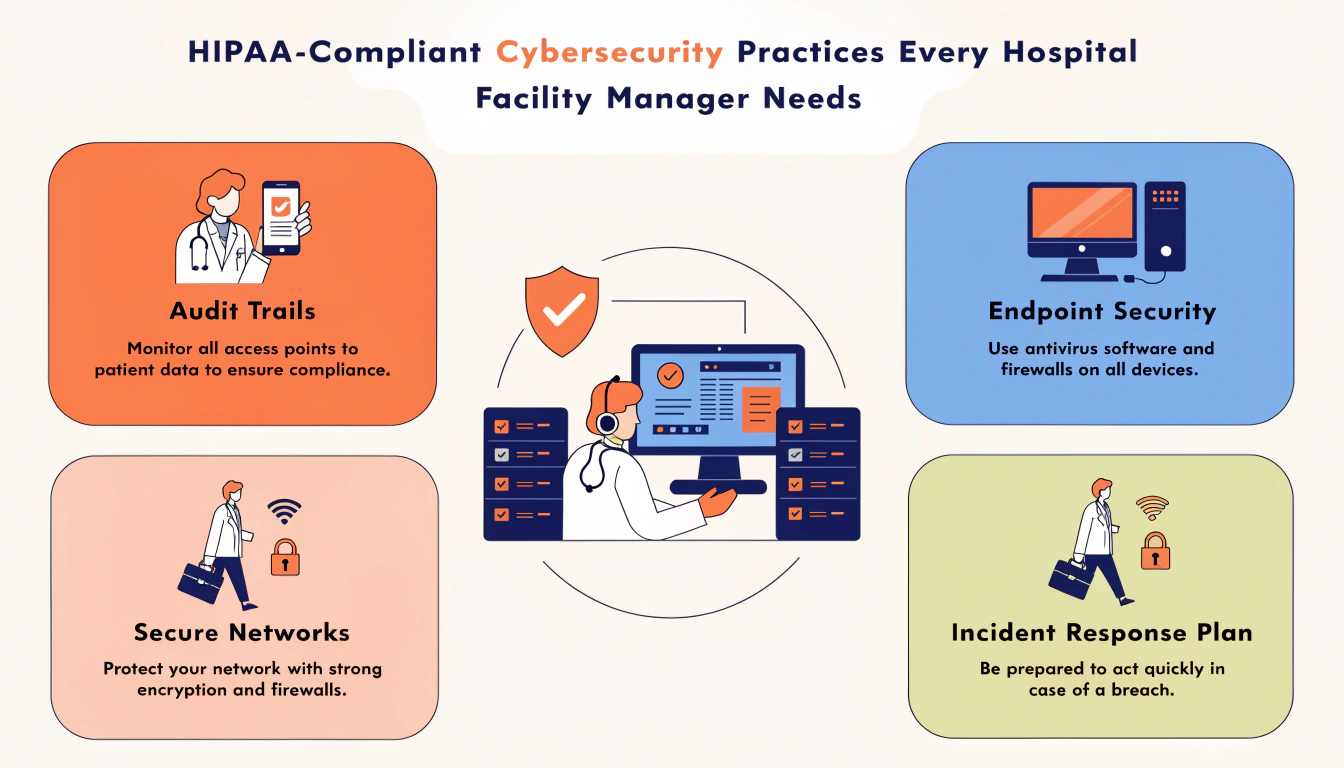
This is why hospital cybersecurity HIPAA compliance has become a strategic responsibility for healthcare facility leaders. The Health Insurance Portability and Accountability Act (HIPAA) requires healthcare organisations to implement administrative, physical, and technical safeguards that protect sensitive patient information. Although cybersecurity is often associated with IT teams, facility managers play a crucial role in ensuring these safeguards extend throughout the hospital environment.
This guide explores eight essential cybersecurity practices every hospital facility manager should implement to strengthen healthcare data protection, reduce cyber risks, and maintain HIPAA compliance.
Why Facility Managers Are Critical to Hospital Cybersecurity
Hospital infrastructure has changed dramatically over the past decade. Traditional buildings have evolved into intelligent healthcare facilities where operational technology (OT) and information technology (IT) work together.
Smart hospitals now rely on:
- Connected HVAC systems
- Automated lighting controls
- Building management systems (BMS)
- Smart access control
- IoT-enabled medical equipment
- Remote monitoring platforms
- Digital maintenance software
Every connected system exchanges data across hospital networks. If one vulnerable device is exploited, attackers may gain access to larger hospital systems.
Facility managers oversee many of these connected assets. Their decisions regarding equipment procurement, maintenance schedules, contractor access, and building upgrades directly influence the hospital’s cybersecurity posture.
Rather than viewing cybersecurity as solely an IT responsibility, leading healthcare organisations now treat it as a shared operational function involving engineering, facilities, compliance, biomedical engineering, and executive leadership.
1. Secure Every Connected Building System
Hospital buildings contain hundreds or even thousands of internet-connected devices.
Examples include:
- HVAC controllers
- Chiller monitoring systems
- Building automation software
- Smart elevators
- CCTV systems
- Fire alarms
- Access control readers
- Environmental monitoring sensors
Many of these systems were originally designed for operational efficiency rather than cybersecurity. Some continue to operate with outdated firmware or default passwords, making them attractive targets.
Facility managers should work with cybersecurity teams to:
- Replace default administrator credentials
- Enable multi-factor authentication wherever possible
- Regularly update firmware
- Remove unused user accounts
- Disable unnecessary remote access
Securing operational technology is one of the most effective ways to strengthen hospital cybersecurity and HIPAA compliance.
2. Control Physical Access to Sensitive Areas
HIPAA is not only about digital security.
Physical security remains one of its core requirements.
Hospital facility managers are responsible for protecting locations where confidential information may be stored or processed, including:
- Data centres
- Network closets
- Biomedical equipment rooms
- Medical record storage
- Pharmacy automation systems
- Security control rooms
Access should be granted strictly according to job responsibilities.
Modern hospitals increasingly implement:
- Smart ID card access
- Biometric authentication
- Visitor management systems
- Electronic access logs
- CCTV monitoring
Regular audits should verify that only authorised personnel retain access to restricted areas.
Lost access cards, contractor badges, and inactive employee credentials should be immediately deactivated.
3. Strengthen Vendor and Third-Party Security
Healthcare facilities rely on dozens of external vendors.
These may include:
- Medical equipment suppliers
- HVAC contractors
- Elevator maintenance teams
- Building automation providers
- Security system installers
- Software vendors
- Cloud service providers
Many vendors require remote access for diagnostics and maintenance.
Without proper controls, third-party access becomes one of the biggest cybersecurity risks facing hospitals.
Facility managers should establish clear vendor security policies that require the following:
- Secure VPN access
- Time-limited login credentials
- Multi-factor authentication
- Activity logging
- Immediate account deactivation after project completion
Cybersecurity should become a mandatory evaluation criterion during procurement, not an afterthought after installation.
4. Conduct Regular Risk Assessments
HIPAA requires organisations to identify and manage potential risks affecting protected health information.
Facility managers should participate actively in cybersecurity risk assessments instead of leaving them entirely to IT teams.
A comprehensive assessment should evaluate:
- Building management systems
- Connected medical devices
- Backup power systems
- Wireless networks
- Physical security controls
- Maintenance software
- Cloud-connected facility platforms
Each identified vulnerability should receive a documented mitigation plan.
Regular assessments also help hospitals prepare for accreditation reviews, insurance evaluations, and regulatory inspections.
As technology continues evolving, annual reviews are no longer sufficient. Many leading healthcare organisations now conduct cybersecurity assessments several times each year.
5. Train Facility Teams on Cybersecurity Awareness
Technology alone cannot prevent cyberattacks.
Human error continues to cause many healthcare data breaches.
Facility staff frequently interact with digital systems, including maintenance applications, work order software, access control platforms, and vendor portals.
Without proper awareness training, employees may unknowingly
- Avoid clicking phishing emails
- Share passwords
- Connect unauthorised USB devices
- Ignore suspicious system behaviour
- Download malicious software
Cybersecurity awareness should become part of every facility employee’s routine training.
Topics should include recognising phishing attempts, password security, reporting unusual activity, safe remote access, and protecting mobile devices used during maintenance operations.
Creating a cybersecurity-conscious culture significantly improves healthcare data protection across the entire organisation.
6. Develop Strong Backup and Disaster Recovery Plans
Hospitals cannot afford prolonged downtime.
Cyberattacks such as ransomware can disable facility systems, patient scheduling, communications, and even life-support infrastructure.
Facility managers should collaborate with IT departments to ensure critical systems can recover quickly.
Recovery planning should cover:
- Building automation data
- Access control databases
- CCTV recordings
- Maintenance records
- Asset management software
- Environmental monitoring systems
Backups should be:
- Encrypted
- Tested regularly
- Stored securely
- Kept offline where appropriate
Disaster recovery exercises should simulate realistic cyber incidents to verify that systems can be restored within acceptable recovery times.
A recovery plan that exists only on paper offers little value during an actual attack.
7. Continuously Monitor Hospital Infrastructure
Cybersecurity is not a one-time project.
Continuous monitoring allows hospitals to detect suspicious behaviour before significant damage occurs.
Facility managers should support technologies capable of monitoring the following:
- Network traffic
- Building automation activity
- Device health
- Remote connections
- Access control events
- Environmental system anomalies
Unexpected behaviour, such as unusual login times, unknown devices joining networks, or abnormal HVAC commands, may indicate a cyber intrusion.
Real-time monitoring allows hospitals to isolate compromised systems before attacks spread across clinical operations.
The integration of facility monitoring with security operations centres (SOCs) is becoming a best practice in smart healthcare environments.
8. Build a Cross-Department Cybersecurity Strategy
Cybersecurity cannot succeed when departments operate independently.
Hospital facility managers should collaborate closely with:
- IT departments
- Biomedical engineering
- Compliance officers
- Risk management teams
- Executive leadership
- Clinical engineering
- Procurement teams
Joint planning ensures cybersecurity is incorporated into:
- New construction projects
- Facility renovations
- Medical equipment purchases
- Digital transformation initiatives
- Smart building upgrades
Regular cross-functional meetings help identify emerging risks before they become operational problems.
A collaborative governance model also ensures HIPAA requirements remain integrated into every infrastructure decision.
Comment on the following: HIPAA Cybersecurity Mistakes Hospitals Should Avoid
Even hospitals with advanced security programmes sometimes overlook basic operational practices.
One common mistake is assuming older building systems are isolated from cyber threats. In reality, many legacy systems are connected to broader hospital networks without adequate security controls.
Another issue is delaying software updates because maintenance windows are difficult to schedule. While operational continuity is important, unpatched systems remain vulnerable to known attacks.
Hospitals also frequently underestimate insider threats. Former employees, contractors with expired credentials, or excessive user permissions can create unnecessary security risks.
Poor documentation presents another challenge. During HIPAA audits, organisations must demonstrate not only that security controls exist but also that policies, risk assessments, employee training, and incident response procedures are properly documented.
Facility managers who address these operational gaps significantly improve long-term compliance and resilience.
The Future of Hospital Cybersecurity
Healthcare cybersecurity is evolving rapidly alongside digital healthcare innovation.
Artificial intelligence is helping hospitals detect anomalies faster, while predictive analytics identify vulnerabilities before attackers exploit them. Zero Trust architecture is becoming increasingly common, requiring continuous verification of every device and user accessing hospital networks.
Medical IoT devices will continue to expand, making secure device management even more critical. Hospitals are also adopting digital twins, cloud-based facility management platforms, and autonomous building systems, all of which introduce new cybersecurity considerations.
Facility managers who embrace cybersecurity as part of infrastructure management will be better prepared to support safe, resilient, and compliant healthcare environments.
Conclusion
Cybersecurity is no longer confined to the IT department. Every connected building system, maintenance workflow, and operational technology platform contributes to a hospital’s overall security posture.
Implementing these eight best practices helps facility managers strengthen hospital cybersecurity and HIPAA compliance while improving healthcare data protection across the organisation. From securing building automation systems and controlling physical access to improving employee awareness and disaster recovery planning, every measure reduces risk and supports uninterrupted patient care.
As hospitals continue investing in smart infrastructure and digital transformation, facility managers will remain at the forefront of creating secure, resilient healthcare environments capable of protecting both patients and critical data.
Register as a Delegate
Cybersecurity, smart healthcare infrastructure, digital transformation, sustainability, and facility innovation are shaping the future of healthcare operations. Learn from industry experts, discover emerging technologies, and connect with leaders driving change across healthcare facilities.
Register as a delegate: https://bmaconventions.com/smart-healthcare-facilities-convention-2026-sep/