As generative AI continues to reshape industries, healthcare is quickly realizing the value of platforms like Google’s Gemini—an enterprise-grade multimodal AI model built to handle everything from medical documentation to operational optimization.
In 2025, early adopters of Gemini in healthcare are seeing productivity gains, enhanced decision-making, and improved patient experience. However, deploying a model like Gemini within a highly regulated and complex environment requires a thoughtful strategy.
This guide outlines key considerations for healthcare organizations getting started with Gemini, based on industry insights and Google’s enterprise support roadmap.
What Is Google Gemini?
Google Gemini is a suite of generative AI models developed by Google DeepMind and integrated into Google Cloud services. It supports:
- Natural language processing
- Image recognition
- Code generation
- Data summarization
- Secure enterprise integration
In healthcare, Gemini can assist with:
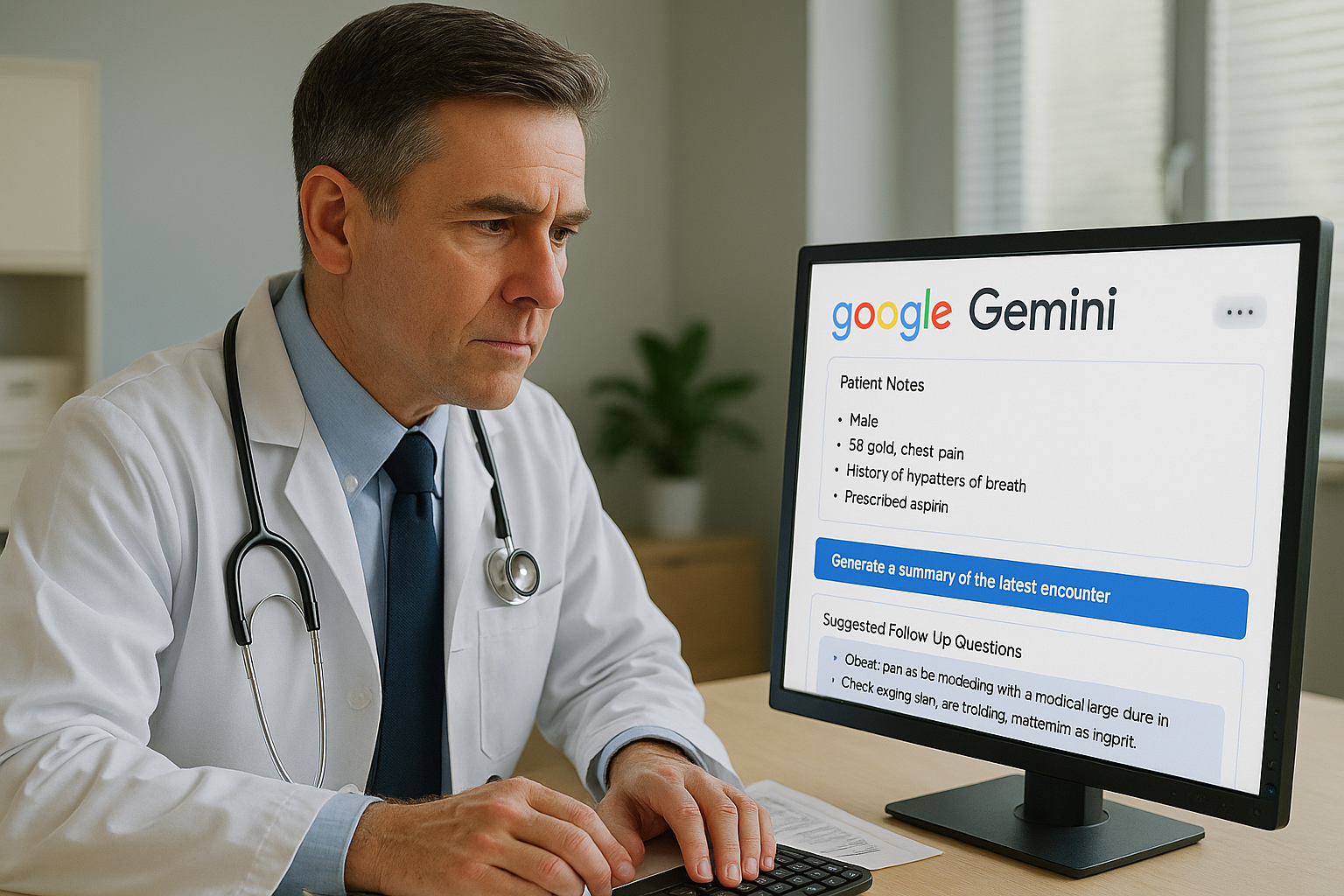
- Drafting patient notes and summaries
- Automating prior authorization workflows
- Answering staff queries based on internal documents
- Enhancing clinical decision support
- Translating patient instructions and documents
The platform is accessible through Google Cloud AI Studio and integrates with Vertex AI, offering customization and control over deployments.
Why Gemini Matters for Healthcare in 2025
Healthcare systems are dealing with increased administrative complexity, documentation burdens, and staffing shortages. Gemini can alleviate these challenges by:
- Reducing manual data entry
- Speeding up patient communications
- Supporting multilingual environments
- Providing quick access to internal documentation or protocols
- Assisting with coding and analytics across clinical and business systems
Additionally, Gemini was built with privacy and enterprise-grade security, which is essential for HIPAA-compliant environments.
Key Tips for Getting Started with Gemini in Healthcare
1. Start with the Right Use Case
Before full deployment, identify use cases that are:
- Low risk but high value
- Aligned with business or clinical objectives
- Capable of being evaluated and monitored easily
Examples include:
- Internal document search
- Clinical summarization for physician hand-offs
- AI-assisted help desk response
- Automating FAQs in patient portals
2. Build a Cross-Functional AI Governance Team
Effective implementation requires collaboration between:
- Clinical leadership
- IT and cybersecurity teams
- Legal/compliance officers
- Operations and data teams
This governance team ensures safe experimentation, model validation, and ethical AI usage within the health system.
3. Establish Guardrails and Prompting Guidelines
Gemini’s output must be predictable and safe. Healthcare organizations should:
- Use system prompts and tuning to define the model’s tone and purpose
- Restrict access to sensitive data fields
- Monitor and log outputs for auditing
- Create fallback or escalation paths when AI output is unclear
These practices mitigate risk while maintaining performance.
4. Leverage Google’s Prebuilt APIs and Fine-Tuning Tools
Gemini supports:
- Fine-tuning for organization-specific vocabulary
- Embedding models to tailor the AI’s search behavior
- Integration with Google Workspace, making tools like Gmail, Docs, and Meet more intelligent for healthcare use
This flexibility allows IT teams to extend Gemini without starting from scratch.
5. Focus on Privacy, Compliance, and Transparency
Ensure that all Gemini use cases:
- Meet HIPAA and local data privacy laws
- Use de-identified data wherever possible
- Include clear documentation of what the AI can and cannot do
- Provide a human-in-the-loop for critical clinical decisions
Healthcare providers must be transparent with staff and patients about how AI is used in workflows.
Common Gemini Healthcare Use Cases in 2025
| Use Case | Description |
|---|---|
| Clinical summarization | Generate handoff-ready summaries from EHR data |
| Provider Q&A | AI assistant trained on clinical protocols |
| Operations support | Helpdesk ticket automation, internal HR chatbots |
| Patient messaging | Translate instructions or simplify medical language |
| Analytics enhancement | Query internal data with natural language prompts |
Final Thoughts: Positioning for Long-Term Success
Gemini represents a significant leap forward in how AI can support healthcare — but successful adoption depends on strategic execution.
To scale effectively, hospitals must:
- Start small and test thoroughly
- Involve stakeholders across departments
- Build infrastructure that supports continuous evaluation and improvement
- Align AI initiatives with long-term goals for patient safety, equity, and care efficiency
In 2025, Gemini is not just an emerging tool — it is becoming a critical AI platform for healthcare modernization.