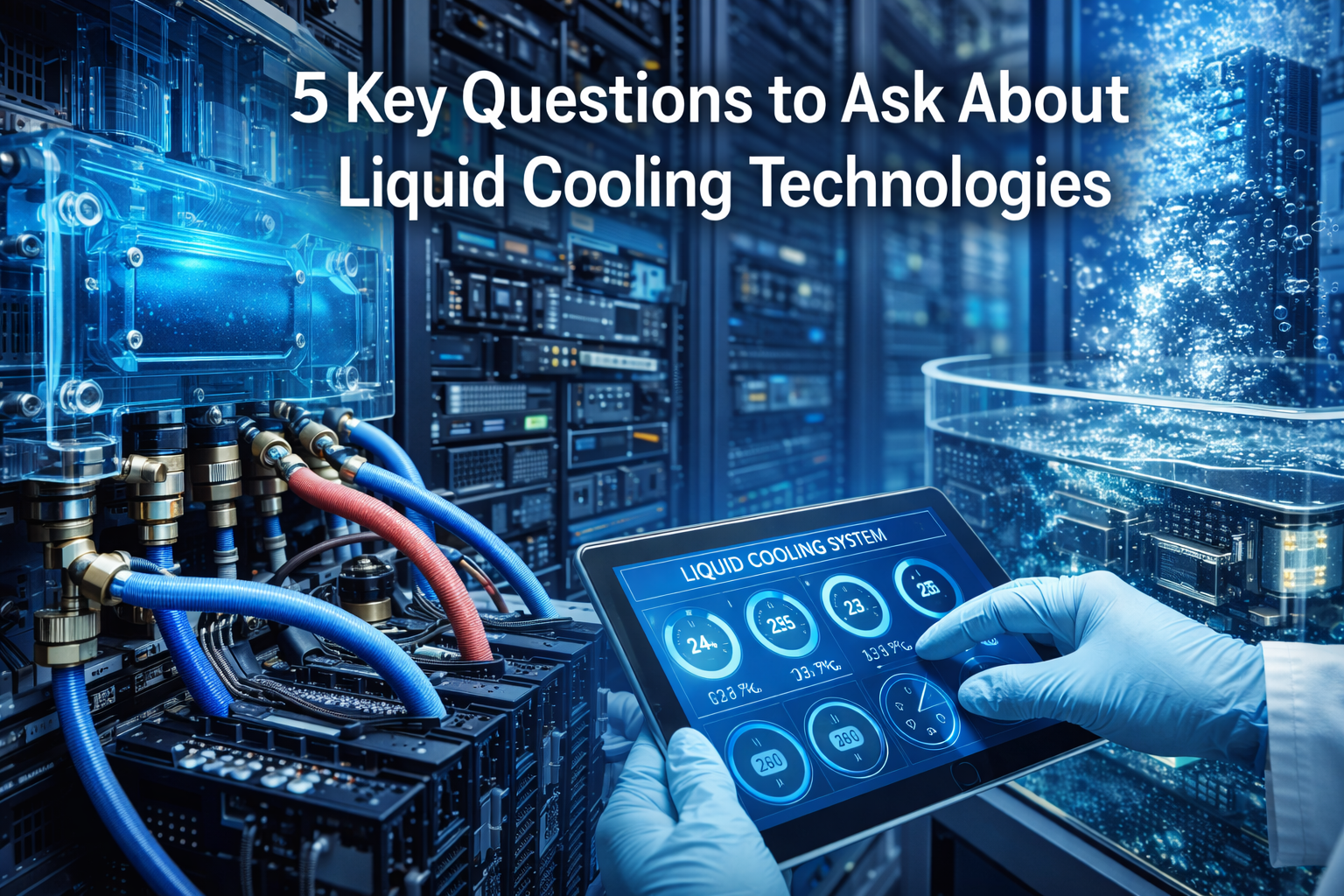
As data centers support increasingly demanding workloads—AI, machine learning, advanced analytics, and real-time healthcare systems—traditional air cooling is reaching its limits. Liquid cooling technologies are emerging as a viable solution to manage higher power densities and improve thermal efficiency.
However, adopting liquid cooling is not a simple plug-and-play decision. Facilities and IT leaders must evaluate technical, operational, and financial implications before making the shift. Asking the right questions early can help avoid costly missteps.
1. Why Is Liquid Cooling Needed in This Environment?
The first and most important question is whether liquid cooling is truly necessary. Liquid cooling is most effective in environments with:
- High-density racks
- Heat-intensive workloads such as AI and GPU computing
- Limited physical space for airflow optimization
Facilities running conventional workloads may still operate efficiently with enhanced air cooling. Liquid cooling should be driven by actual thermal demand, not trends.
2. Which Liquid Cooling Method Is the Right Fit?
Liquid cooling is not a single solution. Common approaches include:
- Direct-to-chip cooling
- Rear-door heat exchangers
- Immersion cooling
Each method has different infrastructure, maintenance, and compatibility requirements. Facilities must assess how each option aligns with existing equipment, rack designs, and operational workflows.
3. How Will Liquid Cooling Impact Facility Infrastructure?
Introducing liquid cooling affects more than IT equipment. Facilities teams must consider:
- Plumbing and leak detection systems
- Floor load capacity
- Redundancy and failover planning
- Integration with existing cooling and monitoring systems
Early collaboration between IT, facilities, and engineering teams is critical to ensure infrastructure readiness.
4. What Are the Operational and Maintenance Implications?
Liquid cooling changes how data centers are operated and maintained. Staff may require new skills, processes, and safety protocols. Key considerations include:
- Ongoing maintenance responsibilities
- Vendor support and service availability
- Training requirements for facilities teams
Operational simplicity and reliability should remain top priorities, especially in healthcare and mission-critical environments.
5. Does the Business Case Justify the Investment?
Liquid cooling can deliver long-term benefits such as:
- Improved energy efficiency
- Support for higher computing density
- Extended equipment lifespan
However, upfront costs can be significant. Organizations must evaluate total cost of ownership, energy savings, scalability, and alignment with long-term digital and infrastructure strategies.
Preparing for the Future of High-Density Computing
Liquid cooling technologies are becoming increasingly relevant as computing demands rise across healthcare, research, and enterprise environments. The key is not whether liquid cooling will play a role in the future—but when and where it makes sense.
Facilities that approach adoption strategically, guided by the right questions, will be better positioned to support performance, efficiency, and sustainability goals.