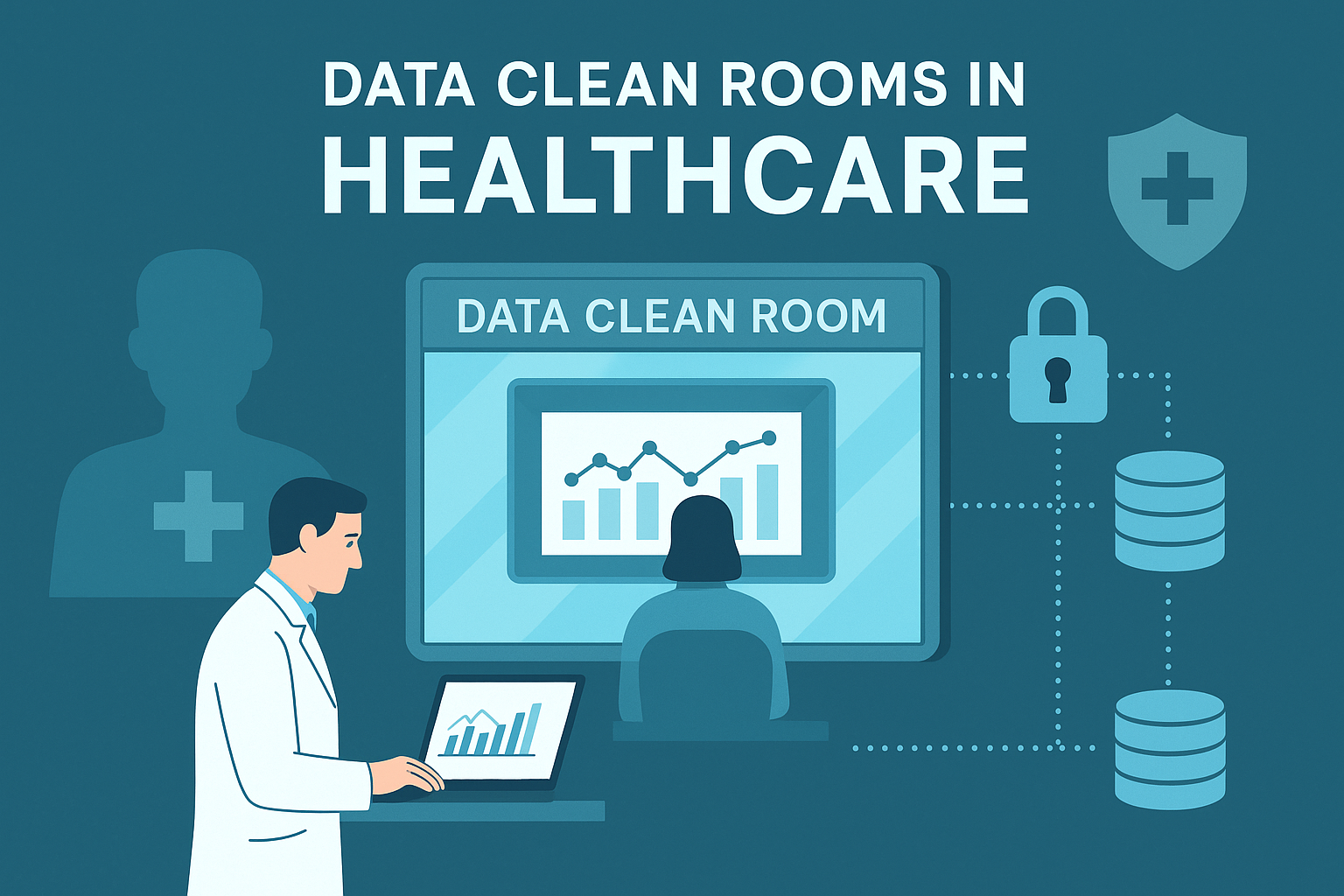
Healthcare organizations are increasingly expected to deliver personalized, high-quality care while maintaining strict compliance with data privacy laws. In 2025, data clean rooms have emerged as a transformative solution—providing a secure, controlled environment for collaborative data analysis without exposing patient identities.
As healthcare performance metrics evolve and partnerships expand, data clean rooms allow multiple stakeholders to derive insights from sensitive data while preserving confidentiality and regulatory compliance.
What Is a Data Clean Room?
A data clean room is a secure, privacy-preserving data-sharing environment. It allows two or more entities—such as hospitals, payers, and technology providers—to analyze shared datasets without moving or directly accessing the raw data.
Data clean rooms apply techniques like:
- Data encryption
- Access controls
- Anonymization and de-identification
- Federated learning and multi-party computation (MPC)
This approach ensures that personally identifiable information (PII) or protected health information (PHI) is not revealed during joint data operations.
Why Healthcare Needs Data Clean Rooms in 2025
The healthcare ecosystem is becoming more interconnected. Providers must collaborate with research institutions, insurers, technology vendors, and pharmaceutical companies to improve clinical outcomes, reduce costs, and meet value-based care goals.
However, data silos and privacy regulations such as HIPAA have long stood in the way of efficient collaboration. Data clean rooms address this challenge by enabling:
- Cross-organizational analytics without compromising privacy
- Regulatory compliance for HIPAA, GDPR, and similar laws
- Collaborative performance improvement with real-time benchmarks
- Innovation in AI-driven diagnostics and treatment optimization
Real-World Applications in Healthcare
1. Clinical Research and Population Health
Hospitals and universities can share insights from large datasets without compromising patient anonymity. This accelerates research on chronic diseases, health equity, and preventive care.
2. Payer-Provider Collaboration
Insurers and health systems can jointly analyze outcomes and cost data to design better reimbursement models and reduce readmissions.
3. Public Health and Crisis Response
Public agencies can securely analyze healthcare provider data to track health trends, vaccine coverage, or emergency responses—without centralizing sensitive records.
How Data Clean Rooms Work in Practice
The basic architecture includes:
- A trusted third-party or technology platform hosting the clean room
- Strict access permissions granted to participating organizations
- Encryption and sandboxing that prevent data exfiltration
- Ability to run SQL queries, ML models, or business intelligence tools on combined datasets, with only approved outputs viewable
In 2025, cloud providers like Google Cloud, AWS, and Snowflake offer purpose-built data clean room capabilities tailored for healthcare.
Benefits for Facilities and IT Teams
Data clean rooms are not just for researchers or analysts. They offer direct benefits to facility administrators, CIOs, and IT leaders:
| Benefit | Description |
|---|---|
| Improved Performance Benchmarks | Compare performance securely with peer hospitals |
| Secure Data Sharing | Eliminate manual file transfers and reduce breach risk |
| Scalability | Analyze larger datasets without moving them |
| Governance | Enforce role-based access and audit trails |
| Innovation Enablement | Collaborate on AI models or analytics without risking PHI |
Regulatory Considerations and HIPAA Alignment
Data clean rooms support compliance by:
- Minimizing access to raw identifiable data
- Applying role-based permissions and audit logs
- Keeping data within jurisdictional boundaries
- Providing proof of compliance for regulators and third parties
In the United States, data clean rooms align well with HIPAA’s privacy and security rules, especially when used with de-identified datasets or limited data sets under Data Use Agreements (DUAs).
Conclusion: A Critical Tool for Secure Healthcare Innovation
As healthcare becomes more digital, collaborative, and performance-driven, data clean rooms offer a path forward that balances innovation with confidentiality. They empower organizations to generate insights across institutions, improve outcomes, and respond to public health needs—all without sacrificing patient trust.
In 2025 and beyond, data clean rooms will play a central role in transforming healthcare data strategies, setting new standards for secure, ethical, and scalable collaboration.