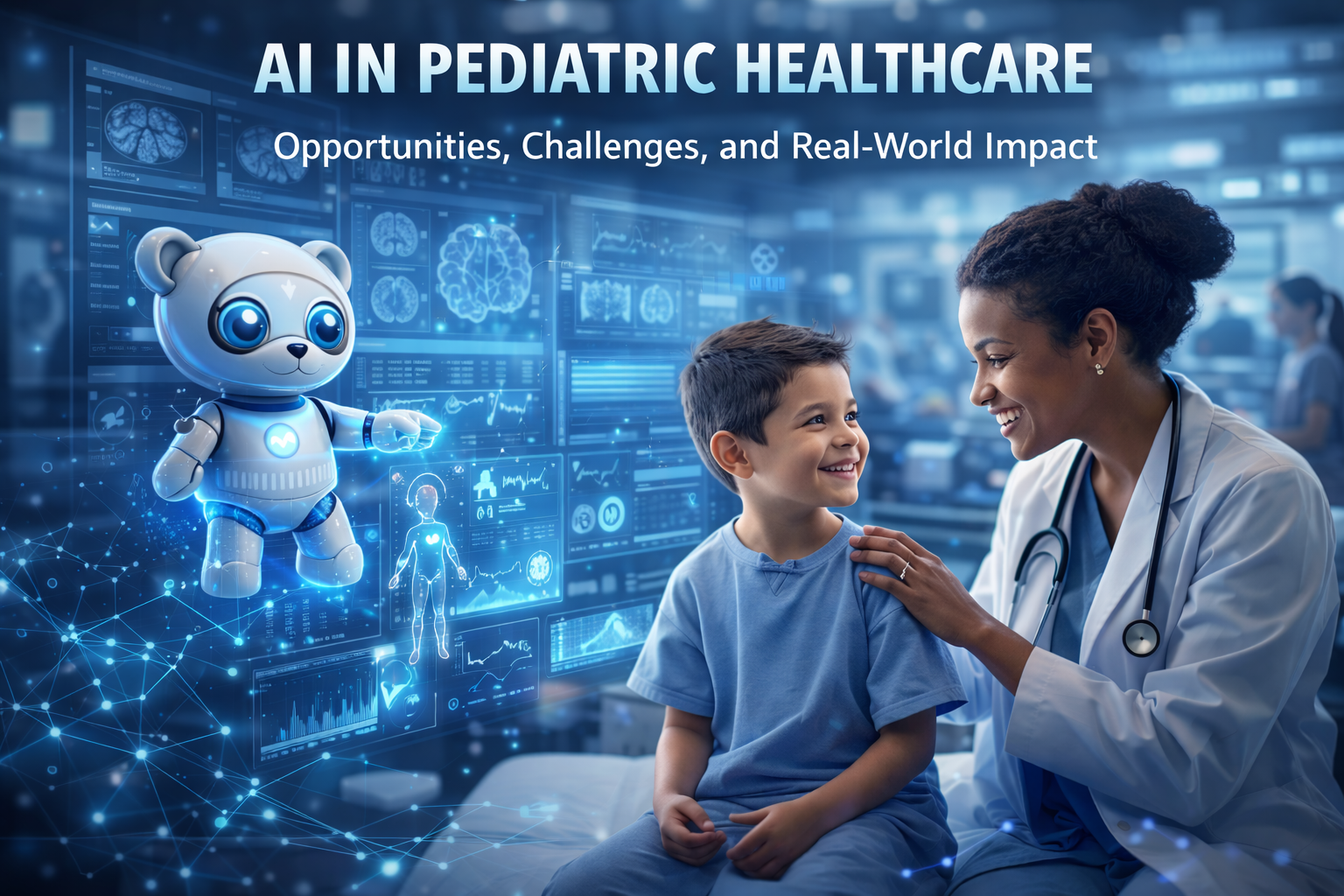
Artificial intelligence (AI) is rapidly transforming healthcare — and pediatric medicine is no exception. Hospitals and children’s health systems are beginning to integrate AI tools across both clinical and administrative areas in ways that improve efficiency, support care decisions, and reduce the burden on clinical teams.
From assisting clinicians in documentation to enhancing diagnostics and improving workflow automation, AI is increasingly becoming part of the pediatric care environment. Yet applying AI in this sensitive field comes with distinct opportunities and important challenges that healthcare leaders must understand.
How AI Is Being Used in Pediatric Hospitals
Pediatric healthcare settings are experimenting with a wide range of AI‑enabled technologies designed to improve both clinical performance and operational workflows:
1. AI for Documentation and Burnout Reduction
A common use of AI in pediatric settings involves automating clinical documentation. Tools like ambient scribes capture patient encounters, allowing clinicians to focus on the child rather than entering notes manually. This automation not only speeds workflows but also helps reduce burnout among providers — a major concern in pediatric care.
2. Enhanced Diagnostic Support
AI models are being applied to support clinical decision‑making in diagnostics. For example, predictive algorithms can help determine deterioration risk in high‑acuity areas like pediatric intensive care units, giving care teams real‑time insights that can influence early intervention.
3. Workflow Automation
Beyond clinical use, AI assists with coding, billing, and revenue cycle processes — reducing administrative load and improving accuracy. By automating routine tasks, hospitals can minimize errors and free up staff for higher‑value responsibilities.
Unique Challenges in Pediatric AI Implementation
While AI brings promise, pediatric healthcare introduces specific hurdles that differ from adult care:
Growth Variability and Training Data
Children are not small adults — their physiology and disease patterns change dramatically with age. Consequently, AI systems trained on adult data often perform suboptimally in pediatric contexts. Developing algorithms that accurately reflect the diversity of childhood development requires larger, more representative datasets.
Rare Conditions and Predictive Limitations
Many pediatric conditions are rare, making it difficult for machine learning models to achieve reliable performance across all scenarios. AI systems may struggle to predict or recognize patterns in uncommon diseases, which can limit their usefulness at the point of care.
Bias and Safety Concerns
AI models may reflect biases present in their training data, leading to inaccuracies or unequal performance across different patient groups. Pediatric institutions must carefully evaluate and refine AI outputs to ensure fair and safe clinical use.
AI Governance and Responsible Use
Given these challenges, leading children’s hospitals emphasize the importance of governance and clinician oversight when deploying AI solutions. Establishing multidisciplinary committees helps ensure that models are validated, safe, and aligned with ethical standards before they influence patient care decisions.
Care teams are encouraged to act as a “human in the middle,” verifying AI results before incorporating them into clinical decisions, rather than relying on automated outputs alone. This approach protects vulnerable pediatric populations while preserving clinician judgment.
Real‑World Pediatric AI Applications
Some hospitals are already applying AI to augment traditional practice areas:
- Radiology Support: AI tools trained on imaging datasets can help radiologists interpret pediatric scans more quickly and consistently, improving turnaround times.
- Ambient Listening for Charting: New ambient AI systems assist with real‑time note capture during clinical encounters — saving time and reducing delays in documentation workflows.
- Risk Prediction Models: Predictive analytics help identify patients at increased risk for complications or deterioration, enabling proactive care adjustments.
Special Considerations for Pediatric Data and Consent
The use of AI in pediatric care must also consider data protection and consent. Since children cannot directly provide informed consent, parents or guardians must authorize AI data use, especially when systems access personal and health information.
AI tools should be tailored to honor pediatric privacy standards and respect the unique legal requirements of adolescent care. This includes differentiating what information can be shared or automatically acted upon in electronic health records.
The Path Forward for AI in Pediatric Care
AI has the potential to make meaningful, measurable improvements in pediatric healthcare — from reducing clinician workload to enhancing early diagnosis and improving clinical workflows. But realizing that potential requires thoughtful implementation, rigorous governance, and ongoing evaluation of both benefits and limitations.
Pediatric healthcare systems should focus on:
- Training clinicians and leaders on AI capabilities and limitations
- Building robust data governance and quality frameworks
- Collaborating with developers to refine pediatric‑specific models
- Maintaining clinician oversight in all AI‑augmented workflows
By advancing AI thoughtfully and responsibly, pediatric institutions can harness innovation to support better outcomes and more resilient care delivery for children and families.