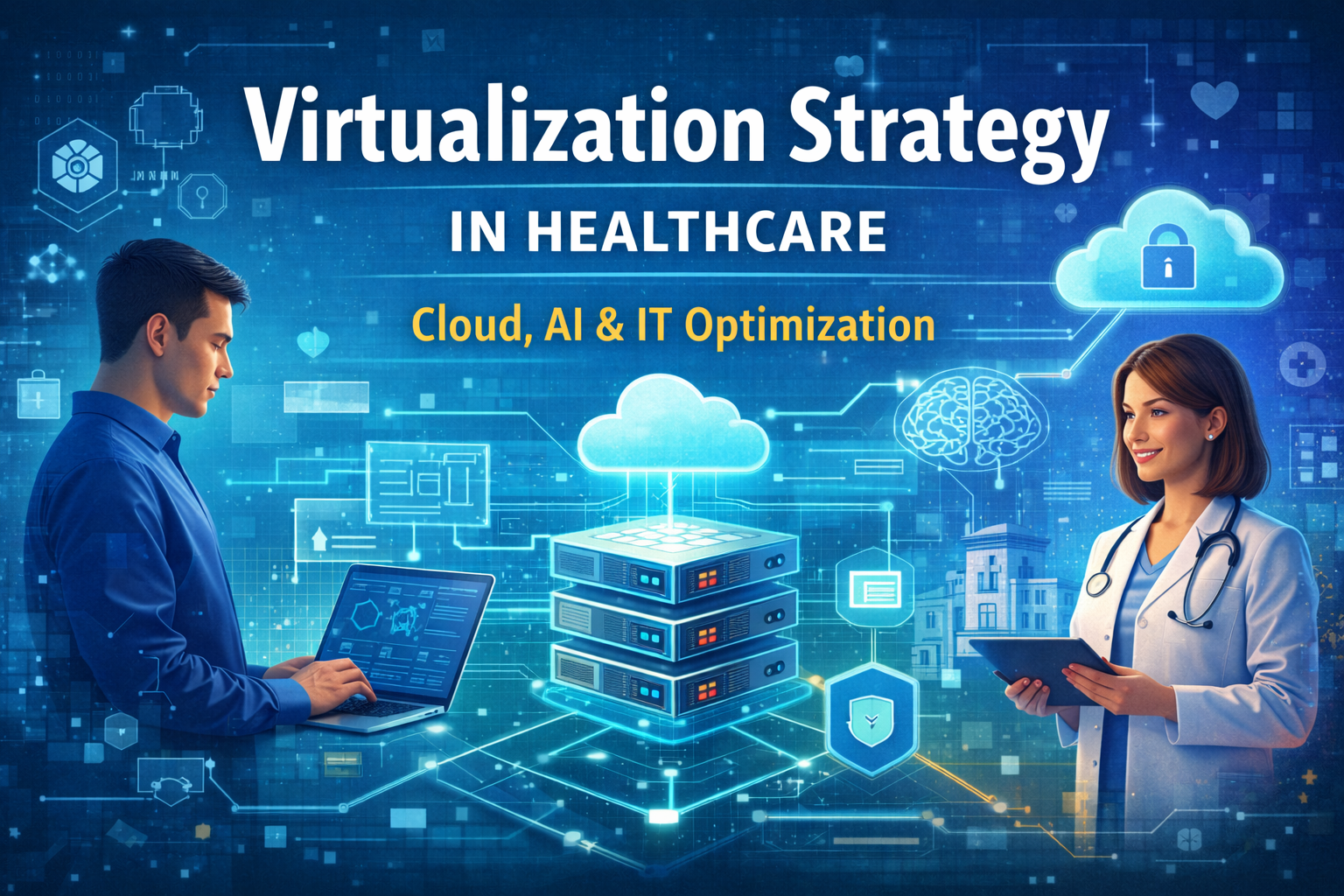
As healthcare organizations accelerate digital transformation, virtualization has become a critical component of modern IT infrastructure. From supporting hybrid cloud environments to enabling artificial intelligence workloads, virtualization helps health systems improve efficiency, strengthen security and gain better visibility into sensitive patient data.
If your organization is reassessing its IT roadmap, optimizing your virtualization strategy should be a top priority.
Understanding the Role of Virtualization in Healthcare IT
Virtualization allows multiple applications and workloads to run on shared hardware through a software abstraction layer. This capability forms the foundation of private cloud, public cloud and hybrid cloud environments.
Following the 2023 acquisition of VMware by Broadcom, many health systems began reevaluating their virtualization investments, licensing models and long-term platform strategies.
Broadcom continues to offer VMware Cloud Foundation under a subscription-based model, while healthcare organizations are also exploring alternatives such as:
- Microsoft Azure Local
- Nutanix Acropolis Hypervisor
- Red Hat OpenShift Virtualization
The market is shifting away from isolated virtualization tools toward integrated platforms that support automation, containers and AI-ready infrastructure.
Why Virtualization Is Essential for AI and Analytics
Artificial intelligence in healthcare requires scalable, flexible and automated infrastructure. Virtualization plays a central role in enabling:
- Machine learning operations (MLOps)
- Large language model deployments
- Data-intensive analytics workloads
- Secure multi-environment data processing
Modern healthcare platforms must support both traditional virtual machines and Kubernetes-based container workloads. AI applications often rely on hybrid architectures that combine VM-based and container-based environments.
For example, Mary Washington Healthcare deployed VMware Cloud Foundation to increase IT visibility and automate virtual machine operations. By integrating AI capabilities into their virtualization stack, health systems can better manage sensitive health information and streamline operations.
Full-stack virtualization and automation are quickly becoming baseline requirements for healthcare organizations preparing for AI-driven innovation.
Align Virtualization With Enterprise Modernization
Virtualization optimization is most effective when it aligns with broader digital transformation initiatives.
Healthcare organizations should evaluate improvements across:
- Compute and storage systems
- Network infrastructure
- Cybersecurity architecture
- Cloud and SaaS ecosystems
- Data governance frameworks
Large health systems may need to modernize enterprise platforms to support advanced analytics and AI initiatives. Mid-sized organizations should prioritize building a cloud-ready foundation. Smaller practices may focus on compliance-first infrastructure and secure telehealth environments.
Embedding virtualization into enterprise-wide modernization plans prevents fragmented upgrades and ensures long-term scalability.
Avoid Vendor Lock-In and the “Status Quo” Approach
Simply renewing existing virtualization contracts without modernization can limit flexibility and increase long-term costs.
Instead, healthcare leaders should adopt a phased strategy:
- Continue operating mission-critical applications in virtual machines.
- Introduce automation and DevOps processes.
- Enable container-native application development.
- Gradually integrate AI-driven workloads.
This step-by-step approach reduces disruption while preparing infrastructure for future innovation.
Build a Resilient Hybrid Cloud Strategy
A hybrid cloud model provides healthcare organizations with the flexibility to balance performance, compliance and cost control.
Key considerations include:
- Determining which workloads remain on-premises
- Evaluating sovereign cloud requirements
- Leveraging public cloud for scalability
- Maintaining strong data governance controls
Private cloud environments offer greater cost predictability and control over sensitive healthcare data, while public cloud platforms provide elasticity for fluctuating workloads. A balanced hybrid strategy helps health systems stay compliant while remaining agile.
Adopt Platform Engineering for Greater Efficiency
Platform engineering is emerging as a best practice in modern healthcare IT environments. By building standardized internal platforms, health systems can:
- Improve security and compliance controls
- Increase developer productivity
- Accelerate software delivery
- Automate infrastructure provisioning
- Enhance operational agility
Even legacy applications running on virtual machines can benefit from automation and standardized governance frameworks.
Validate Strategy Through Proof of Value
Before scaling virtualization changes across the enterprise, healthcare organizations should conduct proof-of-value initiatives.
Examples include:
- Launching self-service portals for compliant application deployment
- Automating infrastructure management workflows
- Testing AI-driven performance optimization
- Measuring cost savings from hybrid cloud integration
Demonstrating measurable outcomes builds confidence among executive stakeholders and IT leaders.
Partner for Long-Term Success
Virtualization modernization is complex, especially in highly regulated healthcare environments.
Working with experienced cloud service providers and healthcare-focused technology partners can help:
- Reduce migration risks
- Ensure secure configuration
- Accelerate hybrid cloud adoption
- Enable AI readiness
Rather than managing multiple disconnected solutions, many health systems are shifting toward long-term strategic platform partnerships.
Preparing for the Future of Healthcare IT
Optimizing virtualization strategy is no longer optional for health systems pursuing AI, automation and cloud transformation. It is a foundational investment that supports:
- Stronger cybersecurity and data protection
- Scalable AI and analytics initiatives
- Improved operational efficiency
- Cost-effective infrastructure management
- Enhanced patient experience
Healthcare organizations that modernize their virtualization platforms today will be better positioned to support innovation, maintain compliance and deliver high-quality care in an increasingly digital healthcare landscape.