Cyberattacks on hospitals are no longer rare—they’re expected. From ransomware to data breaches, today’s healthcare facilities face a growing wave of threats that can completely shut down operations.
So, what’s the smartest way to prepare?
More and more hospital systems are turning to a Minimum Viable Hospital (MVH) strategy—a focused, realistic approach that ensures critical systems stay running even during a worst-case cyber scenario.
What Is a Minimum Viable Hospital?
A Minimum Viable Hospital is a concept that helps healthcare leaders identify the absolute core systems that must function to continue patient care during a cyberattack or IT failure. Instead of trying to recover every system at once, MVH planning allows hospitals to focus on what matters most—fast.
It’s about protecting life-saving workflows first, so operations don’t collapse during a crisis.
Why This Approach Matters More Than Ever
Traditional disaster recovery was designed for fires or floods. But cyberattacks are different—they target the systems you rely on every minute. Restoring full operations can take weeks. That delay is dangerous in any clinical setting.
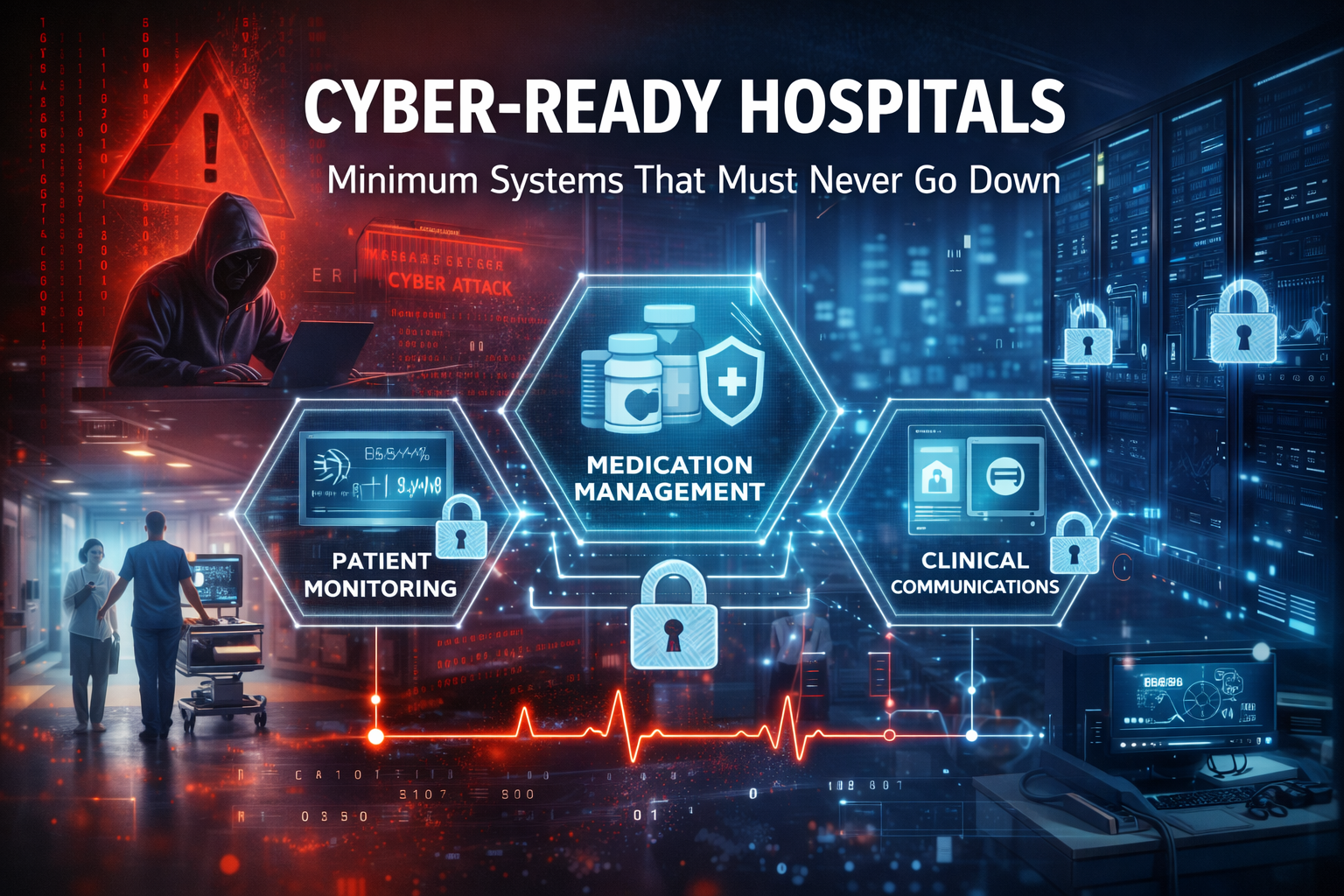
With MVH, the focus shifts from restoring “everything” to maintaining the minimum essential services—like electronic health records, diagnostic imaging, medication management, and staff communications.
Building Blocks of a Minimum Viable Hospital Plan
Here’s how hospitals can approach MVH implementation effectively:
1. Identify Mission-Critical Systems
Start with clinical essentials: the systems that support surgeries, emergency care, inpatient monitoring, and prescriptions. Without these, patient safety is at risk.
2. Prioritize Recovery Tiers
Not everything needs to come online immediately. MVH planning ranks systems in tiers—starting with urgent care tools and scaling up to admin systems later.
3. Use Isolated Recovery Environments
Avoid re-infecting your network during recovery by using a clean, isolated environment to test and validate backups.
4. Enable Immutable Backups
Make sure backups can’t be modified or encrypted by attackers. These unchangeable copies will be your lifeline during recovery.
5. Practice Response Drills
Theory isn’t enough. Run simulation drills involving IT, clinical teams, and leadership. Everyone should know their role when things go dark.
What Are the Real Benefits?
- Patient Care Continues even during IT outages
- Faster Recovery Times for essential operations
- Lower Downtime Costs by avoiding full system rebuilds
- Reduced Panic across clinical and admin teams
- Higher Confidence from patients, staff, and partners
Beyond Cybersecurity: This Is Operational Resilience
Cyber resilience isn’t just about stopping hackers. It’s about making sure the hospital can still function even if the worst happens.
A well-designed MVH plan becomes part of your overall risk strategy—something every healthcare facility should consider as threats grow more sophisticated.
Final Thoughts
The hospitals that will lead tomorrow are not just those with the best tech—they’re the ones prepared to protect patient care when tech fails.
By defining what “must never go down,” adopting the Minimum Viable Hospital approach, and training teams for response, healthcare providers can safeguard operations, reduce damage, and maintain trust.
In short: resilience starts with knowing your minimum—and protecting it like a life depends on it.