The U.S. data center industry is entering a period where demand is growing faster than available infrastructure. Artificial intelligence (AI), cloud computing, high-performance computing, digital services, and enterprise workloads are all increasing the need for reliable, high-density computing capacity. At the same time, operators are facing constraints around power availability, land, construction timelines, equipment, cooling, and grid connectivity.
This combination is creating the conditions for a data center capacity shortage USA 2026 scenario in which available capacity may remain difficult to secure even as developers bring new facilities online.
Recent market data illustrates how tight the environment has become. CBRE reported that vacancy in primary North American data center markets fell to just 1.4% at the end of 2025. In the U.S., supply constraints are particularly significant because much of the capacity under construction has already been committed to customers. CBRE also noted that 80% of space under construction in the four largest U.S. markets was already preleased as of Q4 2025. (CBRE)
For operators, the challenge is therefore not simply building more data centers. It is planning capacity years ahead, securing power early and designing facilities that can adapt to rapidly changing workload requirements.
Why the U.S. Is Facing a Capacity Crunch
The growing data center capacity shortage USA 2026 is being driven by several factors working together.
The first is AI. AI training and inference workloads require significantly greater computing power than many conventional enterprise applications. Modern AI infrastructure can also require much higher rack densities, placing additional demands on electrical systems and cooling infrastructure.
JLL’s 2026 outlook expects AI and cloud computing to drive a 14% compound annual growth rate for the data center sector through 2030. JLL estimates that nearly 100 GW of new data center capacity could be added globally between 2026 and 2030, demonstrating the scale of infrastructure investment required to support future digital workloads. (JLL)
The second factor is the difficulty of bringing new power capacity online. A data center can be constructed on suitable land, but without sufficient electricity and a realistic utility connection timeline, the facility cannot operate at its planned capacity.
CBRE’s 2026 investor survey identified power availability as the industry’s top challenge for the third consecutive year. (CBRE)
The third issue is the lengthy development cycle. New data center projects require land acquisition, permitting, utility agreements, design, construction, equipment procurement and commissioning. These processes can take years, meaning operators cannot wait until demand becomes urgent before expanding.
What the Data Center Demand Forecast Is Telling Operators
The data center demand forecast points toward continued strong growth, but demand will not necessarily be distributed evenly across the country.
AI companies, cloud providers, hyperscalers and neocloud operators are looking for large blocks of contiguous capacity. This is changing the traditional approach to leasing and development. Instead of adding smaller amounts of capacity incrementally, operators increasingly need to plan entire campuses around large-scale requirements.
CBRE’s 2026 U.S. outlook notes that AI-related occupiers are driving demand for large blocks of contiguous capacity, while power costs and delivery speed are becoming more important in site selection. (CBRE)
This means operators should evaluate not only how much capacity they need today but also what their customers may require three, five or even ten years from now.
A facility that appears adequately sized in 2026 could become constrained quickly if AI workloads continue to increase rack density and power consumption.
Power Availability Is Becoming the Critical Constraint
Power is arguably the biggest factor behind the emerging capacity shortage.
Traditionally, data center site selection heavily emphasized network connectivity, proximity to customers, land cost and tax incentives. Those factors still matter, but access to reliable power is increasingly determining whether a project can actually move forward.
The problem is that electricity infrastructure cannot always expand at the same speed as data center demand. Utilities may need to build substations, transmission infrastructure or other grid upgrades before a new campus can receive the required power.
This creates a major planning challenge. A site may have sufficient land and excellent fiber connectivity but still be unsuitable if the power delivery schedule does not align with the operator’s construction and leasing plans.
CBRE reports that limited power, land and infrastructure are slowing development in major U.S. markets, while longer construction timelines are expected to constrain data center supply through 2030. (CBRE)
Operators should therefore treat power procurement as a strategic priority rather than a later-stage project requirement.
AI Is Changing Capacity Planning
AI is also changing what “capacity” means.
Traditional capacity planning often focused primarily on megawatts, floor space and rack count. AI infrastructure requires a broader approach that considers power density, thermal management, network architecture, GPU availability and workload variability.
High-density AI racks can produce substantially more heat than conventional enterprise workloads. Existing facilities may therefore require upgrades to electrical distribution, cooling systems and rack infrastructure before they can accommodate AI deployments.
JLL notes that AI workloads can create rapid power swings and significant heat, putting pressure on facilities that were not originally designed for AI. (JLL)
For operators, this makes flexibility essential. New facilities should be designed with the ability to increase rack densities, support liquid cooling and accommodate future electrical requirements without requiring major structural changes.
Operators Should Plan Capacity Earlier
In a tight market, waiting for confirmed customer demand before starting development can create a serious competitive disadvantage.
The data center demand forecast suggests that operators need to adopt a longer planning horizon. Capacity decisions should consider current requirements alongside projected demand from AI, cloud computing, edge applications and enterprise digital transformation.
One effective approach is to maintain a rolling capacity roadmap. Instead of planning one project at a time, operators can create a multi-year development strategy covering power, land, buildings, cooling, network connectivity and customer commitments.
Early planning also improves negotiating power. Operators that secure land and utility capacity before competition intensifies may have greater flexibility than those entering the market after demand has already accelerated.
Geographic Diversification Will Become More Important
The capacity shortage is also encouraging operators to reconsider where data centers are developed.
Established markets such as Northern Virginia remain important, especially for applications requiring strong connectivity and proximity to major cloud ecosystems. However, limited power availability, land constraints and regulatory pressure can make expansion increasingly challenging.
This is encouraging developers to consider secondary and tertiary markets.
Cushman & Wakefield reported that data center development is increasingly moving toward markets with more predictable approval processes and greater availability of land and power. Its 2026 analysis also identified Dallas as the world’s leading primary data center market, with Texas continuing to gain importance for large-scale AI infrastructure. (Cushman & Wakefield)
For operators, geographic diversification can provide a way to reduce dependency on a single constrained market.
However, moving to a new market requires careful evaluation of fiber connectivity, power costs, workforce availability, climate, water resources, regulatory conditions, tax structures and disaster risk. A cheaper site is not necessarily a better site if it cannot support long-term operational requirements.
Cooling Must Be Part of Capacity Strategy
Electrical capacity and computing capacity are closely linked to cooling.
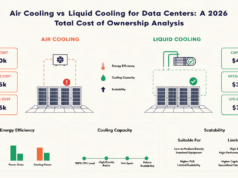
As AI and high-performance computing increase rack densities, traditional air-cooling systems may become insufficient for some workloads. Operators must therefore evaluate liquid cooling, hybrid cooling and other thermal-management strategies as part of future capacity planning.
The goal should not simply be to install the cooling technology that meets today’s requirements. Operators need systems that can accommodate changing densities without creating major operational disruptions.
Cooling design should also be considered alongside water availability and sustainability goals. In regions facing water stress or stricter environmental regulations, operators may need to balance thermal performance with resource efficiency.
Supply Chain Planning Cannot Be Ignored
Capacity expansion depends on more than land and electricity. Operators also need transformers, switchgear, generators, cooling equipment, electrical components, networking equipment and construction labor.
If critical components have long lead times, a project can be delayed even when its site and power arrangements are ready.
The growing competition for construction resources makes early procurement increasingly important. JLL’s 2026 construction update highlighted rising data center construction costs and scheduling pressures in heavily active markets. (JLL)
Operators should identify long-lead equipment early and maintain relationships with multiple suppliers where practical. Standardizing designs across campuses can also simplify procurement and speed deployment.
Build Flexibility Into New Facilities
The best response to a capacity shortage is not necessarily to build the largest possible facility immediately. Instead, operators should build infrastructure that can scale efficiently.
Modular designs, expandable electrical systems, flexible cooling architecture and reserved space for future equipment can help operators respond to changing customer requirements.
This is especially important because demand forecasts can change. AI adoption may accelerate faster than expected, while other workloads may develop differently. A rigid facility could become obsolete or inefficient before the end of its expected operating life.
Flexible infrastructure provides a buffer against uncertainty.
Sustainability and Grid Strategy Must Work Together
Sustainability is also becoming part of capacity planning.
As data center electricity consumption rises, operators are under increasing pressure to improve energy efficiency, secure renewable energy and reduce emissions. At the same time, utilities and local communities are increasingly focused on the impact of large new loads on the electricity grid.
Operators should therefore evaluate renewable power purchase agreements, on-site generation, battery storage and other strategies where appropriate.
CBRE’s 2026 outlook highlights increasing interest in behind-the-meter solutions such as on-site generation and batteries as traditional power availability becomes more constrained. (CBRE)
The objective is not simply to secure more electricity. It is to develop a resilient energy strategy capable of supporting operations through changing grid conditions and future demand.
A Practical Roadmap for Operators
Preparing for the data center capacity shortage USA 2026 requires operators to move from reactive expansion to proactive infrastructure planning.
The first step is to establish a realistic multi-year demand forecast. This should include existing customers, potential AI workloads, cloud requirements, enterprise demand and expected changes in rack density.
The second step is to secure power early. Operators should work closely with utilities and evaluate multiple locations rather than assuming that existing hubs will always provide sufficient capacity.
The third step is to design for higher densities. Electrical systems, cooling infrastructure and physical layouts should accommodate future AI and HPC requirements.
The fourth step is to diversify geographically. Secondary and tertiary markets may offer faster access to land and power, although they must be evaluated for connectivity, workforce and regulatory factors.
Finally, operators should build resilience into procurement and construction strategies. Long-lead equipment, labor availability, permitting and cost escalation should all be incorporated into project schedules.
The Future Will Belong to Prepared Operators
The emerging data center capacity shortage USA 2026 is not simply a shortage of buildings. It is a shortage of power-ready, AI-ready and operationally scalable infrastructure.
The market is growing rapidly, but supply cannot always be delivered at the speed required by AI and cloud demand. CBRE reports that U.S. vacancy remains extremely tight, while Cushman & Wakefield expects meaningful availability improvements to remain difficult in the near term. (CBRE)
For operators, the message is clear: capacity planning needs to start earlier, incorporate longer time horizons and account for power, cooling, land, connectivity and sustainability together.
Organizations that secure power, plan flexible campuses, diversify locations and anticipate AI-driven requirements will be better positioned to capture future demand.
The next phase of the U.S. data center market will not be determined only by who can build fastest. It will be determined by who can secure the right resources, anticipate demand and create infrastructure capable of scaling with the digital economy.
Register as a delegate to connect with industry leaders and explore the strategies shaping the future of data center infrastructure, capacity planning and facility development.