Data centers are becoming the backbone of the digital economy, supporting everything from cloud computing and artificial intelligence to streaming, financial services, enterprise applications, and connected devices. But as digital infrastructure expands, so does its energy demand. This has made clean electricity a strategic priority for data center operators looking to reduce emissions, control long-term energy costs, and meet increasingly ambitious sustainability commitments.
For organizations targeting 100% clean power, simply purchasing renewable electricity is no longer enough. Data center operators need a comprehensive strategy that combines renewable energy procurement, energy efficiency, storage, grid management, onsite generation, and reliable power infrastructure.
The transition requires careful planning because data centers cannot compromise uptime or resilience. A renewable energy strategy must therefore deliver both environmental performance and the reliability required for mission-critical operations.
This is where the concept of a renewable energy data center becomes increasingly important. Instead of treating renewable energy as a separate sustainability initiative, operators can integrate clean power into the overall design, operation, and long-term energy strategy of their facilities.
Why 100% Clean Power Is Becoming a Data Center Priority
The data center industry has historically depended heavily on grid electricity, with backup generators and other systems providing additional resilience. As workloads increase, particularly from high-performance computing and AI, electricity consumption is becoming a more important consideration in facility planning.
At the same time, customers, investors, regulators, employees, and technology partners are placing greater emphasis on environmental performance. Companies operating data centers are under increasing pressure to demonstrate measurable progress toward carbon reduction and renewable energy goals.
A 100% clean-power target can help organizations address several priorities at once.
First, renewable electricity can reduce the emissions associated with facility operations. Second, long-term renewable energy contracts can potentially provide greater visibility into energy costs. Third, a strong clean-energy strategy can strengthen an organization’s sustainability credentials.
However, reaching 100% clean power is more complex than simply installing solar panels on a facility’s roof. Data centers operate continuously, meaning electricity must be available around the clock. Renewable generation, on the other hand, varies according to weather, time of day, and location.
This mismatch makes energy planning essential.
What Does 100% Clean Power Actually Mean?
Before developing a renewable energy roadmap, data center operators need to clearly define what “100% clean power” means for their organization.
A facility may claim that it is powered by renewable energy because it purchases renewable energy certificates, signs a power purchase agreement, or operates with a renewable electricity tariff. However, these approaches can have different implications for emissions accounting and actual physical electricity supply.
Organizations should therefore establish clear criteria for their clean-energy targets.
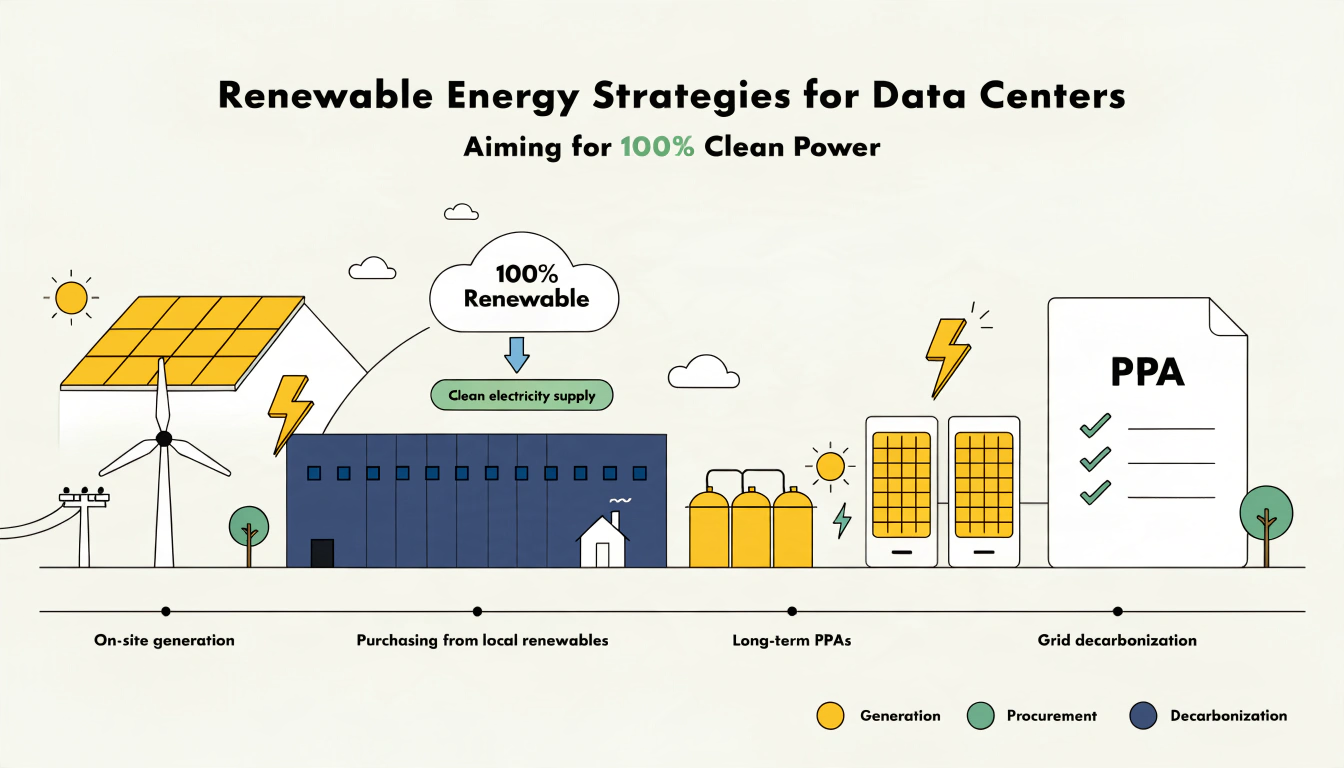
A practical strategy may involve combining several approaches, including renewable energy certificates, utility green-power programs, virtual power purchase agreements, physical power purchase agreements, onsite renewable generation, battery storage, and other clean-energy resources.
The goal should not simply be to achieve a sustainability claim. It should be to create a measurable energy strategy that supports both carbon reduction and operational resilience.
Start With Energy Efficiency Before Adding More Renewable Capacity
One of the most effective renewable energy strategies for a data center is to reduce the amount of energy the facility needs in the first place.
Energy efficiency and renewable procurement should work together. If a data center reduces its electricity consumption, it may require less renewable generation or fewer renewable energy purchases to meet its clean-power objectives.
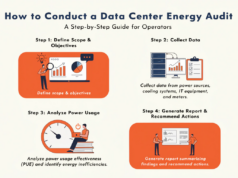
Facility teams can begin by monitoring energy consumption across IT equipment, cooling systems, lighting, power distribution, pumps, fans, and other building systems.
Power Usage Effectiveness (PUE) remains an important metric for evaluating data center energy performance. However, operators should also examine where energy is being consumed and identify opportunities for optimization.
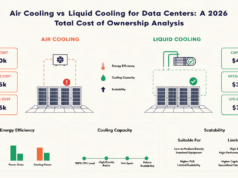
Cooling is particularly important because thermal management can represent a substantial portion of facility energy use. High-efficiency cooling technologies, airflow optimization, liquid cooling, intelligent controls, and improved temperature management can help reduce unnecessary consumption.
Modern data centers can also use intelligent building management systems and analytics platforms to identify inefficiencies. By continuously analyzing operational data, facility managers can detect abnormal energy consumption and adjust systems before waste becomes significant.
The result is a stronger foundation for data center sustainability 2026 initiatives and long-term clean-energy goals.
Use Onsite Solar Where the Facility Allows It
Solar power is one of the most accessible renewable energy technologies for data center operators. Facilities with sufficient roof space, adjacent land, or suitable parking areas may be able to deploy photovoltaic systems on-site.
Onsite solar offers a direct way to generate renewable electricity close to the point of consumption. It can reduce reliance on grid electricity during periods of solar generation and potentially lower exposure to certain electricity costs.
However, on-site solar is rarely capable of supplying all the electricity required by a large data center.
The physical footprint of a data center and its electricity demand can be significantly larger than the available area for solar generation. Solar output also falls at night and varies depending on weather conditions.
For this reason, onsite solar should generally be viewed as one component of a broader renewable energy portfolio rather than the only solution.
Data center operators can combine onsite solar with grid-based renewable procurement and energy storage to create a more resilient clean-power strategy.
Explore Power Purchase Agreements
Power purchase agreements, or PPAs, have become an important tool for organizations seeking to support renewable energy projects while securing renewable electricity over an extended period.
A PPA allows an organization to enter into an agreement associated with a renewable energy project. Depending on the structure, the data center operator may receive renewable electricity physically through the grid or receive associated energy attributes while electricity continues to flow through the existing grid system.
Virtual PPAs can be particularly useful for organizations operating data centers across multiple locations. They can enable companies to support renewable projects in markets where direct physical delivery may not be practical.
PPAs can also provide greater long-term visibility into energy planning. However, they require careful evaluation of contract terms, market conditions, project risks, and regulatory requirements.
Data center leaders should therefore work closely with energy specialists, legal teams, financial advisors, and sustainability professionals before entering into long-term agreements.
Combine Renewable Energy With Battery Storage
One of the biggest challenges of renewable energy is intermittency.
Solar generation is strongest during daylight hours, while wind generation can fluctuate depending on weather conditions. Data centers, however, require continuous electricity.
Battery energy storage can help bridge this gap.
A battery system can store electricity when renewable generation is high or grid conditions are favorable and discharge it when demand increases or renewable output declines. This can improve the flexibility of a facility’s energy strategy.
Storage can also contribute to resilience. During grid disruptions, batteries may help maintain critical loads while backup systems are activated or until grid power is restored.
As energy storage technologies continue to evolve, data center operators can consider batteries not only as backup assets but also as active components of their energy management strategy.
Consider Renewable Energy and Microgrid Solutions
For facilities with demanding power requirements, a microgrid can provide another pathway toward greater energy independence.
A data center microgrid can integrate multiple resources such as solar generation, batteries, grid electricity, backup generation, and advanced control systems. These components can be managed collectively to improve energy reliability and flexibility.
A renewable-focused microgrid can also help facilities respond to changing grid conditions. For example, a data center may draw power from the grid under normal circumstances, use onsite renewable generation when available, charge batteries during favorable periods, and rely on stored energy during peak demand or disruptions.
This approach can make clean energy a more integrated part of facility infrastructure rather than an isolated sustainability project.
Match Renewable Procurement With Data Center Load
Another important strategy is to understand when electricity is being consumed.
A data center may purchase enough renewable electricity annually to match its total electricity consumption. However, annual matching does not necessarily mean that renewable electricity is being generated during every hour when the facility is operating.
This distinction is becoming increasingly important as organizations move toward more advanced clean-energy goals.
Data center operators can begin analyzing their electricity demand on an hourly or sub-hourly basis. This provides a clearer understanding of when renewable electricity is available and where gaps exist.
For example, a facility might have strong solar availability during the afternoon but rely heavily on grid electricity overnight. Batteries, additional renewable resources, or more sophisticated procurement strategies can help address these gaps.
Moving from annual renewable matching toward more time-sensitive clean-energy strategies can strengthen the credibility and effectiveness of a renewable energy data center roadmap.
Use Data and AI to Improve Energy Management
Data analytics and artificial intelligence can play an important role in the clean-energy transition.
Data centers already generate enormous quantities of operational information. Energy consumption, temperature, cooling performance, server utilization, equipment status, and grid conditions can be monitored continuously.
Advanced analytics can use these data points to identify patterns and predict future energy requirements.
For example, intelligent systems can forecast electricity demand based on computing workloads and environmental conditions. Facility teams can then optimize cooling, battery charging, and renewable energy usage around expected demand.
AI can also help identify energy inefficiencies that may not be immediately visible through conventional monitoring.
However, AI-driven optimization should be implemented alongside appropriate governance and cybersecurity controls. Data center operators must ensure that automated energy-management systems do not introduce operational risks.
Improve Grid Interaction
A 100% clean-power strategy should not view the electrical grid simply as a source of electricity. Data centers can increasingly become active participants in the energy ecosystem.
Where market structures and regulations allow it, facilities equipped with storage and flexible loads may be able to respond to grid conditions.
For instance, batteries can potentially charge when electricity is abundant and discharge during periods of high demand. Certain non-critical workloads may also be shifted to times when renewable electricity is more available.
This type of demand flexibility can support both facility economics and broader grid decarbonization.
For large data center operators, understanding local grid conditions should therefore become an important part of site selection and energy planning.
Choose Data Center Locations Strategically
Renewable energy planning should begin before a data center is even built.
Site selection can significantly influence the feasibility of achieving clean-energy goals. Operators should consider factors such as renewable resource availability, grid capacity, transmission infrastructure, electricity markets, utility programs, land availability, climate conditions, and local regulations.
A location with strong access to renewable electricity and a reliable grid may offer advantages over a location where renewable procurement is more challenging.
This means sustainability teams should be involved in site selection from the beginning rather than being brought into the project after major infrastructure decisions have already been made.
For organizations planning new facilities, energy availability should be treated as a core infrastructure consideration.
Don’t Ignore Backup Power
A renewable energy strategy cannot compromise business continuity.
Data centers need backup power systems because even the most reliable grid can experience outages. Traditionally, diesel generators have played a major role in emergency power systems.
As operators work toward lower-carbon infrastructure, they are increasingly exploring alternative technologies and cleaner backup strategies.
Battery storage, renewable-powered microgrids, fuel alternatives, and other emerging technologies may provide opportunities to reduce dependence on conventional backup systems over time.
However, reliability requirements must remain the primary consideration. Any alternative backup technology must be evaluated against the specific uptime, duration, safety, regulatory, and operational requirements of the facility.
The cleanest backup system is not useful if it cannot provide dependable power when the facility needs it.
Build a Renewable Energy Roadmap
Achieving 100% clean power should be treated as a long-term transformation rather than a one-time procurement decision.
A practical roadmap can begin with an assessment of current electricity consumption, emissions, renewable energy purchases, grid conditions, and facility efficiency.
The organization can then establish measurable targets and identify the combination of renewable resources best suited to its operating model.
For example, a data center operator may begin by improving energy efficiency, installing onsite solar where feasible, purchasing renewable energy certificates, and entering into renewable energy agreements. Over time, it can expand battery storage, increase renewable procurement, and move toward more granular clean-energy matching.
Progress should be measured using clear metrics, including renewable electricity percentage, energy consumption, PUE, carbon emissions, renewable capacity supported, storage capacity, and progress toward clean-power targets.
Transparency is critical. Sustainability claims should be backed by credible data and clearly defined accounting methods.
The Business Case for Data Center Sustainability
Renewable energy is not only an environmental issue. It can also influence business resilience, operating costs, customer expectations, investment decisions, and brand reputation.
As organizations increasingly evaluate the environmental performance of their technology suppliers, data center sustainability can become a competitive differentiator.
Energy efficiency can reduce waste. Renewable procurement can support emissions reduction goals. Storage can improve flexibility. Intelligent energy management can optimize facility operations.
Together, these initiatives can help data center operators build infrastructure that is better prepared for the energy demands of the future.
For data center sustainability 2026, the focus should therefore move beyond simply reducing carbon emissions. The objective should be to create facilities that are energy-efficient, resilient, measurable, and increasingly capable of operating on clean electricity.
Moving Toward a 100% Clean-Power Data Center
The journey toward 100% clean power will look different for every data center.
Some facilities may have strong opportunities for onsite solar. Others may benefit more from PPAs, renewable energy certificates, utility programs, battery storage, or grid-connected microgrids. Large operators with multiple sites may combine several approaches across different markets.
What matters is building a strategy that connects renewable energy procurement with actual facility operations.
The strongest approach begins with energy efficiency, then combines renewable generation, clean-energy procurement, storage, intelligent controls, and grid interaction. It also considers energy availability during site selection and maintains reliability as a non-negotiable requirement.
The data center industry is entering an era where electricity strategy and sustainability strategy are increasingly inseparable. Operators that begin planning today can position their facilities for a future in which clean power is not an optional sustainability feature but a fundamental part of resilient digital infrastructure.
Recognize Innovation in Data Center Sustainability
The transition to renewable energy requires leadership, innovation, and collaboration across the data center industry. From energy-efficient cooling and renewable procurement to battery storage, microgrids, and intelligent power management, organizations are developing new ways to build a more sustainable digital infrastructure ecosystem.
If your organization, project, or team is driving meaningful progress in energy efficiency, renewable adoption, infrastructure innovation, or sustainable data center operations, consider bringing that achievement into the spotlight.
Nominate for BMA Awards and showcase the work your organization is doing to advance the future of data center infrastructure.