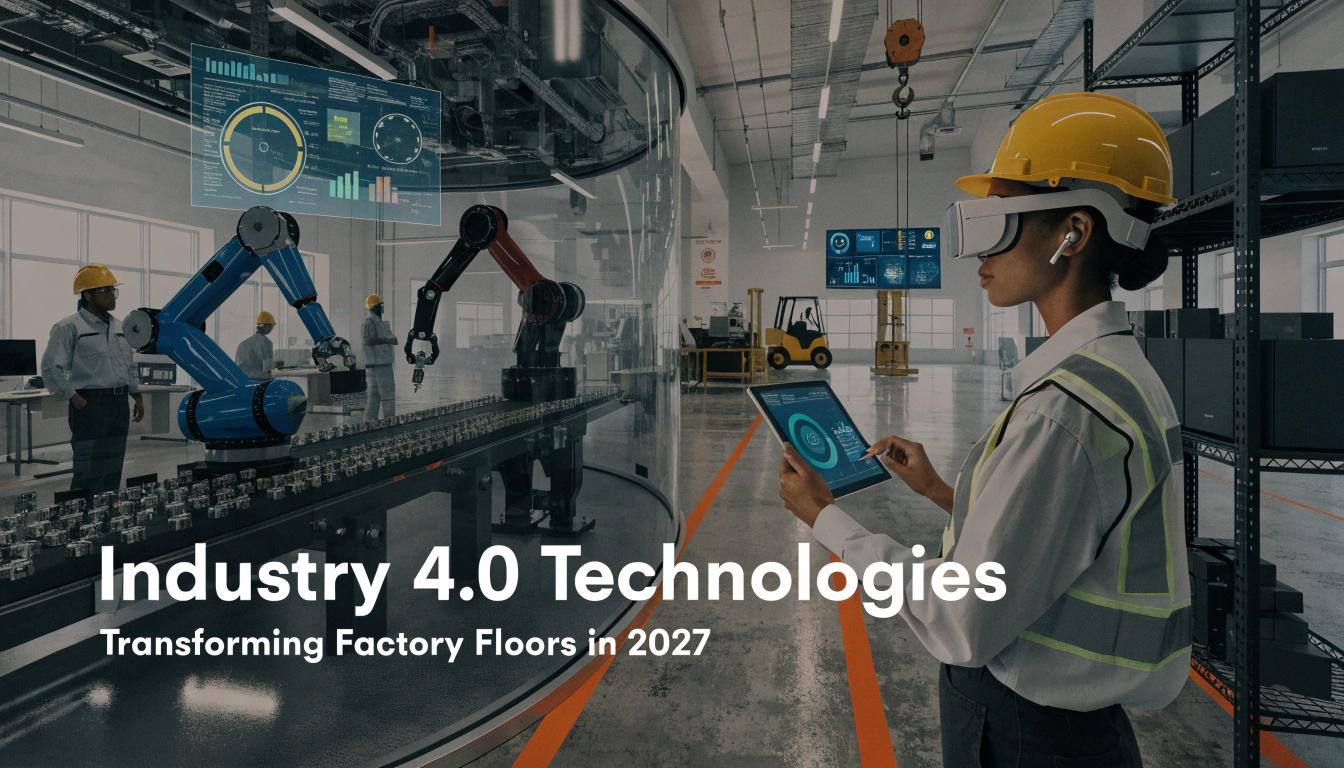
Manufacturing is entering a new era where intelligence is becoming as valuable as machinery. Factories in 2027 are no longer focused solely on increasing production volumes; they are prioritising flexibility, sustainability, resilience, and data-driven decision-making. Rapid advances in artificial intelligence, industrial connectivity, robotics, cloud computing, and predictive analytics are enabling manufacturers to build highly responsive production environments that adapt to changing customer demands while maintaining operational efficiency.
Across industries such as automotive, aerospace, pharmaceuticals, electronics, food processing, logistics, and heavy engineering, digital transformation is redefining how products are designed, manufactured, inspected, and delivered. Instead of relying on isolated machines and manual reporting, manufacturers now operate connected ecosystems where equipment, software, operators, and suppliers communicate in real time.
These advancements are collectively known as Industry 4.0 technologies 2027, and they represent one of the biggest industrial revolutions since automation first entered manufacturing. Companies embracing these innovations are experiencing improved productivity, reduced downtime, enhanced quality control, lower operational costs, and greater supply chain visibility.
At the same time, evolving smart manufacturing trends are encouraging organisations to integrate digital technologies into every stage of production, from planning and procurement to maintenance and customer service.
This article explores the technologies reshaping factory floors in 2027 and explains why they are becoming essential for future-ready manufacturing.
The Evolution of Industry 4.0
Industry 4.0 refers to the integration of digital technologies with physical manufacturing processes. Unlike earlier phases of industrial automation that primarily focused on mechanisation or programmable machines, Industry 4.0 creates intelligent factories where machines continuously exchange information, analyse production data, and optimise operations with minimal human intervention.
Manufacturers are increasingly investing in connected infrastructure because customer expectations continue to evolve. Shorter product life cycles, customised production, rising labour costs, stricter sustainability regulations, and global competition require factories to become more agile than ever before.
The adoption of Industry 4.0 technologies 2027 is enabling businesses to respond quickly without sacrificing productivity or quality.
Artificial Intelligence is Becoming the Brain of Manufacturing
Artificial intelligence has shifted from experimental projects to core production operations.
AI systems now monitor thousands of manufacturing variables simultaneously, identifying inefficiencies before they impact production. Instead of reacting to equipment failures, manufacturers are using predictive intelligence to prevent disruptions altogether.
AI applications include:
- Predictive maintenance
- Production scheduling
- Demand forecasting
- Automated quality inspection
- Energy optimisation
- Inventory management
- Workforce planning
Modern AI algorithms continuously learn from operational data, helping factories improve accuracy over time. This results in lower maintenance costs, improved throughput, and fewer production interruptions.
As Industry 4.0 technologies 2027 continue evolving in 2027, AI will become increasingly autonomous, allowing factories to optimise themselves with minimal manual intervention.
Industrial Internet of Things Creates Connected Factories
The Industrial Internet of Things (IIoT) forms the digital nervous system of modern manufacturing.
Thousands of sensors installed across production equipment continuously collect information about temperature, pressure, vibration, speed, humidity, energy usage, and equipment performance.
Instead of waiting for manual reports, factory managers receive real-time operational visibility through connected dashboards.
IIoT enables manufacturers to:
- Detect equipment failures early
- Improve machine utilisation
- Monitor production remotely
- Reduce maintenance costs
- Optimise energy consumption
- Improve workplace safety
The expansion of IIoT remains one of the most influential smart manufacturing trends because connected assets provide the foundation for nearly every other Industry 4.0 technology.
Digital Twins Are Revolutionising Factory Operations
Digital twin technology has become significantly more sophisticated in 2027.
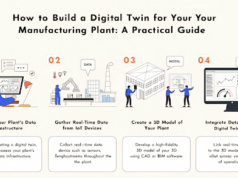
A digital twin creates a virtual replica of machines, production lines, warehouses, or entire manufacturing facilities.
This virtual environment continuously receives real-time operational data, allowing engineers to simulate production changes before implementing them on the shop floor.
Manufacturers use digital twins to:
- Test production layouts
- Predict equipment failures
- Improve product quality
- Optimise factory design
- Simulate new product launches
- Reduce commissioning time
Rather than making costly physical modifications, organisations can evaluate multiple scenarios digitally, saving both time and investment.
Digital twins have become a cornerstone of Industry 4.0 technologies 2027 because they minimise operational risks while accelerating innovation.
Collaborative Robots Continue Expanding
Robotics has evolved beyond traditional industrial automation.
Collaborative robots, commonly called cobots, work safely alongside human operators without extensive safety barriers.
Cobots assist workers with repetitive, physically demanding, or highly precise tasks including:
- Assembly
- Packaging
- Material handling
- Inspection
- Welding
- Machine tending
Unlike conventional robots, cobots are easier to programme and deploy, making automation accessible even for small and medium-sized manufacturers.
As labour shortages continue across many manufacturing sectors, collaborative robotics has become one of the fastest-growing smart manufacturing trends.
Edge Computing Enables Faster Decision-Making
Manufacturing operations generate enormous volumes of operational data every second.
Sending all information to cloud servers introduces latency that may delay critical production decisions.
Edge computing solves this challenge by processing information close to the production equipment.
Benefits include:
- Faster response times
- Improved operational reliability
- Lower network congestion
- Enhanced cybersecurity
- Reduced downtime
Factories using edge computing can detect production anomalies instantly instead of waiting for cloud-based analysis.
This capability is becoming increasingly important as Industry 4.0 technologies 2027 continue generating larger datasets in 2027.
Cloud Manufacturing Improves Collaboration
Cloud computing has transformed how manufacturers manage operations across multiple facilities.
Production data, maintenance records, inventory information, engineering documents, and quality reports are now accessible from anywhere through secure cloud platforms.
Cloud-based manufacturing supports:
- Multi-site production management
- Supplier collaboration
- Remote monitoring
- Real-time reporting
- Data backup
- Faster software deployment
Cloud technologies also make advanced manufacturing solutions affordable for organisations that previously lacked significant IT infrastructure.
Advanced Analytics Drives Better Decisions
Data has become one of manufacturing’s most valuable assets.
However, raw information only becomes useful when transformed into actionable insights.
Advanced analytics platforms evaluate millions of production records to identify hidden patterns affecting quality, efficiency, costs, and productivity.
Manufacturers use analytics to:
- Improve Overall Equipment Effectiveness (OEE)
- Reduce scrap rates
- Optimise inventory
- Improve supply chain performance
- Forecast production demand
- Enhance workforce productivity
The combination of AI and analytics continues strengthening Industry 4.0 technologies 2027, enabling faster and more informed decision-making.
Additive Manufacturing Supports Flexible Production
3D printing has evolved well beyond prototyping.
Manufacturers now use additive manufacturing for producing customised components, spare parts, tooling, and even final products.
Benefits include:
- Reduced material waste
- Faster product development
- Lower inventory requirements
- Customised manufacturing
- Shorter supply chains
As production flexibility becomes increasingly valuable, additive manufacturing is becoming an integral component of modern factory operations.
Autonomous Mobile Robots Improve Internal Logistics
Material transportation has traditionally consumed considerable labour and time.
Autonomous Mobile Robots (AMRs) now move raw materials, components, and finished products throughout manufacturing facilities without human intervention.
Unlike traditional Automated Guided Vehicles (AGVs), AMRs dynamically navigate changing environments using sensors and artificial intelligence.
Their advantages include:
- Faster warehouse operations
- Reduced manual handling
- Improved workplace safety
- Lower logistics costs
- Better inventory accuracy
These intelligent logistics systems are becoming essential to modern smart manufacturing trends.
Cybersecurity Becomes a Manufacturing Priority
As factories become increasingly connected, cybersecurity has become equally important.
Industrial control systems, operational technology networks, and connected production equipment create new security challenges.
Manufacturers now invest in:
- Zero-trust architecture
- Multi-factor authentication
- Network segmentation
- Continuous threat monitoring
- Security awareness training
- Endpoint protection
Cybersecurity is no longer viewed solely as an IT responsibility but as a core manufacturing requirement protecting productivity and operational continuity.
Sustainability is Integrated into Production
Environmental responsibility has become a strategic business objective.
Modern factories are using digital technologies to monitor emissions, energy consumption, water usage, and waste generation in real time.
AI-powered optimisation systems help manufacturers reduce environmental impact while lowering operational expenses.
Sustainability initiatives include:
- Smart energy management
- Renewable energy integration
- Carbon tracking
- Waste reduction
- Circular manufacturing
- Resource optimisation
Sustainability remains one of the defining smart manufacturing trends influencing investment decisions across global manufacturing.
Human-Centred Manufacturing Continues Growing
Industry 4.0 is not replacing people; it is empowering them.
Modern manufacturing technologies automate repetitive tasks while allowing employees to focus on innovation, problem-solving, supervision, and continuous improvement.
Workers increasingly use the following:
- Augmented reality instructions
- Wearable devices
- AI-powered assistants
- Digital work instructions
- Smart safety systems
These tools improve productivity while creating safer and more engaging workplaces.
Supply Chain Visibility Improves Through Digital Integration
Supply chain disruptions over recent years have encouraged manufacturers to improve visibility beyond factory walls.
Integrated digital platforms connect suppliers, manufacturers, logistics providers, and customers through real-time information sharing.
This enables organisations to:
- Monitor inventory continuously
- Predict supply shortages
- Optimise transportation
- Improve demand planning
- Reduce lead times
End-to-end visibility strengthens manufacturing resilience while supporting faster customer response.
Smart Quality Control Enhances Production
Traditional quality inspection often identified defects only after production was completed.
Modern quality management combines AI, computer vision, and machine learning to inspect products continuously during manufacturing.
High-resolution cameras detect defects that may be invisible to the human eye.
This approach enables the following:
- Earlier defect detection
- Reduced waste
- Improved customer satisfaction
- Higher production consistency
- Faster inspections
Smart quality systems represent another important advancement within Industry 4.0 technologies 2027.
The Future Factory Will Be Self-Optimising
Perhaps the most exciting development is the emergence of self-optimising factories.
These facilities combine AI, robotics, analytics, IIoT, digital twins, and automation into unified intelligent ecosystems.
Instead of relying on manual adjustments, production systems continuously evaluate performance and automatically implement improvements.
Future factories will increasingly:
- Predict maintenance automatically
- Optimise production schedules
- Balance workloads
- Minimise energy usage
- Improve product quality
- Adapt to customer demand in real time
These capabilities are redefining manufacturing competitiveness across every industrial sector.
Overcoming Industry 4.0 Adoption Challenges
While the opportunities are significant, successful implementation requires careful planning. Many organisations face challenges such as integrating legacy equipment, managing large volumes of data, addressing cybersecurity concerns, and upskilling employees to work with advanced digital tools. Initial investment costs can also be substantial, particularly for companies modernising multiple production facilities.
A phased implementation strategy often delivers the best results. Manufacturers that begin with pilot projects, measure outcomes, and scale successful initiatives are better positioned to achieve long-term value. Strong leadership support, cross-functional collaboration, and continuous employee training are equally important for ensuring that technology investments translate into measurable business outcomes.
Why Industry Events Matter More Than Ever
Keeping pace with rapid technological innovation requires more than reading reports or researching online. Manufacturing leaders benefit from seeing live demonstrations, learning from real-world case studies, and engaging directly with technology providers and industry experts.
Events dedicated to smart manufacturing provide opportunities to explore the latest automation solutions, AI applications, industrial software platforms, robotics, cybersecurity strategies, and sustainability initiatives. They also help organisations benchmark their digital transformation journey against industry best practices and build valuable partnerships.
Conclusion
Manufacturing in 2027 is defined by intelligence, connectivity, automation, and continuous innovation. From artificial intelligence and digital twins to collaborative robotics, cloud computing, edge analytics, and sustainable operations, Industry 4.0 technologies 2027 are fundamentally transforming how factories operate and compete.
As these technologies mature, manufacturers that embrace digital transformation will be better equipped to improve productivity, reduce operational costs, strengthen resilience, and deliver higher-quality products in increasingly competitive markets. At the same time, emerging smart manufacturing trends will continue to reshape workforce strategies, supply chains, maintenance practices, and customer expectations.
The factories leading tomorrow’s industrial economy are those investing in intelligent technologies today.
Register for Smart Manufacturing Convention 2027
Want to discover the latest innovations driving the future of manufacturing? Register for Smart Manufacturing Convention 2027 and connect with industry leaders, technology providers, automation experts, and manufacturing professionals shaping the next generation of smart factories.
Register here: https://bmaconventions.com/smart-manufacturing-automation-convention-2027/