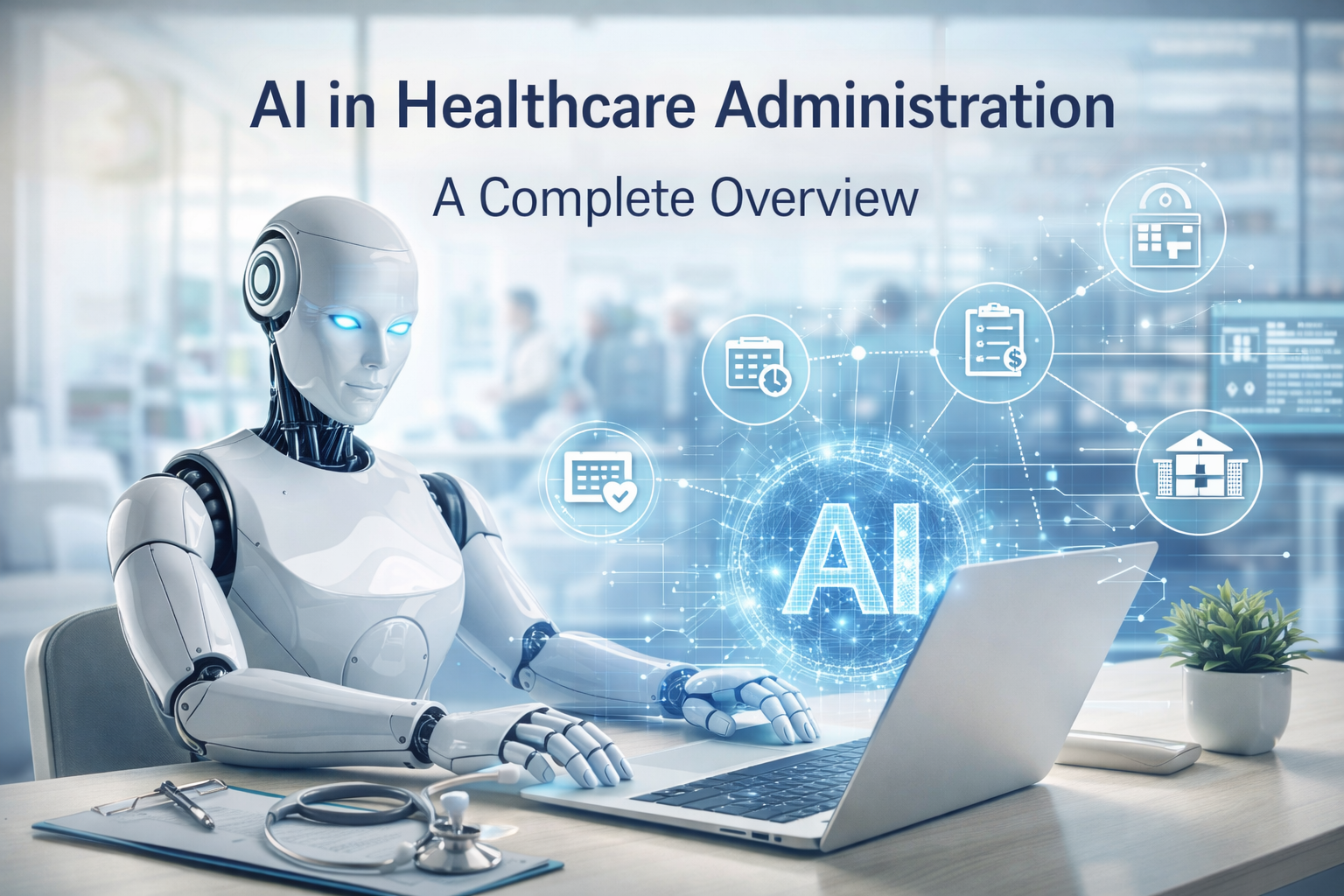
Artificial intelligence is rapidly moving beyond clinical applications and into the administrative core of healthcare organizations. From scheduling and billing to staffing and compliance, AI is reshaping how healthcare systems operate behind the scenes.
As financial pressures increase and workforce shortages persist, healthcare leaders are turning to AI to improve efficiency, reduce manual workload, and support better decision-making across administrative functions.
Why Healthcare Administration Is Ripe for AI
Healthcare administration is complex, data-intensive, and often fragmented across departments and systems. Many processes still rely on manual workflows, duplicated effort, and legacy software.
AI is particularly well-suited to administrative environments because it can:
- Process large volumes of structured and unstructured data
- Identify patterns and inefficiencies
- Automate repetitive, rules-based tasks
- Support predictive planning and forecasting
These capabilities allow organizations to focus human expertise where it matters most.
Key Areas Where AI Is Making an Impact
Revenue Cycle and Billing
AI tools are helping organizations reduce billing errors, improve coding accuracy, and accelerate claims processing. By identifying anomalies and predicting denials, AI supports faster reimbursement and improved financial performance.
Scheduling and Resource Management
Administrative AI systems can optimize appointment scheduling, staff allocation, and facility utilization. This leads to fewer bottlenecks, reduced wait times, and better use of clinical and operational resources.
Documentation and Workflow Automation
AI-powered natural language processing can assist with documentation, data entry, and form processing. This reduces administrative burden and allows staff to spend more time on patient-focused tasks.
Compliance and Reporting
Healthcare regulations require continuous monitoring and reporting. AI can help track compliance indicators, flag risks, and streamline audit preparation through automated data analysis.
Supporting Workforce Efficiency
Administrative burnout is a growing concern in healthcare. AI does not replace staff—it augments them. By automating repetitive tasks, AI allows administrative professionals to focus on:
- Complex decision-making
- Cross-department coordination
- Strategic planning
- Patient experience improvement
This shift can improve job satisfaction while maintaining operational continuity.
Infrastructure and Data Foundations Matter
Successful AI adoption in healthcare administration depends on strong digital foundations. Organizations must address:
- Data quality and standardization
- System interoperability
- Secure access controls
- Integration with existing IT and facilities infrastructure
Without these elements, AI tools struggle to deliver consistent value.
Governance, Ethics, and Trust
AI in administration still involves sensitive patient and operational data. Healthcare organizations must ensure:
- Transparency in AI-driven decisions
- Strong data governance frameworks
- Alignment with privacy and security regulations
- Clear accountability for outcomes
Responsible AI use builds trust among staff, patients, and regulators.
A Phased Approach to Adoption
Rather than large-scale deployment, many organizations succeed by starting small. Pilot projects in specific administrative areas allow teams to:
- Measure impact
- Refine workflows
- Build internal confidence
- Scale responsibly
This approach reduces risk while demonstrating tangible value.
Final Perspective
AI is becoming a foundational tool in healthcare administration, not a future concept. When implemented thoughtfully, it can improve efficiency, reduce costs, and support better operational decision-making across health systems.
For facilities and healthcare leaders, the focus should not be on adopting AI for its own sake, but on aligning technology with organizational goals, workforce needs, and patient outcomes. Those who build strong administrative AI foundations today will be better positioned to navigate the challenges of tomorrow’s healthcare environment.