The data center industry is undergoing one of its biggest transformations in decades. Artificial intelligence, high-performance computing (HPC), cloud expansion, and increasingly dense server deployments are changing the way facilities are designed and operated. While processors continue to become faster and more powerful, they also generate significantly more heat than traditional cooling systems were ever designed to handle.
For years, air cooling remained the industry standard because it was reliable, affordable, and relatively easy to maintain. Today, however, the equation has changed. AI servers equipped with advanced GPUs often consume several times more power than conventional racks, making traditional air cooling inefficient and, in many cases, inadequate.
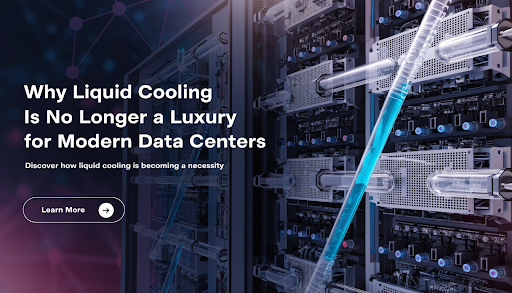
This is why liquid cooling data centers are rapidly moving from an optional upgrade to an operational necessity. Organizations that once viewed liquid cooling as a premium investment are now recognizing it as a strategic requirement for maintaining uptime, improving energy efficiency, and supporting future growth.
As facility managers plan infrastructure upgrades, adopting advanced data center cooling solutions 2026 is becoming a critical part of long-term operational success.
The Heat Challenge Facing Modern Data Centers
Today’s workloads are dramatically different from those of just five years ago. AI model training, machine learning, digital twins, scientific simulations, and real-time analytics all require high-density computing environments.
Modern AI racks can exceed 80–120 kW of power, while some next-generation systems are approaching 200 kW per rack. Traditional air cooling systems typically perform best at much lower rack densities.
This creates several operational challenges:
- Higher cooling costs
- Increased energy consumption
- Hot spots throughout server rooms
- Reduced equipment lifespan
- Greater risk of thermal shutdowns
- Limited rack density expansion
As organizations continue investing in AI infrastructure, these problems become increasingly difficult and expensive to solve using air cooling alone.
Why Air Cooling Is Reaching Its Limits
Air is a relatively poor conductor of heat compared to liquid.
Removing large amounts of heat requires massive airflow, larger cooling units, increased fan speeds, and higher electricity consumption. As rack density increases, airflow becomes more difficult to manage, creating uneven temperatures across the facility.
Facility managers often compensate by:
- Installing additional CRAC units
- Increasing airflow
- Lowering ambient temperatures
- Overprovisioning cooling capacity
While these methods temporarily reduce thermal risks, they also increase operating expenses and reduce overall efficiency.
Eventually, simply adding more air conditioning stops being a practical solution.
Why Liquid Cooling Works Better
Liquids transfer heat far more efficiently than air.
Instead of relying on large volumes of chilled air moving through server aisles, liquid cooling removes heat directly from high-temperature components such as CPUs and GPUs.
Because heat is captured at its source, cooling becomes more effective while requiring less energy.
The result is:
- Lower operating temperatures
- Improved server performance
- Reduced fan usage
- Better energy efficiency
- Higher rack density
- Longer hardware lifespan
This efficiency is one of the primary reasons why major hyperscale operators are investing heavily in liquid cooling data centers.
Different Types of Liquid Cooling
Liquid cooling is not a single technology. Several approaches are now being adopted depending on workload requirements and facility design.
Direct-to-Chip Cooling
Direct-to-chip cooling circulates coolant through cold plates mounted directly onto processors.
The liquid absorbs heat from CPUs and GPUs before carrying it away to a heat exchanger.
Advantages include:
- High cooling efficiency
- Minimal changes to server design
- Excellent for AI workloads
- Reduced fan energy
Many enterprise AI deployments now favor this approach because it can be integrated into existing facilities more easily than complete immersion systems.
Immersion Cooling
Immersion cooling places entire servers into specially engineered dielectric fluids.
Since the liquid does not conduct electricity, servers remain fully operational while being completely submerged.
Benefits include:
- Exceptional cooling performance
- Nearly silent operation
- Minimal airflow requirements
- Very high rack densities
- Significant energy savings
Although immersion cooling requires larger infrastructure changes, it offers some of the highest efficiency levels available today.
Energy Efficiency Is Becoming a Business Priority
Cooling often accounts for a substantial portion of a data center’s electricity consumption.
As electricity prices continue rising worldwide, reducing cooling costs has become a financial priority rather than simply an environmental initiative.
Liquid cooling helps organizations reduce the following:
- Fan energy
- Chiller workload
- Air handling requirements
- Overall facility power consumption
Lower cooling energy also improves Power Usage Effectiveness (PUE), one of the most important metrics for measuring data center efficiency.
For facility managers working toward sustainability targets, advanced data center cooling solutions 2026 offer measurable operational improvements.
Supporting AI Infrastructure
Artificial intelligence has fundamentally changed infrastructure planning.
Large language models, autonomous systems, advanced analytics, and enterprise AI applications require clusters containing thousands of GPUs operating continuously.
These processors generate far more heat than conventional CPUs.
Without sufficient cooling:
- Performance declines
- Components throttle automatically
- Hardware ages more quickly
- Downtime risks increase
Liquid cooling enables facilities to support these high-density AI environments without requiring excessive floor space or enormous cooling plants.
Improving Sustainability Goals
Governments, investors, and enterprise customers increasingly expect data centers to reduce carbon emissions.
Cooling efficiency plays a major role in achieving these objectives.
Liquid cooling contributes by:
- Lowering electricity consumption
- Reducing greenhouse gas emissions
- Improving equipment efficiency
- Supporting waste heat recovery
- Reducing water usage in some system designs
Many operators are also exploring methods to reuse recovered heat for district heating, nearby commercial buildings, and industrial processes.
These initiatives help transform cooling systems from operational expenses into sustainability assets.
Higher Rack Density Without Expanding Facilities
Building new data centers requires enormous capital investment.
Real estate, construction costs, permitting, and utility availability continue to make expansion increasingly expensive.
Liquid cooling allows organizations to install more computing power within existing facilities.
Instead of expanding buildings, operators can increase compute capacity by safely deploying higher-density racks.
This approach maximizes existing infrastructure investments while delaying costly expansion projects.
Lower Total Cost of Ownership
Although liquid cooling generally involves higher initial installation costs, the long-term financial picture is often much more favorable.
Savings can include:
- Lower electricity bills
- Reduced maintenance
- Longer equipment lifespan
- Smaller cooling infrastructure
- Improved server utilization
As AI workloads continue growing, these savings often offset implementation costs over the life of the facility.
Facility managers increasingly evaluate liquid cooling based on total cost of ownership rather than upfront capital expenditure alone.
Reliability Matters More Than Ever
Downtime is expensive.
Whether supporting banking systems, healthcare applications, cloud platforms, or manufacturing operations, modern businesses rely on continuous availability.
Excessive temperatures remain one of the leading contributors to equipment failures.
Liquid cooling improves reliability by maintaining consistent operating temperatures across servers, even during peak workloads.
Stable thermal conditions reduce stress on processors, memory modules, storage devices, and networking equipment.
For mission-critical facilities, reliability often becomes one of the strongest business cases for adopting liquid cooling data centers.
Retrofitting Existing Facilities
Many organizations assume liquid cooling is only suitable for new data centers.
In reality, many existing facilities can successfully retrofit portions of their infrastructure.
Hybrid approaches are becoming increasingly common.
Organizations may continue using air cooling for traditional workloads while implementing liquid cooling only for AI clusters or high-density compute racks.
This phased strategy allows gradual investment while minimizing operational disruption.
Facility managers can evaluate performance improvements before expanding deployment throughout the facility.
Challenges to Consider
Despite its advantages, liquid cooling requires careful planning.
Organizations should evaluate:
- Existing facility infrastructure
- Water distribution systems
- Maintenance procedures
- Staff training
- Leak detection technologies
- Equipment compatibility
- Vendor support
Proper planning helps ensure successful implementation while minimizing operational risks.
Working closely with infrastructure vendors during design and deployment is essential.
The Future of Data Center Cooling
Industry analysts expect liquid cooling adoption to accelerate rapidly over the next several years.
Several trends are driving this transition:
AI infrastructure continues expanding across every industry.
Server power densities continue increasing.
Sustainability regulations are becoming more stringent.
Electricity costs remain volatile.
Cloud providers are investing heavily in advanced cooling technologies.
Organizations seeking long-term scalability increasingly view liquid cooling as foundational infrastructure rather than an experimental technology.
As processors continue evolving, cooling systems must evolve alongside them.
What Facility Managers Should Do Now
Facility managers should begin preparing today rather than waiting until existing cooling systems reach their limits.
Practical first steps include:
Evaluate current rack densities and future AI deployment plans.
Assess facility PUE and overall cooling efficiency.
Identify workloads that would benefit most from liquid cooling.
Develop phased modernization strategies.
Collaborate with technology vendors and engineering partners early in the planning process.
Facilities that proactively modernize their cooling infrastructure will be better positioned to support future workloads while controlling operational costs.
Conclusion
The conversation surrounding data center cooling has fundamentally changed. What was once considered a premium technology reserved for specialized computing environments is quickly becoming a standard requirement for modern facilities.
The rapid growth of AI, HPC, and high-density computing has exposed the limitations of traditional air cooling. Organizations that continue relying solely on legacy cooling methods risk higher operating costs, reduced efficiency, limited scalability, and increased downtime.
By adopting liquid cooling data centers, facility managers can improve energy efficiency, support demanding AI workloads, increase rack density, extend equipment life, and meet evolving sustainability goals. As data center cooling solutions 2026 continue advancing, liquid cooling will play a central role in shaping the next generation of resilient, efficient, and future-ready infrastructure.
If your organization is planning the future of its data center, now is the time to explore the latest innovations, hear from industry experts, and connect with technology leaders.
CTA: Register as a delegate: https://bmaconventions.com/data-center-facilities-convention/