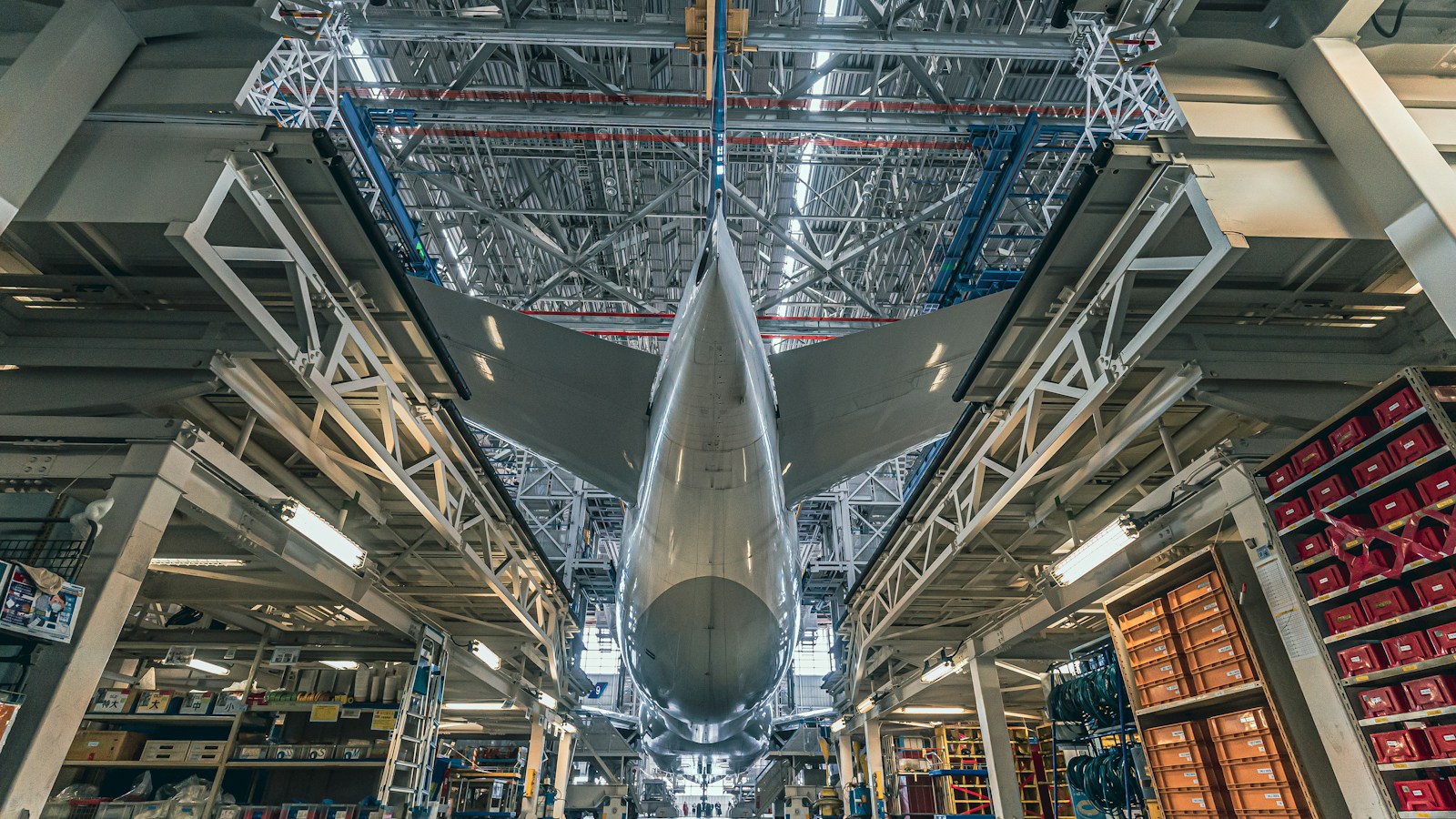
Honeywell Aerospace’s planned $500 million factory in Tempe, Arizona, puts a spotlight on a question that affects far more than aerospace: what does it take to build an industrial facility that is genuinely ready for the next generation of manufacturing?
Announced on October 28, 2026, the 300,000-square-foot project is expected to open in late 2028 and create approximately 600 permanent jobs. Honeywell says the plant will feature modular robotics, automated inspection, digital twins and an integrated digital thread. Those technologies may be headline attractions, but the story for facility managers lies in the infrastructure that makes them work reliably.
A Smarter Factory Starts With Smarter Infrastructure
Automation systems do not operate independently of the building around them. Robots, machining equipment, quality-control stations and connected production tools depend on stable electrical systems, consistent indoor conditions, industrial connectivity and predictable maintenance access.
That makes early collaboration among plant engineers, facilities teams, technology specialists and construction managers essential. When building systems are treated as an afterthought, a facility can end up needing costly modifications just as production is supposed to ramp up.
Power Reliability Becomes a Production Priority
Advanced machining and automated assembly can be sensitive to downtime and power-quality problems. A modern facility may need to assess electrical distribution, equipment loads, redundancy, surge protection and real-time energy monitoring before production equipment is installed.
The goal is not simply to add electrical capacity. It is to create a system that can support changing workloads while keeping safety, reliability and maintenance in view. Facilities leaders should evaluate where loss of power would interrupt production, damage work in progress or compromise inspection data.
HVAC, Cooling and Environmental Control Matter
High-precision manufacturing requires more than comfortable air temperatures. Heat from machinery and electronics, ventilation requirements, humidity and airborne particles can all affect workers, equipment and finished components.
For facilities teams, a smart-factory upgrade is a good moment to review:
- HVAC capacity and zoning for changing machine layouts;
- Process cooling and heat rejection where applicable;
- Ventilation, filtration and humidity requirements;
- Energy efficiency without compromising production conditions;
- Monitoring that alerts teams to environmental drift before it disrupts operations.
These are general design considerations for advanced manufacturing sites, not specifications announced for Honeywell’s Tempe project.
Digital Twins Can Also Change Facility Maintenance
Honeywell has highlighted digital twins and a digital thread as part of its planned manufacturing system. For facility managers, the broader opportunity is to connect asset information with operational decisions. When equipment data, maintenance history and performance trends are accessible, teams can move beyond purely calendar-based inspections.
A practical approach begins with critical assets: compressors, pumps, motors, cooling equipment, electrical infrastructure and production-support systems. Monitoring vibration, temperature, operating hours and fault history can help identify emerging issues and prioritize attention. A digital twin is valuable only when data quality, maintenance processes and employee training keep it useful.
Robotics Changes the Floor Plan—and the Maintenance Plan
Modular automation can increase manufacturing flexibility, but it also changes how people use industrial space. Safe access around robot cells, service clearances, material-handling paths and emergency procedures need to be designed into the layout.
Facilities teams should ask whether floor structures support the equipment, whether utilities can move with production lines and whether maintenance staff can reach service points without disrupting adjacent operations. Flexibility has to exist in the physical building, not only in the software.
The Building Envelope Should Not Be Overlooked
Roofing, insulation, drainage, doors and the wider building envelope are easy to overlook in conversations about artificial intelligence and robotics. Yet water intrusion, uncontrolled heat gain and poor environmental separation can undermine expensive production investments.
Long-term asset planning should account for the roof’s expected service life, inspection schedules, weather resilience and building-envelope performance—especially when equipment inside must operate within tight environmental tolerances.
Supply-Chain Resilience Includes Facility Readiness
Honeywell says the new investment will expand its internal complex-machining capacity and help address external supply constraints. That is a reminder that resilience is partly a facilities issue. Increasing production in-house only helps if the building, utilities, maintenance organization and skilled workforce can sustain the added workload.
Before expansion, facility leaders can map potential constraints across energy, cooling, space, water, personnel access, spares and critical service providers. Identifying those dependencies in advance gives production teams a stronger foundation for growth.
What Facilities Leaders Can Learn From the Investment
The lesson from Honeywell’s announcement is not that every manufacturer needs a $500 million new-build facility. It is that large-scale automation and physical infrastructure must be planned together. Modern facilities perform best when building systems, production technologies and maintenance operations share a clear strategy.
For existing factories, that might begin with an asset-condition assessment, a power and cooling review, targeted sensor deployment or a redesign of maintenance workflows. For greenfield sites, it means bringing facility specialists into the project early enough to influence the design.
The Bottom Line
Honeywell’s Tempe expansion represents an ambitious plan for advanced aerospace manufacturing. Its long-term significance for the wider industrial sector will depend not only on robots and digital models, but on the quality of the facilities supporting them. Smart manufacturing needs smart infrastructure—and infrastructure needs people who understand how to keep it operating.
Follow Facilities Upgrade for more coverage of manufacturing facilities, building systems, operational reliability and the technologies reshaping industrial infrastructure.
Source: Honeywell Aerospace announcement filed with the SEC, October 28, 2026. Project details represent the company’s announced plans and estimates. General facilities recommendations in this article are editorial analysis, not descriptions of confirmed project design specifications.