A building needs more than space and power to work well. It also needs a way to remove heat. Without enough cooling, equipment can struggle, rooms can become too warm, and daily work can face delays. Owners often focus on new machines, larger work areas, or more computing power. Yet each change can affect how much cooling a building needs. Planning for that demand early can help a business avoid costly changes later.
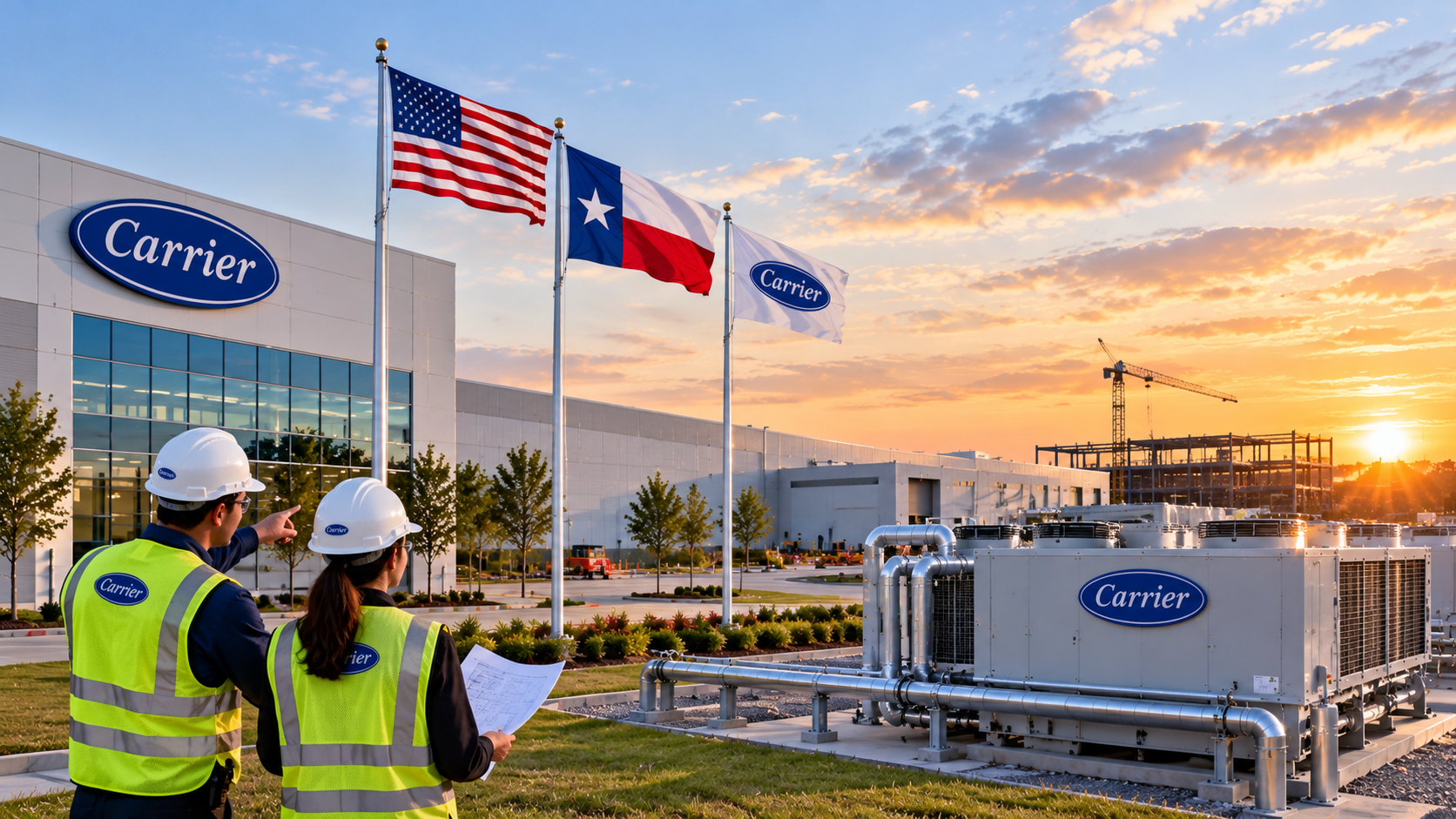
Carrier’s planned investment in Texas puts this issue in the spotlight. The company plans to expand its ability to make cooling equipment in the United States. For building owners, the news raises a useful question: is their own site ready for future demand? Strong U.S. cooling infrastructure depends on sound planning, suitable equipment, trained staff, and regular care. A new cooling unit forms one part of a much larger system.
What Carrier Has Announced
On October 22, 2026, Carrier announced plans to invest more than $600 million over three years. The project will create a manufacturing and engineering center in Fort Worth, Texas. Carrier expects the site to cover more than one million square feet and begin operations in 2027. The company also expects the investment to create 1,500 jobs. The center will expand production of air- and water-cooled commercial chillers for markets that include data centers, healthcare, education, and industrial facilities. These figures describe announced plans, rather than completed results. ir.carrier.com
The announcement gives facility owners a reason to review their own cooling needs. More manufacturing capacity may support the wider market over time. However, each building still needs a plan based on its size, use, and future goals. The broader lessons below concern how owners can prepare their facilities. They do not describe the design or operating methods of Carrier’s planned center.
Why Cooling Deserves Attention From Business Leaders
Cooling affects more than comfort. It helps create the conditions that people and equipment need to work well. When a system struggles, staff may need to move work, reduce activity, or arrange urgent repairs. Managers may also face difficult choices about when to stop equipment for service. These effects make cooling a business issue as well as an engineering concern.
Owners should understand which spaces depend on cooling and what could happen if service is lost. An office, a hospital, and a production plant may have very different needs. The right approach starts with the work taking place inside the building. That review helps teams decide where to invest first. It also gives finance teams a clearer reason for spending on upgrades, maintenance, or backup arrangements.
Understand How the Building Works Today
A useful cooling review begins with the building as it operates now. Old drawings and equipment records provide a starting point, but they may not tell the full story. Rooms may have changed their use, staff numbers may have grown, and new machines may release more heat. A room once used for storage could now hold technical equipment with different cooling needs.
Facility teams should compare their records with actual conditions. They should note when rooms become too warm and whether problems follow a clear pattern. A qualified team can then assess the cause. The issue may involve capacity, controls, airflow, or maintenance. Understanding the problem first helps owners avoid buying equipment that does not address the real need. It can also reveal when a smaller repair is more suitable than a major replacement.
Plan Cooling Before Expanding the Site
Extra floor space does not always mean a building is ready to grow. The systems serving that space must also support its planned use. A new production area may need more cooling, power, and pipework. It may also require changes to the way air or water moves through the site. These needs should be reviewed while the project is still being planned.
Good facility infrastructure planning brings engineers, operators, finance teams, and project managers into the same discussion. Each group should work from the same assumptions about future demand. The team should also consider where later equipment could fit and how staff would reach it for service. This does not mean purchasing everything in advance. It means keeping practical options open so that future growth is easier to manage.
Data Centers Need Close Teamwork
Changes in computing equipment can create new cooling needs. That makes data center cooling demand a useful example of why teams must plan together. A site might have enough total cooling capacity yet still face problems in one area. Equipment layout and heat distribution can affect how well the available cooling serves each part of the room.
The people choosing the computing equipment should share their plans with electrical and cooling specialists. All teams need to understand the expected loads and layout. If those plans change, the supporting systems may need another review. A design based on earlier assumptions may no longer suit the final installation. Clear communication helps the owner match the cooling approach to the equipment it must support.
Healthcare Projects Need Careful Timing
Cooling work in a healthcare building needs close coordination with the people using the site. Replacing equipment may affect nearby rooms, access routes, or daily services. The project team should understand these effects before work begins. Some tasks may need temporary arrangements or a phased schedule to limit disruption.
Different spaces can also have different requirements. Qualified specialists should assess those needs during design. Staff should know which areas will be affected and how long the work is expected to take. Clear roles help the project move forward, especially when a change needs quick approval. The work plan deserves the same care as the equipment choice. Both shape how smoothly the site moves from the old system to the new one.
Look Beyond the Purchase Price
The lowest equipment price does not always mean the lowest overall cost. Owners also need to understand what it takes to install, run, and maintain the system. One proposal may exclude work on power supplies, controls, or pipework. Another may include those tasks. Prices become hard to compare when the scope differs.
When reviewing commercial cooling systems, buyers should involve the staff who will operate and maintain them. Those employees can raise practical questions about access, repairs, and daily checks. Suppliers should explain what their offer covers and what the owner must provide. Training and service needs should also be clear. A fair comparison helps the business make a sound choice and reduces the chance of unexpected costs during installation.
Energy Savings Depend on the Whole System
Buying energy-efficient HVAC equipment can support better building performance. However, the way the full system works also affects energy use. Controls, pumps, operating hours, and maintenance all play a role. A suitable unit may still perform poorly if the wider setup does not match the building’s needs.
Owners should ask how proposed equipment will work under normal site conditions. Peak demand forms only part of the picture. The system may spend much of its time serving a lower load. Demand may also change during the day or across the year. These details help teams judge whether projected savings are realistic. A useful assessment explains the assumptions behind the expected results and shows how performance will be checked after installation.
Confirm Delivery Times for Each Project
A manufacturing expansion can be important news for customers. Still, it does not confirm when a particular cooling unit will arrive. Delivery depends on the product, order details, and agreed schedule. Buyers need current information from the supplier for their own project. They should avoid using a general investment announcement as proof of equipment availability.
Timing matters when a unit must arrive at a certain stage of construction. Access may become harder once other work is complete. A late design change may also affect the order or its delivery date. Regular contact between the owner, contractor, and supplier helps keep plans aligned. The project schedule should rest on clear commitments, with changes reviewed as soon as they arise.
Make Maintenance Easy to Carry Out
Maintenance access deserves attention before installation begins. Equipment can fit into a space and still be difficult to service. Technicians need room to inspect parts, use tools, and remove components. They may also need a safe route for bringing larger replacement parts into the area. A crowded layout can make routine work slower and more disruptive.
Facility staff should review the proposed layout with the design team. Their experience can reveal problems that are easy to miss on a drawing. The team should also consider how the equipment will eventually leave the building. A route used during construction may not remain open forever. Planning for service and replacement helps owners care for the asset throughout its working life.
Test the System Before Full Handover
Installed equipment still needs to be checked. The owner needs evidence that the system works as intended. Commissioning is the process of testing the installation and checking how its parts work together. It can reveal control issues, setup errors, or gaps between the design and actual performance. The project team should agree on the tests and expected results early.
Operators should take part where appropriate. They need to understand normal behavior and know how to respond when conditions change. Handover should include clear records, useful instructions, and relevant training. Staff should also know where to seek help. A careful handover preserves knowledge after the installation team leaves and gives the operating team a stronger start.
Use Monitoring to Guide Action
Monitoring can help staff understand how a cooling system performs. Its value comes from using the information to make decisions. A display full of numbers offers limited help if people do not know what they mean. Teams should agree on which changes need attention, who will review them, and what action may follow.
Records should also include context. A change in building use, weather, or operating hours may help explain a change in performance. Without that context, staff may struggle to judge whether a result signals a problem. Useful monitoring supports maintenance planning and helps owners review recent upgrades. The aim is to make the system easier to manage and give staff information they can use.
Prepare the People Who Will Run It
A cooling system depends on people with the knowledge to keep it working well. Training should suit each role. Operators may need to carry out daily checks, while technicians may need more detailed service knowledge. Staff should have time to ask questions and practice relevant tasks before taking full responsibility for the installation.
Important knowledge should not rest with one person alone. Shared records and clear procedures help the organization manage staff changes. Guidance should remain easy to find and should be updated when equipment or duties change. Including training in the project budget makes it easier to deliver. People, equipment, and information all contribute to reliable U.S. cooling infrastructure.
What This Means for Facility Owners
Carrier’s Texas plan draws attention to the manufacturing behind essential building systems. For owners, it also offers a useful moment to review current conditions and future needs. That review should connect technical advice with budget planning and daily operations. Each part helps the business understand where an upgrade would provide value.
A successful cooling project starts with a clear problem and a suitable response. It needs careful design, realistic delivery plans, proper testing, and ongoing care. Owners who bring these elements together can make better use of their investment. They can also prepare their buildings for change with greater confidence. Cooling deserves attention early because it supports the work the facility exists to do.
Continue the conversation about production, technology and industry growth. Explore the Smart Manufacturing & Automation Convention 2027 for event details and registration information.