Manufacturing is entering a new era where automation, artificial intelligence, connected systems, and data-driven decision-making are changing how factories operate. As businesses look for ways to improve productivity, reduce costs, strengthen resilience, and respond faster to market demands, industry events have become an important source of knowledge and innovation.
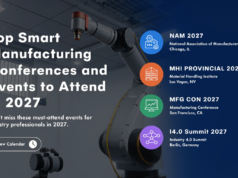
The Smart Manufacturing Convention 2027 is positioned as an important meeting point for manufacturing professionals, technology leaders, automation specialists, engineers, and decision-makers exploring the future of industrial operations. The convention offers an opportunity to understand emerging technologies, discover practical strategies, and connect with professionals working toward smarter, more connected manufacturing environments.
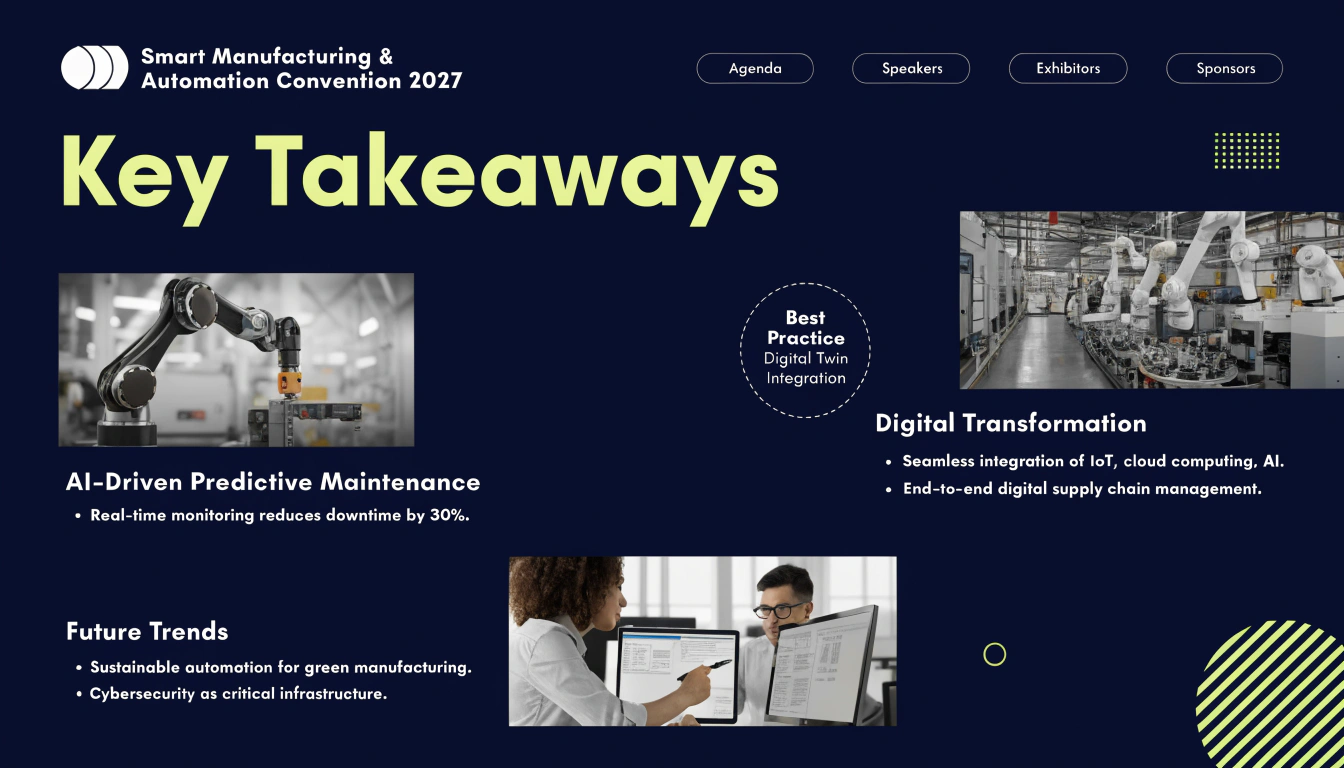
From intelligent automation to predictive maintenance and industrial data, there are several important manufacturing conference takeaways that can help businesses prepare for the next stage of manufacturing transformation.
Why Smart Manufacturing Matters in 2027
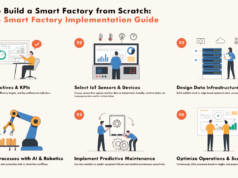
Smart manufacturing is no longer simply about installing automated machines. Modern manufacturing environments increasingly depend on connected technologies that allow equipment, people, software, and production systems to work together.
The shift toward Industry 4.0 has encouraged manufacturers to integrate technologies such as industrial IoT, artificial intelligence, machine learning, robotics, cloud platforms, digital twins, advanced analytics, and automation.
By 2027, manufacturers will need to think beyond individual technologies. The real advantage will come from integrating different systems into a coordinated digital ecosystem.
The Smart Manufacturing Convention 2027 provides a valuable platform for exploring how these technologies can work together to create more flexible, efficient, and resilient operations.
1. AI Will Become More Practical on the Factory Floor
One of the biggest manufacturing conference takeaways is the growing role of artificial intelligence in day-to-day manufacturing operations.
AI can help manufacturers analyze large volumes of production data and identify patterns that may not be visible through traditional monitoring. This can support quality control, demand forecasting, predictive maintenance, production planning, and process optimization.
Computer vision powered by AI can also assist with automated inspection. Instead of relying entirely on manual quality checks, manufacturers can use intelligent vision systems to identify defects and inconsistencies more rapidly.
However, successful AI adoption requires more than purchasing software. Manufacturers need high-quality data, reliable infrastructure, trained employees, and clearly defined business objectives.
The discussions around AI at the Smart Manufacturing Convention 2027 can help industry professionals understand how to move from AI experimentation toward practical implementation.
2. Automation Will Focus on Flexibility
Automation has traditionally been associated with repetitive tasks and high-volume production. But modern automation is becoming increasingly flexible.
Manufacturers are exploring collaborative robots, autonomous mobile robots, automated guided vehicles, intelligent machinery, and adaptable production systems. These technologies can help businesses respond to changing product requirements and workforce challenges.
Collaborative robots, or cobots, are particularly interesting because they can work alongside human employees in suitable applications. Rather than completely replacing workers, automation can support employees by handling repetitive, physically demanding, or highly precise tasks.
A key lesson for manufacturers is that automation should be connected to business objectives. Companies should identify specific operational challenges before deciding which technology to implement.
This focus on practical automation is likely to be among the most valuable manufacturing conference takeaways for companies planning their next phase of digital transformation.
3. Industrial IoT Will Connect More Manufacturing Assets
Industrial Internet of Things (IIoT) technology is becoming an essential component of smart manufacturing.
Sensors installed on machinery can collect information such as temperature, vibration, pressure, energy consumption, and operating conditions. When connected to centralized systems, this information can provide manufacturers with greater visibility into their operations.
Instead of waiting for a machine to fail, operators can monitor performance indicators and identify potential problems earlier. This supports predictive maintenance and can reduce unexpected downtime.
IIoT can also help companies track production performance in real time. Managers can gain insights into bottlenecks, equipment utilization, energy consumption, and production efficiency.
The Smart Manufacturing Convention 2027 will provide an opportunity for professionals to explore how connected factory environments can turn equipment data into actionable operational insights.
4. Predictive Maintenance Will Become a Strategic Priority
Unexpected equipment failures can disrupt production schedules, increase maintenance expenses, and affect customer deliveries. Predictive maintenance offers manufacturers a way to address these challenges proactively.
Instead of relying solely on fixed maintenance schedules, predictive maintenance uses equipment data and analytics to estimate when maintenance may be required.
AI and machine learning can analyze historical and real-time data to identify unusual patterns that could indicate developing equipment problems.
The important takeaway is that predictive maintenance is not simply about installing sensors. Companies need a complete process for collecting data, analyzing it, prioritizing maintenance requirements, and taking action.
This makes predictive maintenance an important area to explore at the Smart Manufacturing Convention 2027, particularly for manufacturers seeking greater equipment reliability and operational efficiency.
5. Digital Twins Will Improve Decision-Making
Digital twins are becoming increasingly relevant in advanced manufacturing. A digital twin creates a virtual representation of a physical asset, production line, facility, or process.
Manufacturers can use digital twins to simulate operations and evaluate potential changes before implementing them in the physical environment.
For example, a company could test how a production line might respond to a new machine configuration. It could analyze potential bottlenecks, evaluate production scenarios, or explore process improvements without immediately disrupting the physical factory.
As manufacturing becomes more complex, digital twins can support better planning and more informed decisions.
One of the key manufacturing conference takeaways is that digital transformation should not only focus on collecting data. Businesses must also find ways to use that information for better decision-making.
6. Cybersecurity Will Become Essential for Connected Factories
Greater connectivity creates new opportunities, but it also introduces new cybersecurity risks.
When production equipment, sensors, enterprise systems, cloud platforms, and operational technology are connected, manufacturers need to protect these systems from unauthorized access and cyber threats.
Cybersecurity strategies for smart factories can include network segmentation, access controls, authentication, system monitoring, software updates, employee training, and incident response planning.
Manufacturers must also consider cybersecurity when selecting new connected technologies and vendors.
As more industrial systems become connected, cybersecurity should be treated as an integral part of smart manufacturing strategy rather than an afterthought.
7. Data Will Become a Competitive Manufacturing Asset
Smart factories generate enormous amounts of data. But data alone does not create value.
Manufacturers need systems that can convert raw information into useful insights. This requires effective data collection, integration, storage, analytics, and visualization.
Manufacturing leaders can use data to understand production efficiency, identify quality issues, track equipment performance, optimize inventory, and improve resource planning.
The future factory will increasingly depend on real-time information. Managers who have access to accurate operational data can make faster and more informed decisions.
This is another important manufacturing conference takeaway: successful smart manufacturing depends not simply on collecting more data, but on making that data usable.
8. Human Skills Will Remain Critical
Technology may be transforming manufacturing, but people remain at the center of successful transformation.
Employees need the knowledge and skills required to operate, maintain, monitor, and improve advanced manufacturing systems. This means companies may need to invest in upskilling and reskilling programs.
Workers who previously focused on mechanical processes may increasingly interact with digital dashboards, automated equipment, analytics platforms, robotics, and connected systems.
Manufacturing leaders should therefore consider workforce development alongside technology investments.
The most successful smart factories will likely combine advanced technologies with experienced employees who understand how to use those technologies effectively.
9. Sustainability Will Become Part of Smart Manufacturing Strategy
Sustainability is increasingly connected with manufacturing efficiency.
Smart technologies can help companies monitor energy usage, identify inefficient processes, reduce material waste, and optimize resource consumption.
Connected sensors can provide detailed information about energy use across machines and production areas. Analytics can then help identify opportunities for improvement.
Automation and intelligent production planning may also contribute to more efficient use of materials and resources.
The Smart Manufacturing Convention 2027 can help industry professionals explore how digital transformation and sustainability strategies can work together rather than being treated as separate initiatives.
10. Collaboration Will Accelerate Manufacturing Innovation
Perhaps one of the most important manufacturing conference takeaways is the value of collaboration.
Manufacturing transformation involves multiple stakeholders, including manufacturers, technology providers, engineers, software developers, automation specialists, consultants, and industry experts.
Events such as the Smart Manufacturing Convention 2027 create opportunities for professionals to exchange ideas, discuss challenges, explore technologies, and learn from different perspectives.
For manufacturers, attending an industry convention can also help identify potential technology partners and understand how other organizations are approaching digital transformation.
Preparing for the Smart Manufacturing Future
The future of manufacturing will not be shaped by one technology alone. AI, robotics, IIoT, digital twins, predictive maintenance, analytics, cybersecurity, and sustainable technologies will increasingly operate as interconnected parts of a broader ecosystem.
Manufacturers should therefore take a strategic approach to transformation. Rather than adopting technology simply because it is new, organizations should identify their most important operational challenges and determine where digital solutions can create measurable value.
The Smart Manufacturing Convention 2027 provides an opportunity to explore these developments and understand how manufacturers can prepare for the next stage of Industry 4.0.
Whether the goal is improving production efficiency, increasing equipment reliability, strengthening cybersecurity, reducing operational costs, or building a more sustainable facility, industry events can provide valuable perspectives and practical insights.
Final Thoughts
The manufacturing industry is moving toward a future that is more connected, intelligent, automated, and data-driven. For manufacturers, staying competitive will require continuous learning and a willingness to evaluate new technologies and strategies.
The Smart Manufacturing Convention 2027 brings together ideas and developments that can help industry professionals understand where manufacturing is heading. From AI and robotics to IIoT, predictive maintenance, digital twins, cybersecurity, workforce development, and sustainability, the convention can offer valuable insights into the technologies shaping modern factories.
For anyone involved in manufacturing operations, engineering, automation, technology, or industrial strategy, attending the event can be an opportunity to learn, connect, and prepare for what comes next.
Register early for 2027 and stay ahead of the technologies, strategies, and innovations shaping the future of smart manufacturing.