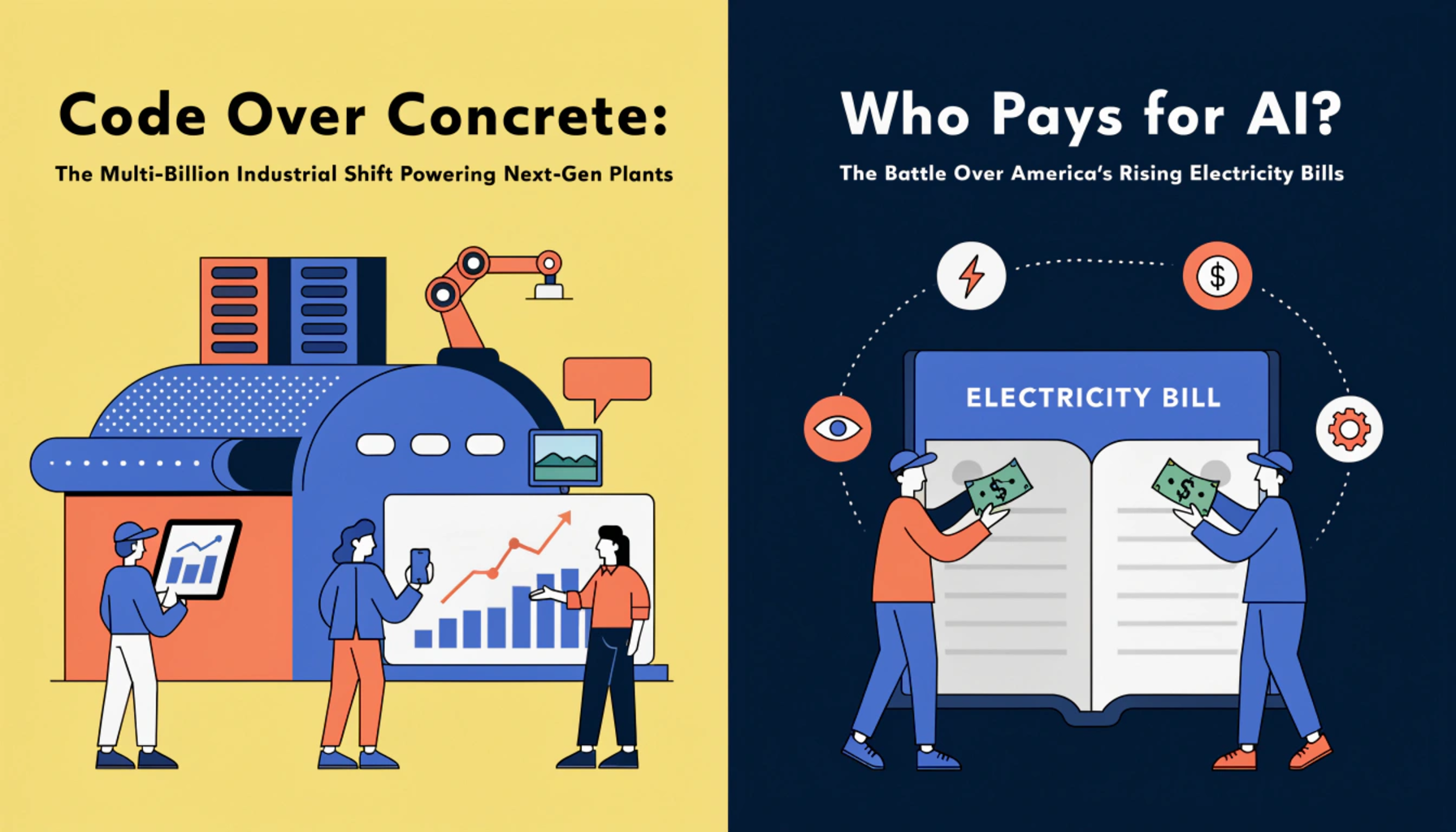
As artificial intelligence expands across the United States, the growing energy needs of data centers are creating a critical question for utilities, regulators, technology companies, and everyday consumers: who should pay for the infrastructure powering the AI boom?
The AI Boom Is Creating a New Electricity Challenge
Artificial intelligence is changing how businesses operate, how people access information, and how industries make decisions. Behind every AI-powered chatbot, automated workflow, and advanced computing model is a physical infrastructure that requires substantial amounts of electricity. As this technology expands, AI data center electricity costs are becoming an increasingly important issue for America’s energy sector.
Data centers house servers, networking equipment, storage systems, cooling infrastructure, and electrical equipment that keep digital services running. AI workloads can demand particularly high computing capacity, placing additional pressure on facilities to deliver reliable power and maintain safe operating temperatures.
The challenge extends beyond the data center itself. Large facilities need dependable electricity supplies, connections to transmission and distribution networks, and, in some cases, new generation capacity. Utilities may need to construct substations, expand transmission lines, upgrade equipment, or secure additional electricity resources to serve these customers.
These investments raise a fundamental question: should the technology companies driving this demand pay the full cost of the additional infrastructure, or could some of those costs be passed on to households and other businesses through electricity rates?
The answer depends on utility regulations, market conditions, infrastructure agreements, and decisions made by state and federal authorities. As AI adoption accelerates, determining who pays has become a major part of the national conversation about energy affordability.
Why AI Data Centers Need More Power
Traditional data centers already require substantial electricity to operate servers, storage systems, networking equipment, cooling systems, and backup power infrastructure. AI is adding another layer of complexity.
Training and running advanced AI models can involve large numbers of specialized processors working simultaneously. These systems generate heat and require careful engineered electrical and cooling arrangements. As computing density increases, facilities must deliver more power within limited physical space while maintaining reliability.
This creates several infrastructure challenges.
Higher electricity demand: AI workloads can increase the amount of electricity a facility consumes, depending on its size, workload, and operating schedule.
Cooling requirements: High-density computing generates significant heat. Operators may need advanced air cooling, liquid cooling, or hybrid systems to maintain equipment performance.
Grid connection delays: A proposed facility may be ready for construction before sufficient utility capacity is available. Transmission upgrades and new power supplies can take years to plan, approve, and build.
Reliability requirements: Many digital services operate continuously. Data center operators therefore need resilient power systems, backup generation, uninterruptible power supplies, and carefully designed redundancy.
The Federal Energy Regulatory Commission has identified data centers as a growing source of electricity demand in the United States. Its market assessment reported that data centers used approximately 4.4% of total U.S. electricity in 2023, with subsequent development indicating further growth. The expansion of AI computing is making electricity planning even more important.
The Regulatory Battle: Big Tech Versus Ratepayer Concerns
The debate over data center energy costs is not simply about how much electricity a facility consumes. It is also about how the costs of supplying that electricity are allocated among customers.
Utilities generally recover approved costs through regulated rates or other authorized arrangements. When a large customer requires new infrastructure, regulators must determine which costs are attributable to that customer, which investments benefit the wider grid, and how expenses should be distributed.
For example, a dedicated substation built primarily to serve one large data center presents a different cost-allocation question from a transmission upgrade that improves reliability for an entire region.
If the allocation is poorly designed, residential customers and smaller businesses could end up paying part of the cost of infrastructure needed to support major technology projects. However, the actual impact varies by location, utility, rate structure, and contract.
This issue has attracted attention from lawmakers and regulators. In September 2026, the U.S. House of Representatives passed legislation intended to address the energy costs associated with data centers. Meanwhile, regulators have been examining how grid operators should manage large new electricity loads.
The Federal Energy Regulatory Commission’s October 2026 decision concerning PJM Interconnection illustrates the complexity. FERC approved the development of a registry to track data centers connected to the regional grid but rejected parts of a proposal to temporarily curtail their electricity supply during periods of high demand. The decision highlighted unresolved questions about regulatory authority, reliability, and the treatment of large energy users.
The wider debate is clear: policymakers want to accommodate new infrastructure while protecting existing customers from unfair cost allocation.
Are Households Paying More for the AI Boom?
The relationship between data center growth and household electricity bills is complicated. It would be inaccurate to assume that every new AI facility automatically increases every household’s bill by a fixed amount.
Nevertheless, U.S. electricity bills can be affected when rising demand increases the cost of wholesale electricity, creates a need for additional generation, or triggers major grid investments.
Several mechanisms can contribute to these costs.
First, utilities may need to secure additional generating capacity to meet higher demand. If available supply is limited, wholesale electricity prices and capacity costs can rise.
Second, new facilities may require expensive transmission lines, substations, transformers, and distribution equipment. These investments can affect customer rates depending on who benefits from the assets and how regulators approve cost recovery.
Third, rapid demand growth can force utilities to build infrastructure on accelerated schedules. Equipment availability, construction costs, financing, and the choice of generation technology can influence the total investment required.
Finally, electricity contracts and rate structures determine how much of these costs are assigned to large customers rather than other ratepayers.
An NPR report published by KNKX on October 1, 2026, described estimates of increased annual electricity costs for Maryland customers associated primarily with the data center boom. It also emphasized that the impact varies across markets and that there is no single figure that accurately describes the burden nationwide.
This distinction matters. Rising electricity bills can reflect multiple factors, including fuel prices, weather, aging infrastructure, and broader electricity demand. Understanding the specific contribution of data centers requires examining local market conditions and utility decisions.
Who Should Pay for New Grid Infrastructure?
At the center of the debate is the principle that customers should pay for the costs they cause, while also recognizing that some infrastructure delivers broader public benefits.
Technology companies have a strong interest in securing dependable, affordable electricity. If a project requires a new substation, dedicated power equipment, or additional generation, developers and operators may negotiate arrangements to fund some or all of those investments.
Utilities, meanwhile, must maintain reliable service for existing customers while planning for new demand. They also need a workable method for recovering legitimate infrastructure costs.
Regulators must evaluate whether proposed rates are fair, whether large customers are contributing appropriately, and whether investments benefit the wider community.
A practical approach could include several safeguards:
- Dedicated infrastructure funding: Require large customers to pay for facilities built primarily to serve their projects, where justified by the applicable regulatory framework.
- Transparent electricity contracts: Clearly explain how generation, transmission, connection, and reserved-capacity costs will be allocated.
- Long-term customer commitments: Use appropriate contractual protections to reduce the risk that other ratepayers inherit stranded costs if a large project closes or reduces its demand.
- Cost-based tariffs: Design rates that reflect the scale and timing of large customers’ electricity requirements.
- Independent regulatory review: Evaluate proposed agreements to ensure that charges are reasonable and that residential customers are not unfairly subsidizing large industrial loads.
No single policy will work identically in every state or electricity market. The objective is to make cost responsibility clear before major infrastructure investments are approved.
The Role of Utilities and Energy Regulators
Utilities are becoming central players in the AI infrastructure expansion. They must forecast demand, plan new generation, maintain grid stability, and coordinate with developers whose projects may require hundreds of megawatts of power.
Regulators must balance these responsibilities against consumer protection and fair competition.
In regions experiencing rapid data center development, improved forecasting and better information about planned facilities can help utilities make more informed investments decisions. The data center registry approved for PJM is one example of efforts to improve visibility into the size, location, timing, and power requirements of large facilities.
Better information can help grid operators assess future demand, identify potential capacity shortages, and coordinate infrastructure planning. It does not, by itself, resolve who pays for the upgrades or how electricity should be prioritized during emergencies.
State utility commissions, regional grid operators, federal regulators, and lawmakers each have different responsibilities. Effective policy requires coordination among these institutions rather than relying on a single rule or voluntary commitment.
Can On-Site Power and Smarter Facilities Reduce the Pressure?
Expanding electricity supply is only one part of the solution. Data center developers and operators can also explore ways to manage their energy requirements more effectively.
On-site power generation can provide an additional source of electricity, improve resilience, or reduce dependence on constrained grid connections. Options may include natural gas generators, fuel cells, renewable energy systems, and other technologies, depending on the project’s requirements and location.
However, on-site generation is not a universal solution. It requires appropriate permits, fuel availability, emissions management, equipment maintenance, and careful integration with facility operations.
Battery energy storage can help manage short-duration power requirements and support certain grid services. Its effectiveness depends on system capacity, duration, charging arrangements, and the facility’s operating profile.
Advanced energy management systems can provide better visibility into power consumption, equipment performance, and cooling demand. Operators can use this information to identify inefficiencies, improve maintenance planning, and reduce avoidable energy waste.
Cooling optimization is particularly important for AI facilities. Liquid cooling and other high-density cooling strategies can help manage thermal loads, although the overall energy and water benefits depend on system design and operating conditions.
These measures can improve facility efficiency and resilience. They do not eliminate the need for grid investment, but they can form part of a broader strategy for responsible data center expansion.
What the Debate Means for Data Center Developers and Operators
The regulatory debate is changing the way companies should evaluate new data center projects.
Power availability is no longer simply an engineering consideration that can be addressed late in the design process. It can influence site selection, construction schedules, capital expenditure, operating costs, and long-term business viability.
Developers need to understand utility connection timelines and the likely costs of supporting infrastructure before committing to a site. Operators need reliable power arrangements that account for current workloads as well as future AI capacity.
Facilities teams also need to coordinate electrical design, cooling systems, backup power, commissioning, and operational monitoring. Decisions made during planning can affect energy efficiency and reliability for years.
Solution providers have opportunities to support these requirements through power distribution equipment, advanced cooling, backup generation, energy storage, microgrids, automation, monitoring platforms, and predictive maintenance.
The strongest project strategies will combine realistic power planning with efficient facility design and transparent financial arrangements. Companies that understand both the technical and regulatory environment will be better positioned to evaluate risks and plan expansion responsibly.
The Road Ahead: Balancing AI Growth With Energy Affordability
AI infrastructure is becoming an increasingly important part of the American economy. Data centers support digital services, business productivity, research, and new computing capabilities. At the same time, their growing electricity requirements create real planning and affordability challenges.
The central question is not whether the United States should develop AI infrastructure. It is how that development can proceed while maintaining reliable electricity service and treating existing customers fairly.
A sustainable approach requires more accurate demand forecasts, timely grid investment, clear contracts, efficient facilities, and regulatory oversight that reflects the needs of both large customers and the wider public.
Technology companies need dependable power. Utilities need investment certainty. Regulators need reliable information and workable rules. Households and businesses need confidence that they will not be unfairly charged for infrastructure built primarily to serve someone else.
As the debate continues, the future of AI will depend not only on computing power, but also on how effectively the country plans, finances, and operates the energy systems behind it.
Powering the Future of Data Center Infrastructure
As AI workloads expand, data center leaders must navigate power availability, grid constraints, advanced cooling, energy efficiency, and resilient facility design. Connect with industry professionals and explore the infrastructure strategies shaping the next generation of data centers.
Join the conversation at the Data Center Facilities Convention, Northern Virginia 2027.
Explore the convention: https://bmaconventions.com/smart-data-centre-facilities-convention-2027-northern-virginia/