The data center industry is entering a period of rapid transformation. Artificial intelligence, high-density computing, sustainability targets, grid constraints, cybersecurity risks, and the growing demand for digital infrastructure are changing how facilities are designed, built, operated, and maintained. The Data Center Facilities Convention 2026 brings these issues together, creating a platform for industry professionals to examine practical strategies for the next generation of data center operations.
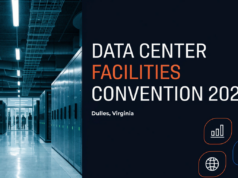
The 2026 convention is scheduled for November 17–19, 2026, at the DoubleTree by Hilton, Washington Dulles Airport, with discussions focused on AI-ready infrastructure, cooling, sustainability, power reliability, security, operations, resilience, workforce development, and modular design. (bmaconventions.com)
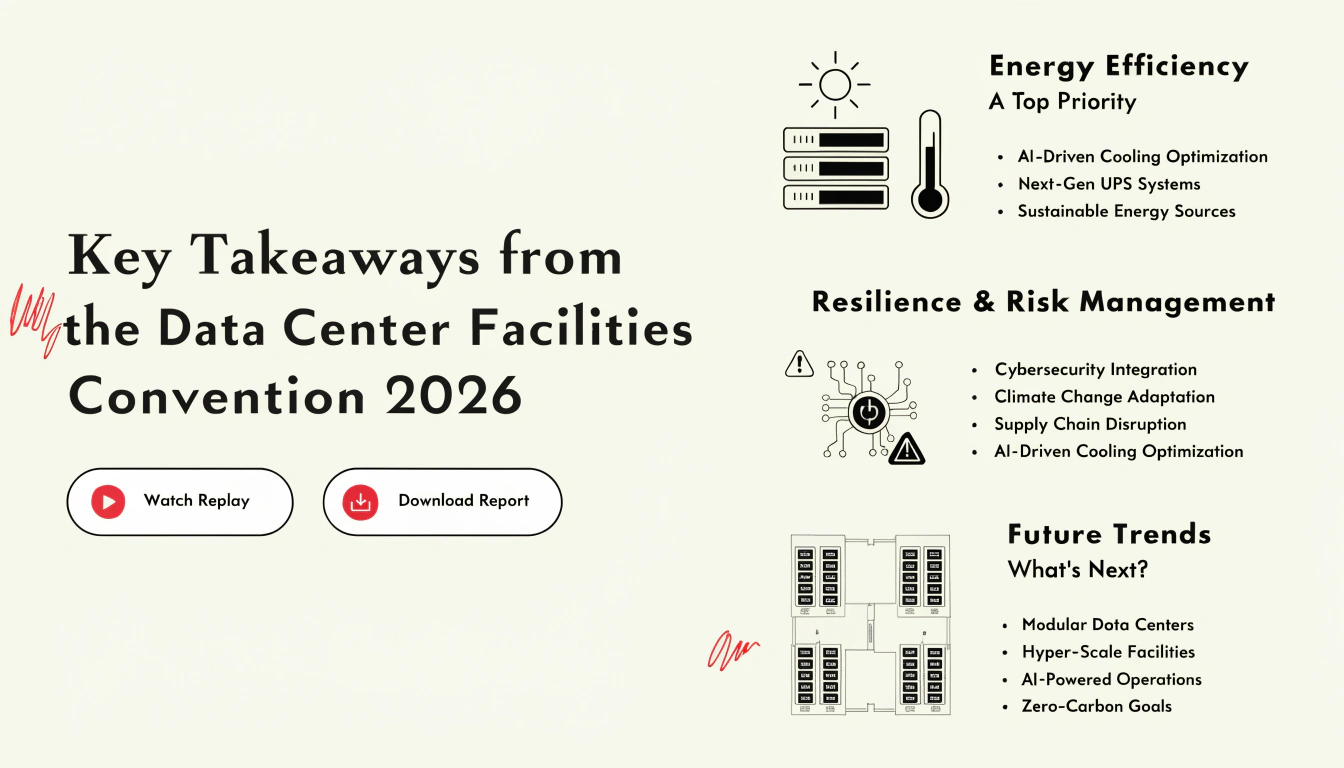
For professionals looking for a Data Center Facilities Convention recap 2026, the biggest message is clear: data centers can no longer be planned around yesterday’s workloads. Operators need infrastructure that can adapt to rapidly increasing power densities, evolving cooling requirements, stricter sustainability expectations, and new operational risks.
AI Is Redefining Data Center Infrastructure
One of the most important themes emerging from the 2026 agenda is the impact of artificial intelligence on data center infrastructure. AI workloads require significantly different infrastructure considerations compared with traditional enterprise computing. Higher rack densities, greater power requirements, more demanding thermal loads, and specialized computing architectures are forcing operators to rethink facility design.
The convention’s AI-focused discussions examine how facilities can prepare for next-generation workloads by reconsidering power distribution, airflow, thermal capacity, and rack density. The agenda specifically highlights the shift from traditional rack densities toward much higher-density GPU deployments. (bmaconventions.com)
This represents a major takeaway for data center leaders: AI readiness should be incorporated into infrastructure planning rather than treated as an upgrade that can be added later.
Facilities designed today need enough flexibility to accommodate changing hardware configurations and increasing computational requirements. This means planning electrical systems, cooling infrastructure, floor layouts, connectivity, and monitoring capabilities with future workloads in mind.
Cooling Has Become a Strategic Priority
Another major theme in the data center conference highlights is the growing importance of thermal management. As computing density increases, traditional cooling approaches may become insufficient for certain high-performance workloads.
The 2026 convention places particular attention on liquid cooling, including direct liquid cooling and immersion cooling, while also examining the balance between water consumption and power efficiency. (bmaconventions.com)
The takeaway is that cooling is no longer simply an engineering function. It has become a strategic factor affecting capacity, energy consumption, operating costs, sustainability performance, and equipment reliability.
Data center operators need to evaluate cooling technologies according to their workload requirements, facility design, local environmental conditions, and long-term expansion plans. The most effective approach may involve a combination of technologies rather than relying on one cooling method across every environment.
Sustainability Must Move Beyond Targets
Sustainability continues to move higher on the data center agenda. Operators are under increasing pressure to improve energy efficiency, reduce environmental impact, and demonstrate measurable progress toward carbon reduction goals.
The convention’s sustainability discussions focus on renewable energy strategies, carbon-free energy procurement, power efficiency, and pathways toward carbon-neutral or carbon-negative operations. (bmaconventions.com)
One of the most important lessons is that sustainability needs to be integrated into operational and investment decisions rather than treated as a separate corporate initiative.
Renewable energy procurement, efficient cooling, energy monitoring, battery storage, and intelligent facility management can all contribute to a more efficient data center strategy. At the same time, sustainability decisions need to account for reliability and business continuity.
The future of sustainable data centers will therefore depend on finding the right balance between environmental performance, operational resilience, cost, and availability.
Power Reliability Is Now a Capacity Issue
Power availability has become one of the biggest constraints facing data center expansion. As AI workloads increase electricity demand, operators must consider not only how much power a facility requires today, but whether sufficient power will be available for future expansion.
The convention’s power and grid discussions address grid instability, aging infrastructure, energy security, battery energy storage, backup generation, microgrids, and on-site generation. (bmaconventions.com)
This is an important takeaway from the Data Center Facilities Convention recap 2026: power strategy needs to be considered alongside capacity strategy.
A facility may have available physical space for expansion, but that does not necessarily mean it has access to sufficient electrical capacity. Operators therefore need to evaluate utility relationships, grid conditions, backup power, energy storage, and alternative generation options when developing long-term expansion plans.
Cybersecurity and Physical Security Are Converging
Data center security is becoming increasingly complex because modern facilities depend on connected operational technology. Building management systems, HVAC controls, monitoring platforms, access systems, and other operational technologies can create additional attack surfaces.
The 2026 convention places cybersecurity and physical security together as a strategic concern, including protection of building management systems, HVAC, and operational technology environments. (bmaconventions.com)
The key lesson is that security cannot be limited to traditional IT networks. Facility teams and cybersecurity teams need to understand how physical infrastructure and digital systems interact.
A stronger security strategy should include access controls, monitoring, incident response, employee awareness, network segmentation, regular assessments, and coordination between IT and operational technology teams.
Smarter Operations Depend on Better Data
Another major theme in the data center conference highlights is the evolution of data center operations through DCIM, real-time analytics, predictive maintenance, and AI-driven monitoring.
Modern facilities generate enormous volumes of operational information. The challenge is turning that information into useful decisions.
Data center infrastructure management platforms can help operators monitor power usage, equipment health, environmental conditions, cooling performance, and other critical parameters. Predictive analytics can then help identify potential issues before they become serious failures.
This creates a shift from reactive maintenance to proactive operations.
Instead of waiting for equipment to fail and then responding to the problem, operators can use real-time information to identify unusual patterns and address risks earlier. This can improve reliability while helping teams manage maintenance more efficiently.
However, technology alone is not enough. Data must be presented in a way that allows facility teams to act quickly without creating unnecessary alerts or information overload.
Resilience Needs a Broader Definition
Traditional data center resilience has often focused on redundancy and uptime. Those factors remain essential, but the definition of resilience is expanding.
Extreme weather, flooding, water availability, grid stress, supply chain disruptions, and other external factors can affect facility operations. The convention therefore includes disaster recovery and climate resilience as important areas of discussion. (bmaconventions.com)
The takeaway for operators is that resilience needs to be evaluated across the entire infrastructure ecosystem.
Facilities should consider how extreme weather could affect power, cooling, connectivity, physical access, fuel supplies, water availability, and staff availability. Business continuity planning should reflect realistic scenarios rather than relying exclusively on historical assumptions.
A resilient facility is not simply one that can survive equipment failure. It is one that can continue operating when multiple external pressures occur simultaneously.
Workforce Development Cannot Be Ignored
Technology is changing rapidly, but skilled professionals remain essential to operating complex data center environments.
The convention highlights the industry’s workforce challenge, including training, apprenticeships, community college partnerships, and the need to retrain technicians as facilities adopt new technologies. (bmaconventions.com)
This is particularly important as data centers introduce AI-ready infrastructure, advanced cooling, battery systems, renewable energy, automation, and sophisticated monitoring platforms.
Operators need employees who understand both traditional critical infrastructure and emerging technologies. Continuous training and skills development will therefore become increasingly important for maintaining reliability.
Organizations that invest in their workforce can potentially improve operational performance while creating a stronger pipeline of qualified professionals for future expansion.
Modular Design Could Accelerate Data Center Growth
The final major takeaway is the growing role of modular and prefabricated data center design.
Traditional construction approaches can involve lengthy timelines and complex coordination. Modular construction can offer greater standardization and potentially accelerate deployment by allowing components to be manufactured and prepared in controlled environments.
The convention’s design and build agenda examines prefabricated modules, containerized capacity, modular campuses, and the relationship between standardized design and faster deployment. (bmaconventions.com)
For operators facing rapidly changing demand, modular design can provide greater flexibility. Instead of designing every expansion from scratch, organizations can develop repeatable infrastructure models that can be deployed as capacity requirements evolve.
This approach can also support consistency in engineering, testing, maintenance, and operational processes.
What the 2026 Convention Means for Data Center Leaders
Taken together, the Data Center Facilities Convention 2026 themes point toward a data center industry that is becoming more integrated, intelligent, and infrastructure-intensive.
AI is increasing computing density. Higher density is changing cooling requirements. Increased power demand is creating new grid challenges. Sustainability is influencing energy decisions. Connected infrastructure is expanding the security landscape. At the same time, operators need better analytics, stronger resilience, and more skilled employees.
The biggest takeaway is that these challenges cannot be managed independently.
A data center’s power strategy affects sustainability. Cooling affects both capacity and energy efficiency. AI affects power, cooling, connectivity, and physical design. Cybersecurity affects operational technology. Workforce development affects the ability to manage every one of these systems.
Successful operators will therefore need a holistic approach to facility planning and operations.
Looking Ahead to 2027
The lessons and themes surrounding the 2026 event provide a useful framework for organizations preparing for the next stage of data center development. As AI adoption continues, energy requirements increase, and infrastructure becomes more connected, the industry will need continued collaboration between operators, technology providers, engineers, energy specialists, cybersecurity professionals, and facility leaders.
The next generation of data centers will not be defined only by how much capacity they can deliver. They will also be judged by how efficiently, securely, sustainably, and reliably they can operate.
For professionals who want to stay connected with these developments, the Data Center Facilities Convention offers an opportunity to engage with industry peers, explore emerging solutions, and prepare for the infrastructure challenges ahead.
Register Interest for 2026
Want to stay ahead of the next wave of data center infrastructure innovation? Register interest for 2026 and stay connected with future discussions, networking opportunities, technology developments, and industry insights.